Revenue from the long-distance freight trucking is expected to grow about $108B by 2020 only in the U.S. Logistic software automation is huge, however, the transport logistics automation is extremely low. The logistics sector project can become a blue ocean for your startup.
And if you are a transportation company’s owner — a customized automation solution from a trusted logistic software development company will help beat the competition and increase your profits. TMS logistics meaning is probably the most demanded solution for transport logistics automation. What is the transport management system definition and what opportunities does it open up for the transport industry?
What Is TMS (Transportation Management System)
According to the Gartner’s IT dictionary, TMS is used to plan shippers' movements, do freight rating and shopping across all modes, select the appropriate route and carrier, and manage freight bills and payments.
In other words — a transportation management system or TMS system means a kind of CRM specially adapted for the transportation industry. However, in contrast to the CRM, a transportation management system has much more sophisticated functionality, more modules, and gives more features to users and customers.
Read more about 7 Best Logistics Software Development Companies.
What Is Logistics Automation?
Logistics automation is the use of software, connected systems, and real-time data to reduce manual work across transportation, warehousing, freight management, order processing, and delivery operations. It helps logistics companies replace fragmented workflows, spreadsheets, and repetitive administrative tasks with coordinated digital processes.
Automated logistics systems can collect information from transportation management systems, warehouse platforms, GPS trackers, telematics devices, ERP software, and customer applications. This data can then be used to plan routes, assign vehicles and drivers, track shipments, process documents, calculate costs, update customers, and identify operational disruptions.
A transportation management system is one of the core platforms used for logistics automation. It connects transportation planning, dispatching, carrier management, freight tracking, billing, reporting, and other workflows within a shared digital environment.
Logistics automation commonly covers:
- route planning and vehicle dispatching;
- real-time shipment and fleet tracking;
- carrier and freight management;
- digital documentation and billing;
- warehouse and inventory coordination;
- delivery notifications and customer communication;
- analytics, reporting, and performance monitoring.
By connecting these processes, logistics companies can improve operational visibility, reduce manual errors, respond to disruptions faster, and manage growing transportation volumes more efficiently.
Key Processes Of Transportation Management
| Core transportation processes automated by TMS | |||
|---|---|---|---|
| Process | What the TMS does | Data and actions involved | Operational value |
| Planning | Selects an efficient transportation scheme based on operational priorities | Transportation cost, number of vehicles, routes, and required stops | More efficient use of vehicles, routes, and transportation budgets |
| Transportation | Monitors cargo delivery in real time and automates dispatcher workflows | Shipment completeness, route deviations, vehicle location, and schedule adherence | Better shipment visibility and faster response to delivery issues |
| Support | Coordinates workflows between carriers, ports, customs, and other participants | Arrival and delay notifications, customs clearance, invoices, booking documents | Fewer loading delays and less time spent waiting for documents |
| Calculations | Automates operational calculations and analyzes incoming data using KPIs | Inventory, fuel consumption, stops, transportation tenders, and settlements | Improved cost control and fewer manual calculations and reconciliation |
Planning
Transportation Management System selects the most efficient transportation scheme, taking into account parameters’ priority: the transportation cost of several vehicles, the minimum required number of stops, etc.
Transportation
Using TMS allows you to monitor the cargo delivery process 24/7. The system automates dispatchers’ work and controls cargo movement — for this option, in TMS is usually used GIS service. By using TMS, you may monitor:
- whether the cargo is transported in full;
- if the driver deviates from the route;
- whether the driver adheres to the transportation schedule.
Support
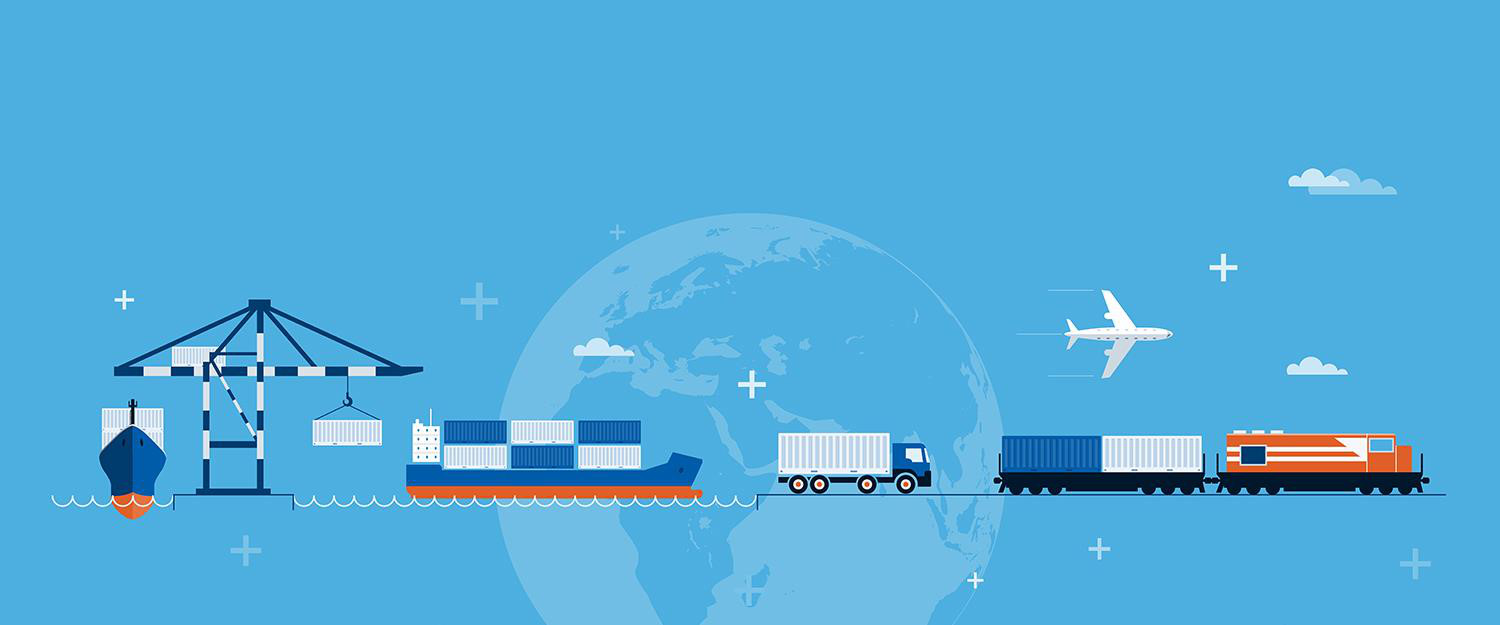
Basically, the transportation of cargo is performed by several modes of transport — first, the truck, and then ship, train,n or plane. Accordingly, during the transportation process, you need to communicate with many organizations — a port’s administration, customs, etc. TMS helps to automate the workflow among cargo delivery process participants.
For example, if you need to carry cargo by sea, via TMS you have the opportunity to inform the port about the truck arrival time (or quickly notify the port of a vehicle’s delay), and automatically pass customs clearance, invoicing, and booking documents. Thus, your shipment will not stand in the queue for loading or wait until all necessary transportation documents are signed.
Calculations
TMS-solution automates calculation processes that are necessary for cargo transportation: the optimal cargo loss, inventory control, fuel consumption norms, the optimal number of stops, etc. The TMS business logic analyzes incoming data, based on key performance indicators. In TMS systems, additional functions are available, for example, functions that help to hold tenders for transportation and reconcile settlements with counterparties.
Modules That TMS Solution May Include
In addition to the mentioned above CRM system, TMS may include modules for automating processes related to freight transportation:
- Warehouse Management System(WMS);
- Enterprise Resource Planning System(ERP);
- Enterprise Asset Management System (EAM).
- Manufacturing Execution System (MES);
- Supply Chain Management System (SCM).
TMS Benefits For Logistics Company

Through data analysis and cargo transportation optimization, TMS allows you to save on budget in the shipping process. A survey among logistics companies showed that the TMS system helps to save up to 10% on transportation costs.
Read How Custom Software Helps Logistics and Transport Companies Overcome Supply Chain Challenges.
Who may get benefit from TMS
To ensure maximum efficiency from the interaction, TMS systems provide versions for large transport companies and for small carriers. For example, when developing a TMS for cargo delivery the project(under NDAs), we have made three versions of the system: for cargo owners, carriers, and drivers. So that each participant of the transportation process has the opportunity to interact through the TMS directly.
If we talk about industries, TMS is a solution for transport and logistics companies, 3PL operators, as well as for any company which needs regularly carries or sends goods: large online shops, manufacturing, agricultural companies, etc.
Who Uses a TMS?
TMSs are first used by businesses that need to ship, move, and receive goods regularly, including manufacturers, distributors, e-commerce firms, retail firms, and companies that provide logistics services. Businesses in nearly every industry use a TMS. The primary users are businesses that spend $100M or more annually on freight.
TMS Offerings
Firms may buy a standalone TMS that can be integrated with their existing cloud or on-premises enterprise resource planning software and SCM solutions. Some TMS solutions have trade documentation ability, or you can complement your TMS with a global trade management app. Other, with less feature-rich TMSs, are available as modules within ERP and SCM suites.
TMSs And The Smaller Business
Smaller firms — those that spend $5M to $10M annually on freight. Now, cloud-based solutions are making it more affordable for these smaller companies to invest in a TMS. The majority of TMS solutions are connected to the cloud, which means they may be accessed from any remote device with a secure internet connection. It is especially helpful for smaller-volume shippers that require simplicity with each software solution they use.
Today’s technology alongside the integration of APIs has made custom TMS configuration simple, streamlined, and much more affordable. This flexibility and cost-friendliness make it easier for the smaller shipper to develop, integrate, and use daily.
Read more about overcoming SaaS limits through logistics API integration to enable scalable data flow.
Why Prefer Cloud-based Solution

Custom transportation management systems can be divided into two categories: software and cloud-based solutions. Software TMS solutions require significant financial investment — you will need to buy (rent) the server hardware, licenses, and integrate TMS with the enterprise working processes.
Cloud-based solutions do not require additional servers. All processes are done in the cloud; it allows saving financial resources and time on system integration — you may start work almost immediately. A big plus of a web-based TMS — all participants of the transportation process get quick access to the system, allowing you to quickly make changes and react to them.
Craig Boroughf, senior director of USG, said that during the period from 2010 to 2017, a key indicator of his company’s productivity has doubled thanks to the TMS solution. Construction Corporation USG uses the cloud-based TMS to automate daily deliveries of raw materials from 45 factories, and TMS allows the company not to expand its staff to serve the growing number of orders.
The Importance Of Mobile App Development
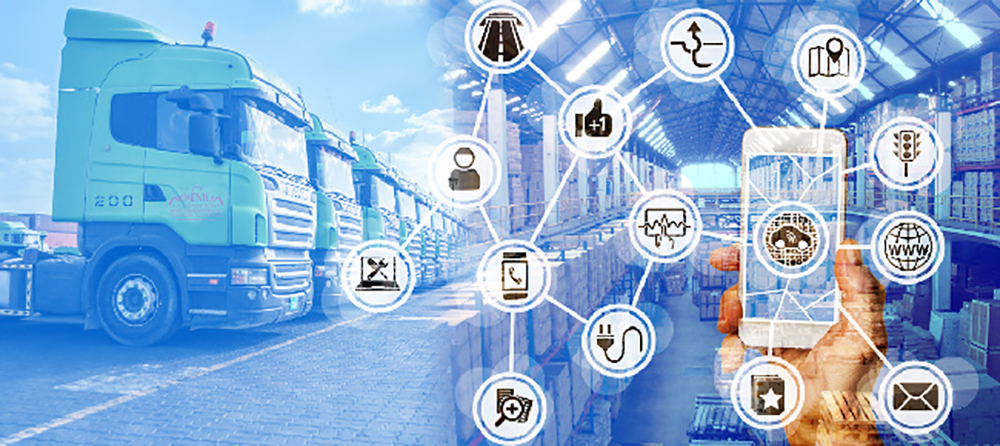
Transport logistics automation provides access to information in real time. Accordingly, the participants of the supply chain should have access to the system anytime and anywhere, firstly from a smartphone.
The mobile version of TMS is particularly relevant for truck drivers —a native mobile app provides the ability to quickly inform the administrator about the truck movement, route deviations, and other force majors.