



Choosing SaaS solutions for fleet management is totally reasonable. In the end, your GPS software is working, routes are visible, drivers are tracked, and when you first set it up, the per-vehicle fee looked fine. But as your company’s fleet crosses the 100-vehicle mark, evaluating the actual GPS tracking software price becomes much harder than a simple monthly line item. Prices keep rising along with your company’s success, while the app keeps crashing with the same old bugs. And that crucial dispatch integration? It’s been sitting on the vendor’s roadmap for nearly a year.
Apart from that, focusing only on monthly subscription tiers hides the bigger picture from you. Apart from the per-vehicle fee, you pay for the hours your team wastes on manual data exports, the features your vendor never ships, and the compounding scaling penalties. When you outgrow a ready-made platform, you are basically funding your vendor’s roadmap while remaining trapped in their limitations.
This article is based on our 16+ years inside the problem, building custom dispatch, booking, and custom GPS tracking software for logistics operators who outgrew their SaaS.. Stfalcon's work powers logistics companies like Nova Post, Ecolines, and MeinFernbus. What follows is the pattern we've seen repeat: when SaaS still saves you money, when it stops, and how to tell which side of the line your fleet is on.
TL;DR
- The visible cost of fleet GPS tracking software is the per-vehicle subscription ($33/vehicle/month on Samsara as a benchmark). The real cost (integration workarounds, manual spreadsheet fixes, scaling price jumps, vendor roadmap delays, exit fees) runs 30–60% higher than the headline price. We call this the SaaS cost multiplier.
- SaaS is the right call for fleets under 50 vehicles with standard tracking needs, no integration complexity, and unsettled routes or operating models.
- Custom becomes the right call once your fleet crosses SaaS pricing thresholds, your dispatch logic doesn't fit the platform, vendor roadmaps block features you need now, or you're running multi-region or non-standard hardware.
- On a 150-vehicle fleet, the 3-year math is $299K on Samsara vs $164K on a custom-built platform, a $135K gap, plus you own the asset at the end.
- Run the numbers against your actual fleet before the next renewal conversation.
GPS tracking software cost: how SaaS pricing actually works
Most commercial telematics platforms use one of three models, or some combination of all three.
Per-vehicle, asset licensing (hardware model). The industry default. Take Samsara, which charges around $33 per vehicle per month. This fee covers standard evaluation of your real GPS tracking costs, geofencing, and basic route optimization for that specific truck. You can usually add as many office users to the dashboard as you want for free.
Per-user or per-seat pricing (headcount model). Routing-heavy platforms like Route4Me and OptimoRoute are highlighted here. They charge for personnel rather than trucks, billing roughly $35–$42 per driver or user, per month. On a fleet of more than 50 drivers, these individual seat costs compound fast, as you must pay for every active profile on the system.
Tiered feature gating (paywall model). Entry plans usually cover basic tracking, basic history, and simple geofencing. ELD monitoring, open API access, advanced reporting, and hardware integrations typically sit behind mid- or top-tier walls. Dynamic routing, custom KPI reporting, and full API access are normally add-ons.
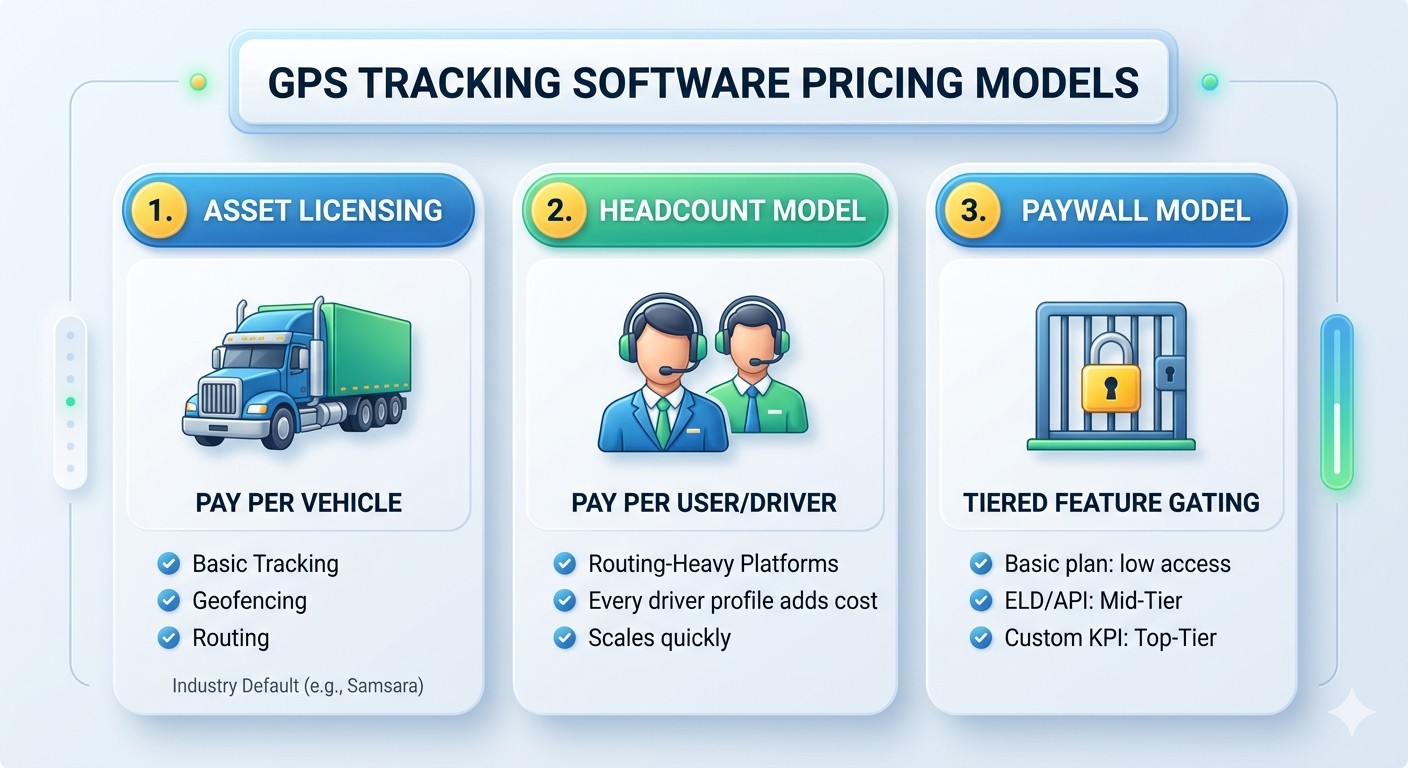
Big providers often employ hybrid models to capture revenue from both vehicles and staff. Verizon Connect, for example, charges a core subscription fee per vehicle for its Reveal platform to cover telematics, but then feature-gates advanced mobile dispatching, field service scheduling, and specialized asset tracking modules. These add-ons are billed either as secondary per-user fees or standalone monthly premiums.
For a small fleet of 15 to 30 vehicles, these pricing structures are highly predictable and cost-effective. However, as the fleet grows, this predictable math begins to warp.
What’s the SaaS cost multiplier or the SaaS cost you don't see
The true cost of an enterprise SaaS platform includes everything a company must build, buy, or tolerate to bridge the gaps in the vendor's software. When a fleet scales, these invisible layers expand dynamically, transforming a predictable monthly line item into a complex operational tax.
This compounding financial drag is what we call SaaS cost multiplier, which includes the following layers:
The integration tax (integration workarounds)
Vendors always promise an open API, but full documentation is usually gated. Worse, standard webhooks don't send the data your internal system actually needs. If a ready-made integration doesn't exist, your developers have to build custom code just to connect the platforms and pass data back and forth.
For a 150-vehicle fleet, the base subscription is $59,400/year ($33/vehicle/month). If one engineer spends just one day a week fixing broken API connections or updating code when the vendor changes something, that wastes about $20,000 a year. That’s a 34% hidden tax on top of your software bill.
The spreadsheet tax (feature gaps filled manually)
SaaS roadmaps are built for the median logistics operation, not yours. If your drivers are paid based on custom KPIs, your routes require multi-stop dynamic reordering, or your compliance workflow doesn't match the platform's assumptions, your dispatchers work around it. They export raw telematics data into spreadsheets. They manually calculate driver bonuses and verify refrigeration compliance. Every manual step is a delay, an error risk, and an overhead cost that doesn't appear on the software invoice.
The leverage trap (scaling price jumps)
At 30 vehicles, the per-vehicle fee is a minor line item. At 150, it's a primary expense. At 500, it’s a massive budget hole. Volume discounts are designed to favor the vendor, not you, so when renewal time comes, getting a better deal is incredibly tough. The vendor knows you are trapped. Swapping out hardware on hundreds of trucks, pulling historical data, and retraining 200 drivers is way more painful than just swallowing the price hike.
The stagnation cost (vendor roadmap delays)
When a feature your operation needs is classified as "upcoming," your business absorbs the delay. For compliance features (e.g., updated IFTA boundary processing, new ELD diagnostic rules), waiting on a vendor patch creates direct regulatory exposure. For operational features, the math is direct. If a vendor takes 18 months to ship a multi-depot routing update, your team routes manually for 18 months while paying for software that can't do the job.
The technical debt trap (embedded switching costs)
After two or three years on a platform, the exit cost is substantial. Standard enterprise SaaS contracts, such as Verizon Connect's service terms, routinely list hardware removal and de-installation fees for GPS tracking devices as high as $150 per GPS tracker. Add database extraction, driver retraining, rebuilding integrations with your CRM and warehouse tools, and the operational risk of cutting over during active operations. None of this appears on day one. It accumulates with every vehicle you add.
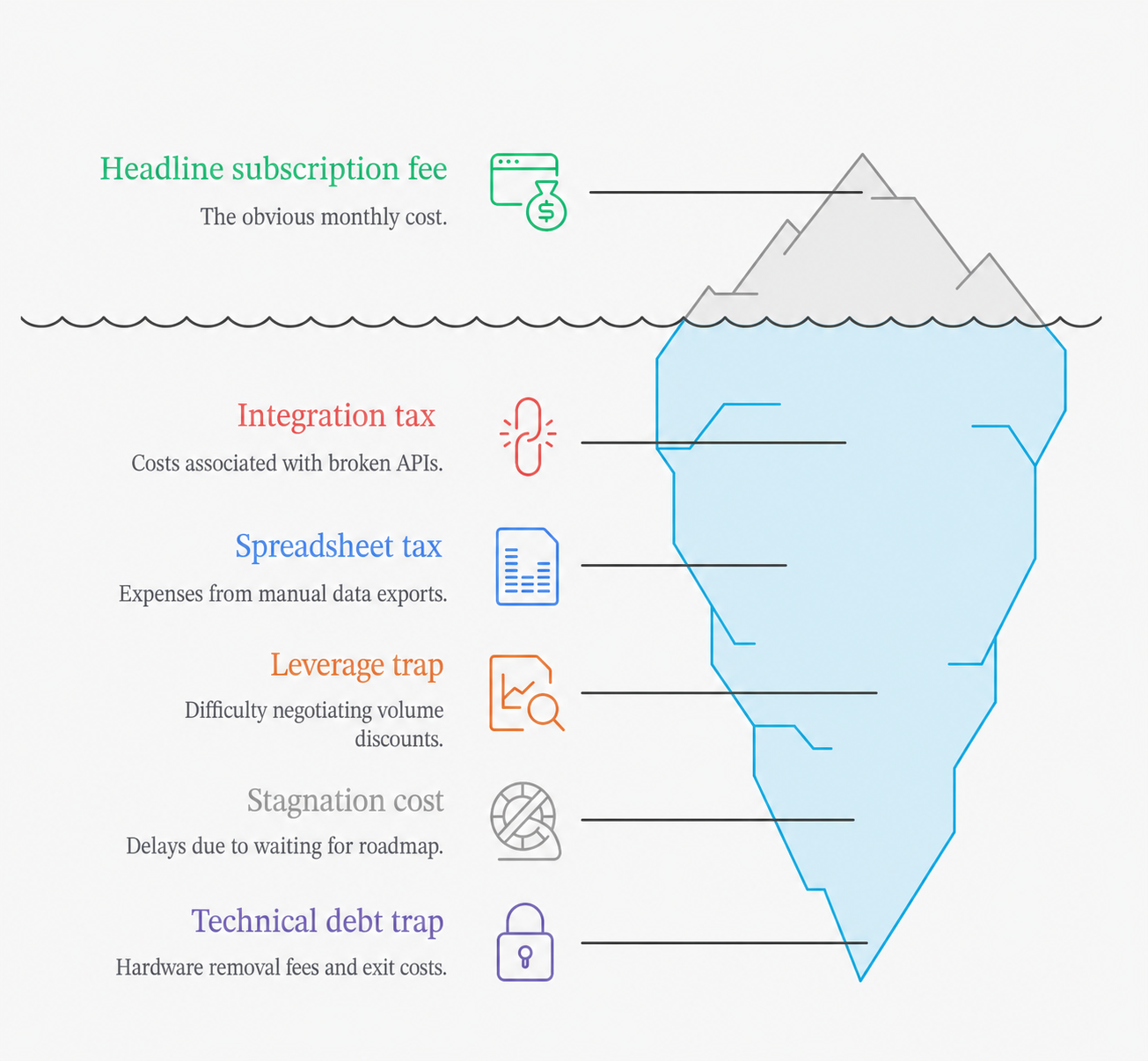
When you weigh in all these extra pieces, the actual cost of SaaS looks completely different. Based on our experience auditing fleet operations, the true total cost of ownership (TCO) of a rigid SaaS platform is routinely 30% to 60% higher than the headline subscription fee. This compounding operational tax is precisely why a simple monthly calculation fails.
How much does GPS tracking software cost over three years vs custom build?
The per-vehicle fee tells you what your GPS software costs this month. However, it doesn't tell you what it costs to run a fleet on SaaS for three years against owning the custom-built platform.
To map this transition directly, we can apply a build-to-own advantage model. Here's how the model applies to a 150-vehicle fleet scaling at a moderate 10% annually, using standard enterprise market benchmarks as reference points:
| Year 1 | Year 2 | Year 3 | ||||
|---|---|---|---|---|---|---|
| Cost Category | Samsara | Custom | Samsara | Custom | Samsara | Custom |
| Software / Hosting | $59,400 | $6,000 | $65,340 | $6,300 | $72,000 | $6,600 |
| Hardware / Dev | $22,200 | $120,000 | $0 | $0 | $0 | $0 |
| Maintenance / Updates | $0 | $0 | $0 | $15,000 | $0 | $10,000 |
| Manual Workaround | $20,000 | $0 | $26,000 | $0 | $34,000 | $0 |
| Annual Total | $101,600 | $126,000 | $91,340 | $21,300 | $106,000 | $16,600 |
| Cumulative TCO | $101,600 | $126,000 | $192,940 | $147,300 | $298,940 | $163,900 |
The custom build costs more in Year 1. But by the end of Year 2, the custom platform is already $45,640 cheaper on a cumulative basis. And by the end of Year 3, the gap reaches $135,040. Because unlike SaaS, the custom platform is yours to keep, with no recurring licensing fee.
The Year 1 capital requirement ($120,000 for engineering) is the legitimate reason most operations don't build immediately. That's not just a flaw in the model, but a real constraint. Which brings us to when SaaS is actually the right answer.
Already past the SaaS options?
Tell us about your fleet, and we'll walk you through what a custom build would cost you
Alina
Client Manager

When SaaS GPS software makes sense
Custom software development isn't the right move for every operation. Off-the-shelf SaaS makes sound financial and operational sense when:
For these environments, platforms like Samsara deliver mature, well-supported ecosystems that deploy in days. The SaaS Cost Multiplier is real, but at a small scale the absolute dollar amounts are manageable. The economics of ownership don't turn positive until the fleet and the operational complexity cross certain thresholds.
Read more about freight broker software development cost: SaaS vs. custom build math.
When custom GPS tracking software development cost is justified
The decision rarely comes from a single number. The real reason businesses opt for custom development is because their operations become too complex to handle, and no SaaS software can meet their needs precisely.
Four triggers let you see if you should consider custom built:
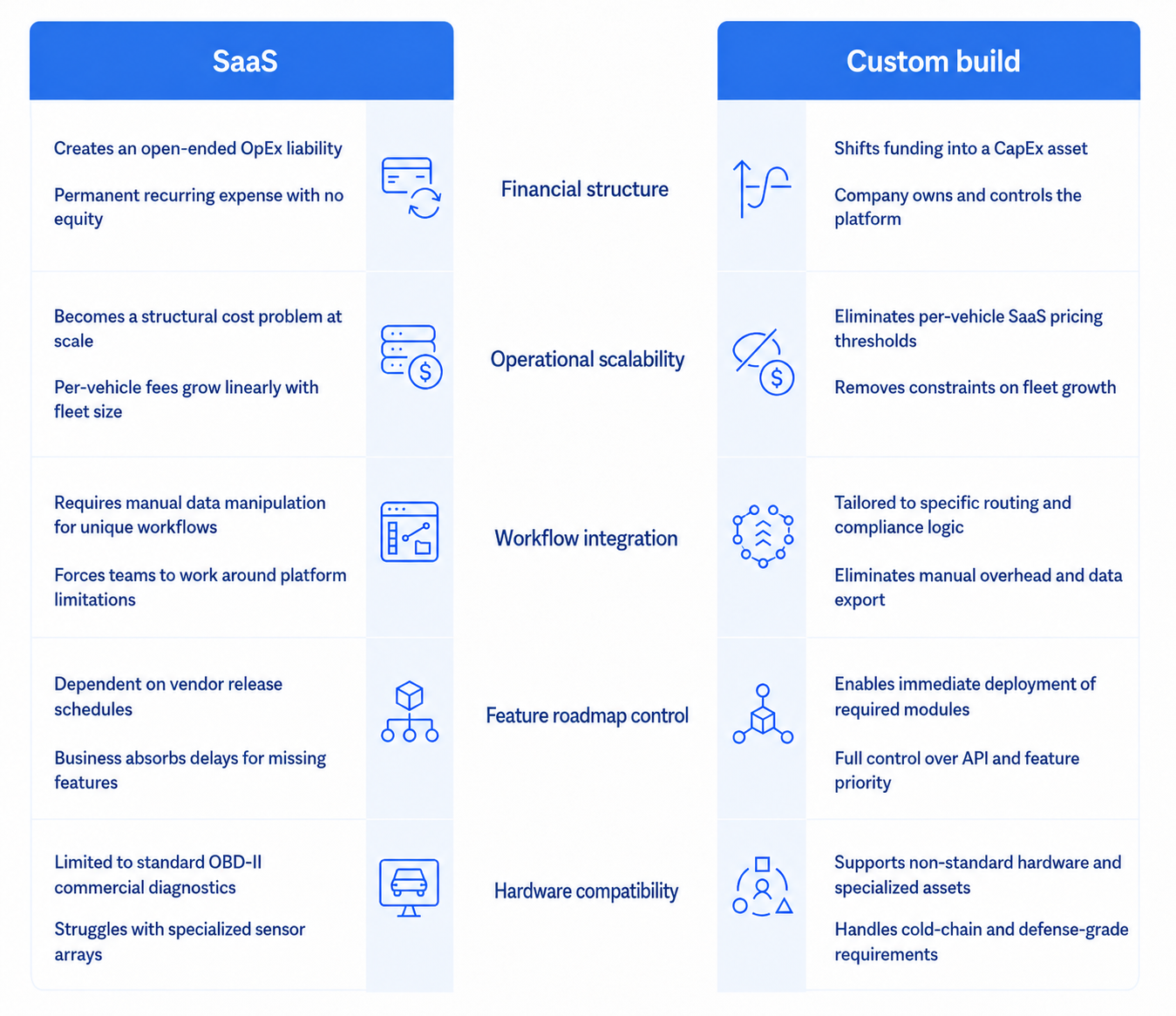
If your fleet hits these triggers, building a proprietary system shifts software funding from an open-ended OpEx liability into a structured CapEx asset that your company owns and controls.
What happens when companies make the switch to custom. Our cases
Our custom transportation and logistics software development agency has spent 16+ years building software for booking platforms, workforce tools, dispatch and tracking systems with a 99% success rate across 378 projects. Here are some cases when moving to custom made sense and helped the client grow.
BBGO
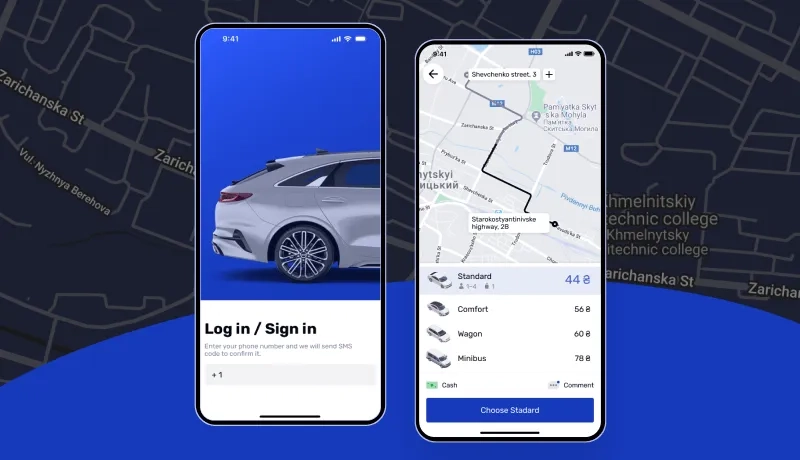
BBGO ran on TaxiAdmin, a SaaS platform for taxi services, until the rigid dispatch logic and rising hosting costs made it hard to work with, as there was no control over driver matching or a path to custom tracking features.
Together with Stfalcon, BBGO replaced it with custom logistics software: rider and driver apps feeding live vehicle positions through Google Maps and an XML live map layer, smart dispatch algorithms that auto-match riders to the nearest available driver, and a backend migrated from GCP to Hetzner Cloud with zero downtime to cut hosting costs.
 Read the full case study
BBGO now owns the tracking and dispatch stack entirely and handles 50,000+ orders a month at lower operational cost than the SaaS it replaced.
MeinFernBus
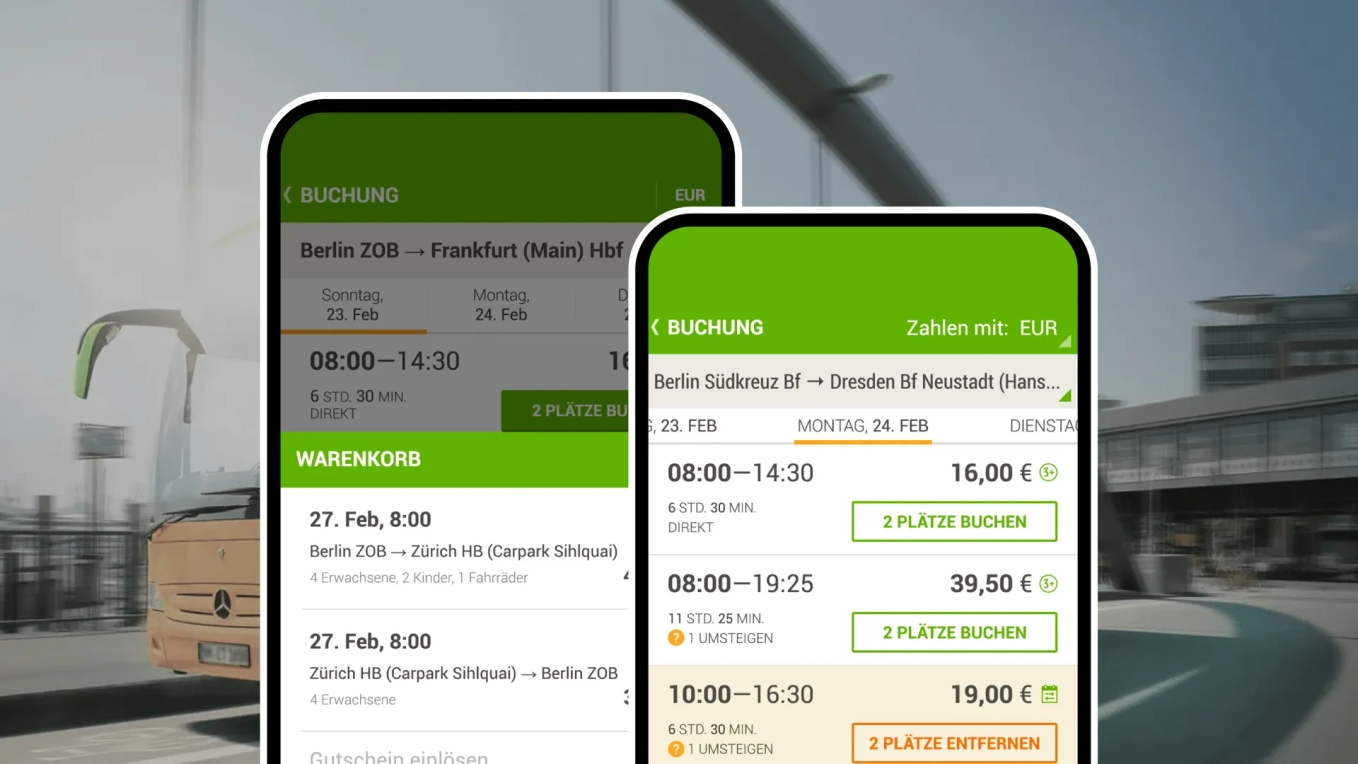
MeinFernbus needed a platform to handle live multi-region routing, real-time vehicle tracking, complex partner integrations, and massive holiday traffic spikes — all that before Germany's intercity bus market had even officially opened.
With Stfalcon, they built the core booking and routing backend from scratch, paired with dynamic route maps showing live bus positions for easy tracking and transfers, Android and iOS mobile apps surfacing real-time departure and arrival data, and a web interface that unified routes, prices, and schedules in one view.
 Read the full case study
The platform went from prototype to becoming the backbone of Germany's leading intercity bus operator, reaching 1,300+ routes across Europe, 8M+ passengers, 38.5% market share by route coverage by late 2014.
Nova Post
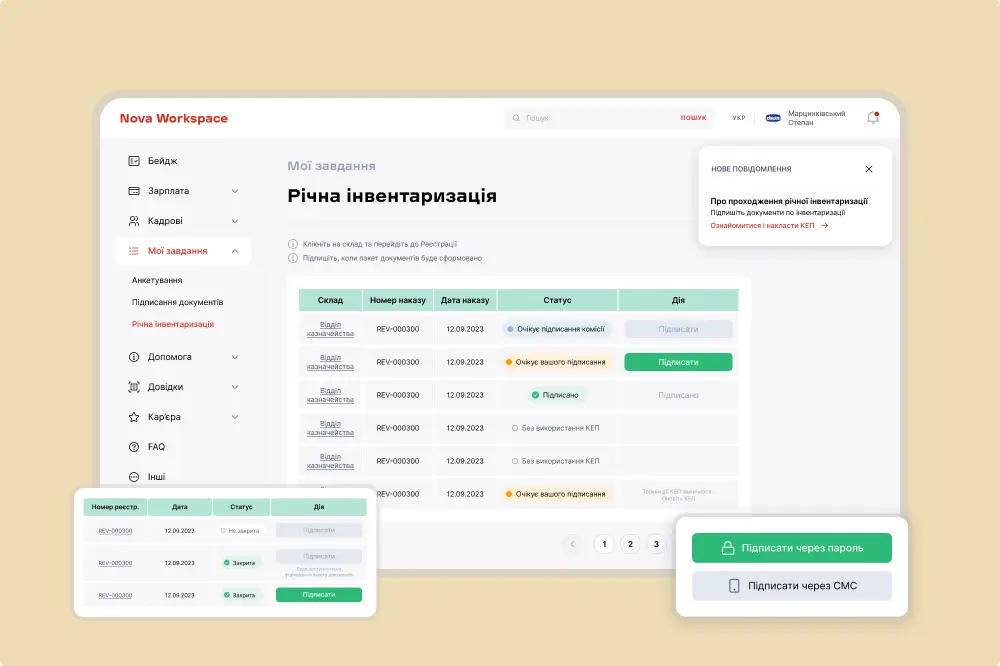
Nova Post operates Ukraine's largest logistics network, 1.5M parcels a day, 39,000+ service points, 38,000 employees. What Stfalcon built wasn't a GPS tracking system, but a custom workforce platform replacing manual scheduling and Excel-driven planning across 13,000+ locations.
 Read the full case study
But the economics translate directly: once the platform is owned, the recurring cost structure changes permanently. With that system in place, Nova Post saves $1.3M+ annually (Year 3 of the Build-to-Own model at enterprise scale).
None of these transitions were immediate. Each required upfront engineering capital, a full discovery and architecture phase, and 6–12 months before go-live. But in return, our clients got structural control over core features, predictable long-term costs, and a technology asset instead of a recurring expense.
Stop funding someone else’s roadmap
By now the math is on the page. The only question left is which side of the line your fleet sits on.
If you're in the second group, the next move isn't another renewal cycle. Our recommendation is to start scoping what a custom GPS tracking solution would actually cost against your fleet, dispatch logic, and integration stack. Feel free to tell us about your operation, and we'll come back with the build, the timeline, and the 3-year cost picture.
Want to build custom GPS tracking software?
Book a call to discuss your needs and how Stfalcon can help
Alina
Client Manager
FAQ
What is the average GPS tracking software price for a fleet of 100 vehicles?
On a standard enterprise platform like Samsara, a fleet of 100 vehicles operating at $33/vehicle/month runs exactly $39,600/year in base licensing. However, this is only the starting point. The final operational cost inevitably increases once your business accounts for essential add-ons like ELD compliance modules, advanced API access, and the unbilled labor your internal team spends managing data gaps and system integrations.
What hidden charges affect the total GPS tracking software cost?
The standard hidden expenses that bloat your total cost include integration engineering (building and maintaining custom middleware for your TMS or ERP), manual workarounds like exporting raw data to spreadsheets, scaling price penalties when crossing contract thresholds, operational stagnation while waiting on vendor roadmap updates, and steep hardware removal fees if you choose to switch platforms.
How much does GPS tracking software cost compared to building your own?
For a 150-vehicle fleet using a platform like Samsara, the 3-year cumulative GPS tracking software cost runs approximately $293,000. A custom-built platform for the exact same fleet runs approximately $163,900 over the same 3-year period. This creates a net savings of $135,040, while transforming an ongoing subscription liability into a proprietary, fully owned company asset by the end of Year 3.
What is the upfront GPS tracking software development cost for a custom platform?
An enterprise MVP tailored to a mid-sized fleet typically requires a fixed, upfront capital investment of $120,000 to $150,000, depending on your specific hardware requirements, dispatch logic, and integration complexity. Once the system is engineered, recurring subscription fees drop to zero, leaving only marginal cloud infrastructure hosting and scheduled maintenance updates (≈ $10,000 to $15,000/year).
