
Ready-made trucking dispatch software is often one of the first “serious” systems a logistics company buys. At first, almost any dispatching tool feels like a win because routes become visible and spreadsheets fade into the background.
But as shipment volume grows and gets complicated, teams discover their logistics dispatch software can’t keep up with how their business works.
We won't tell you to abandon generic solutions and rush into custom development. It’s not always the right move. But to see the full picture, you need a clear view of all your options. That's why we'll review the best trucking dispatch software available today. Without the intent to “crown the winner” though.
We’ll approach this topic as a transportation and logistics software development company that has been building custom dispatch solutions for over 16 years. We'll help you navigate the decision between off-the-shelf and custom, so you move towards what's right for your operation.
TL;DR
Off-the-shelf trucking dispatch software is a solid starting point for small and early-stage operations. Here are some of the strongest options, depending on how your company runs today:
- ProTransport: A reliable all-in-one system for companies with fairly standard processes.
- Onfleet: A good fit if your business revolves around high-volume, predictable last-mile deliveries.
- TruckingOffice: A practical choice for owner-operators and small fleets.
- Axon Trucking Software: An integrated system built for large, asset-heavy carriers that run on strict rules and structure.
- TruckLogics: A solid dispatch solution for small fleets and growing carriers.
| Top trucking dispatch software compared | |||
|---|---|---|---|
| Software | Best for | Key strengths | Main limitations |
| ProTransport | Small and mid-sized fleets or freight brokers with standardized operations | All-in-one dispatching, accounting, safety, maintenance, analytics, and third-party integrations | Restricted file uploads, no 24/7 support, and an older architecture that may feel limiting for large fleets or advanced needs |
| Onfleet | High-volume, predictable last-mile delivery operations | Routing, real-time tracking, proof of delivery, driver communication, and customer notifications | Limited customization and possible performance or scheduling issues during peak workloads |
| TruckingOffice | Owner-operators and small fleets with straightforward dispatch workflows | Dispatching, accounting, IFTA reporting, maintenance tracking, and expense management | Manual data entry, limited invoice customization, and cumbersome multi-stop or multi-authority workflows |
| Axon Trucking Software | Large, asset-heavy carriers with structured and centralized operations | Deeply integrated dispatching, routing, accounting, driver pay, fuel, maintenance, and compliance tools | Rigid predefined workflows, difficult third-party integrations, and a steep learning curve |
| TruckLogics | Small and mid-sized carriers that need an accessible all-in-one dispatch system | Dispatching, invoicing, IFTA reporting, expense tracking, LTL/FTL support, and driver visibility | Driver settlement gaps, mobile app reliability issues, and inconsistent customer support |
Each platform works well for dispatch operations. But when workflows get complex, pre-built tools become constraints. Custom dispatch software removes those limits: it follows your processes, integrates with your systems, and grows with your business.
Why the best truck dispatch software might not be the "best"
Most “best transportation dispatch software” articles focus on surface-level comparisons. They line up tools side by side and evaluate them based on visible features: routing, tracking, load assignment, and reporting. According to those comparisons, all dispatch solutions look interchangeable. And in early-stage operations, they often are.
But processes evolve. You manage cross-border shipments. You coordinate with third-party warehouses. You build direct integrations with major customers. Each change widens the gap between how the software expects dispatch to work and how your dispatch works.
That’s why even companies using top dispatching software solutions quietly fall back on old habits. A spreadsheet reappears “just for edge cases” and dispatchers keep notes outside the system because the software can’t reflect what’s happening on the ground. Teams adapt their processes to the tool, instead of the tool supporting how the business runs.
So, why not build a custom dispatch solution from the start then?
The answer we hear more often is obvious: cost. At glance, off-the-shelf trucking dispatch systems look cheaper than custom development. But let’s see if it really is.
Read more about Top Logistics Software Development Companies.
The price tag behind “affordable” ready-made dispatch software
Monthly subscriptions feel safer than a huge one-time investment. You pay as you go, avoid upfront risk, and vendors often promise that their dispatcher software is “highly customizable.” For a small transportation company, that sounds like a sensible choice.
Let’s say you run a growing transportation company with 25 vehicles and a few dispatchers. At this stage, you are past spreadsheets, but not yet enterprise-scale. You decide to turn to logistics dispatch software and pick Onfleet (the one from our further list), for instance.
Onfleet’s basic plan starts at $599 per month. That comes out to $7,188 per year. If your business stays exactly the same (no growth in fleet size, no increase in delivery volume), you’ll spend nearly $36,000 in five years just on the subscription.
But as soon as you expand, the basic plan won’t be enough, and you’ll have to move to a higher tier. Onfleet’s next plan is $1,299 per month, or $15,588 per year. Over five years, that adds up to $78,000+ in subscription fees.
Let’s imagine you choose another dispatching software, LoadOps. Its pricing model looks simple: $55 per driver per month. For a fleet of 25 vehicles, that comes out to $1,375 per month, or $16,500 per year. Over five years, you’ll pay $82,000+. And yet, even at that cost, there’s no guarantee the software will fully support how your dispatch operations work. One day, you may need additional integrations or custom reports that typically come with extra fees.
It doesn't mean the best dispatching software for trucking is bad or low quality. They solve real problems and are often the fastest way to bring structure into early operations. But as complexity grows, their pricing model and workflow constraints start working against the business. One of our clients felt this on their own skin. Let’s dive into the details.
Nova Poshta case study: Why the biggest logistics companies build custom
Nova Poshta is Ukraine’s biggest postal company. Over 20 years, it grew into a complex delivery network with thousands of shipments every day, different customer types, regional rules, and constantly changing processes. At that scale, no off-the-shelf system could handle the complexity of their operations.
But Nova Poshta didn’t change its processes to fit existing tools. They decided to build custom systems around its workflows. And turned to Stfalcon for help.
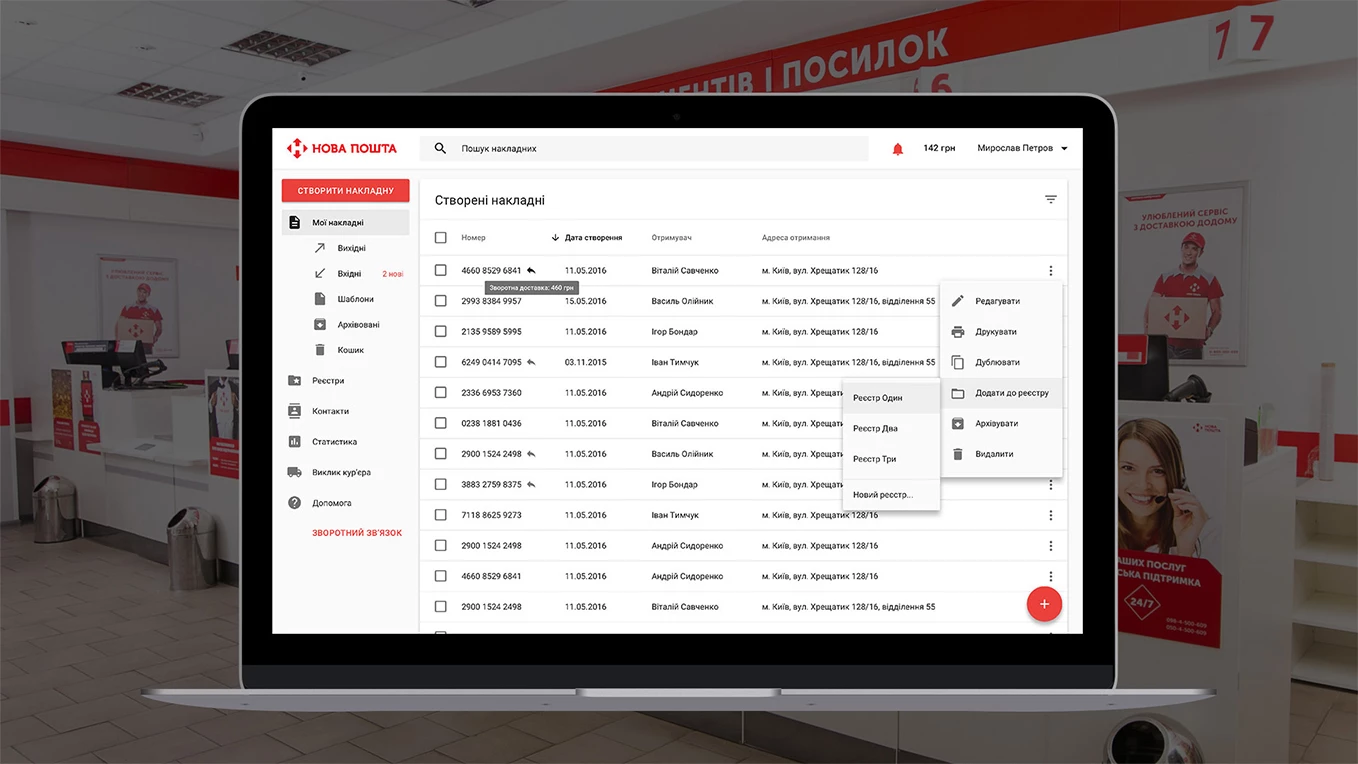
We’ve partnered on several projects, one of which is building a parcel dashboard UX that allows customers to create consignment notes independently without going to the postal office.
We redesigned their current personal dashboard and turned it into a scalable operational tool that enhanced customer experience and could evolve alongside Nova Poshta’s logistics processes. But not every company is Nova Poshta, so reviewing the best trucking dispatch systems still makes sense.
 Read the full case study
Because for many logistics businesses, these systems are a necessary step, just not the final one.
5 best truck dispatching software solutions and how we'll review them and how we’ll review them
In our review, we're interested in how well each system supports real operational workflows. That’s why, for each tool from our list of the best dispatching software solutions, we’ll cover:
- what it does well
- what processes it supports
- what it cannot support well
- where companies typically outgrow it
Of course, we’ll also mention pricing because it plays an important role in the decision.
ProTransport: All-in-one dispatch and back-office system for standardized trucking operations
What it does well
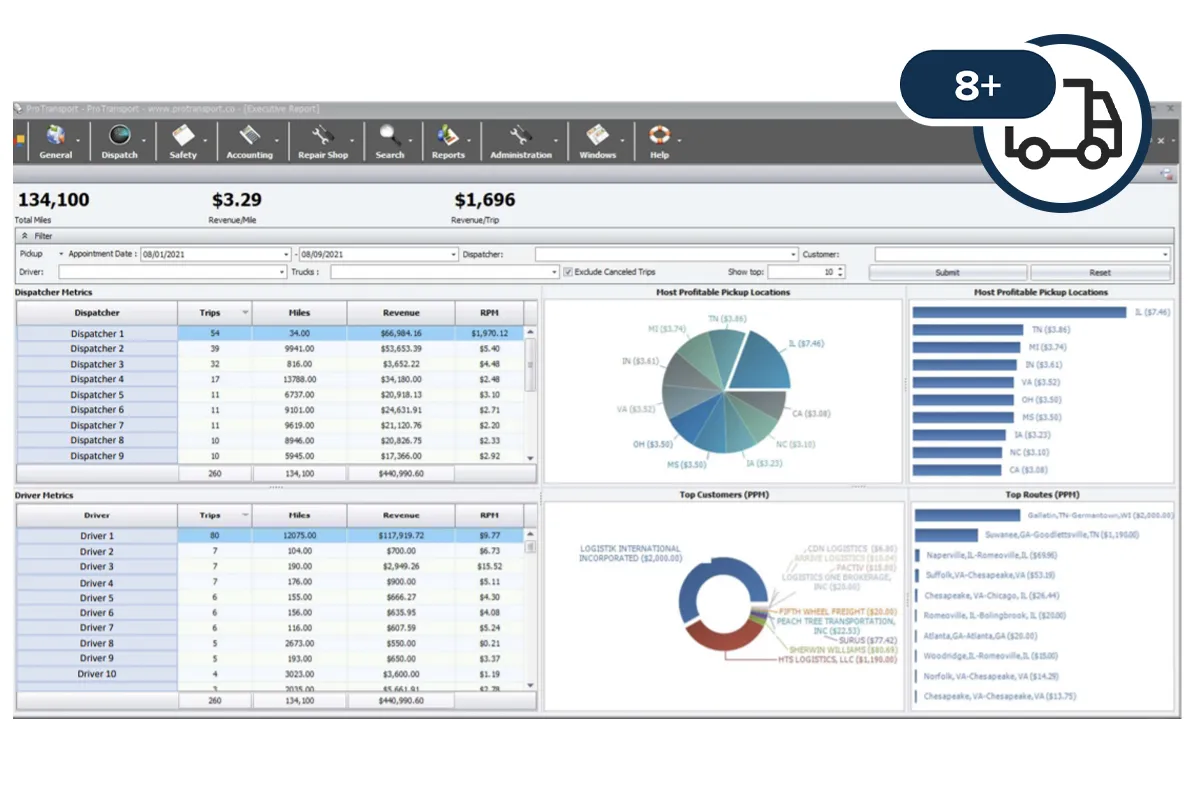
ProTransport positions itself as an all-in-one system for trucking companies of all sizes. It combines dispatching, accounting, safety, analytics, and maintenance in a single platform. With more than 20 years in the market and a broad feature set, ProTransport is a stable option for companies that want to consolidate multiple operational functions under one tool.
ProTransport offers three pricing tiers: a Basic plan available as a free trial, a Premium plan priced at $125 per month, and an Enterprise plan with custom pricing.
What processes it supports
ProTransport works best for small to mid-sized fleets or freight brokers with relatively standardized operations. It supports core dispatch workflows, basic performance tracking, accounting processes, and compliance-related tasks. The software integrates with various programs and tools, including GPS, QuickBooks, fuel card providers, IFTA, and more. So, it’s a suitable option for companies that rely on established third-party systems.
What it struggles to support
Here, we lean on user feedback. People who worked with this transportation dispatching software are the best to point out limitations. While reviews are mostly positive, users mention restricted uploading capabilities, such as the inability to attach photos to maintenance entries or upload bank statements and credit card records for financial tracking. Some users also note the absence of 24/7 customer support, which can be a challenge for operations that run outside standard business hours.
Where companies typically outgrow it
According to user reviews, ProTransport shows its limits when companies operate large fleets or require a wide range of advanced features. At that stage, the platform’s older architecture and feature set can feel restrictive compared to newer or custom-built solutions.
Onfleet: Last-mile delivery platform built for customer-facing operations
What it does well
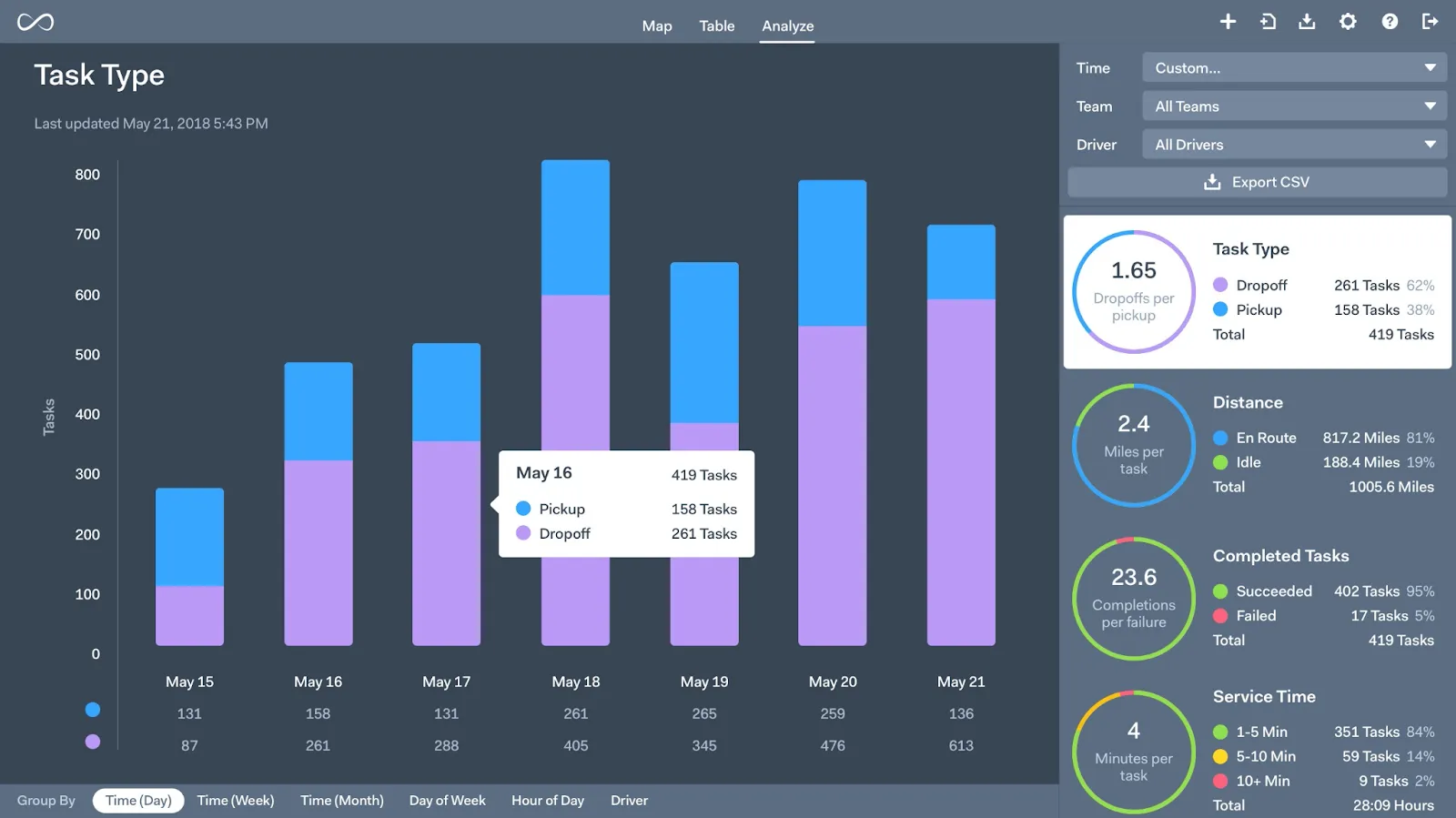
Onfleet is a strong last-mile delivery platform with excellent routing, real-time tracking, driver communication, and customer notifications. It’s widely used by on-demand delivery companies, retailers, and courier services operating across multiple countries.
What processes it supports
The platform is well-suited for standardized last-mile delivery operations with high volume and predictable flows. Features like proof of delivery, SMS notifications, chat, and delivery analytics work well for customer-facing delivery models. They also have a driver app and client portal to streamline order management and delivery tracking.
What it struggles to support
Users mention performance and flexibility issues in day-to-day use. Some report slowdowns when applying multiple filters or during peak hours. Others describe a lag that caused deliveries not to appear as scheduled. Another common frustration is limited customization, namely the lack of tailor-made fields that could simplify delivery workflows. Auto-fill features can also overwrite data in complex, repeat-customer scenarios.
Where companies typically outgrow it
Your company might reach the limits of Onfleet as delivery operations expand beyond last-mile scenarios. Besides, teams might feel the limits even when delivery volume spikes. Users report slowdowns when too many tasks come in at once, and scheduling logic that breaks under pressure, assigning only pickup and leaving drop-offs unassigned.
TruckingOffice: Dispatch and accounting software for owner-operators and small fleets
What it does well
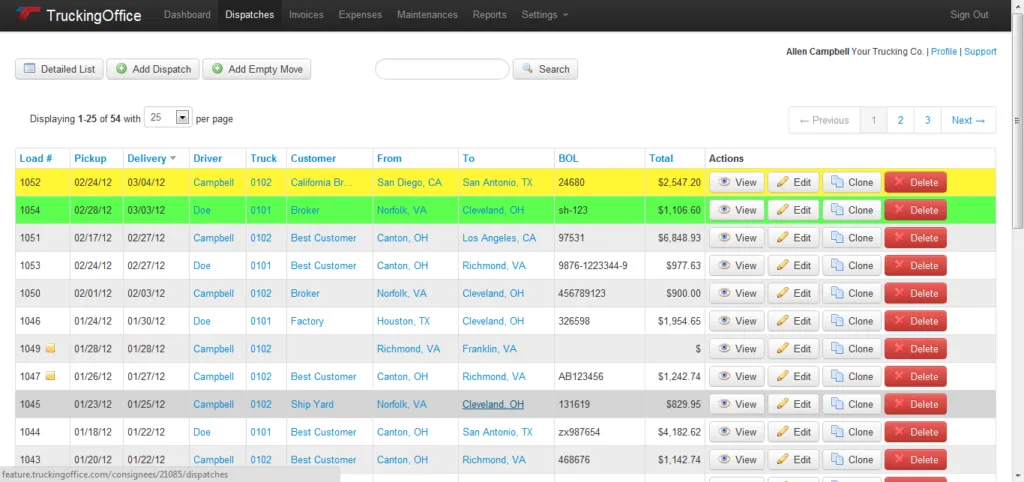
TruckingOffice was built by a fleet owner for fleet owners, with a strong focus on practicality. It combines dispatching, accounting, IFTA reporting, maintenance tracking, and expense management in a single tool designed primarily for small trucking companies.
The pricing is split into two plans, Basic and Pro, with costs that scale based on fleet size. The lowest tier comes in at 1–2 trucks, and pricing increases as more vehicles are added. As a reference point, the Basic plan starts at $20 per month, while the Pro plan begins at $30 per month at the entry level. However, it’s best to check their website for exact numbers.
What processes it supports
TruckingOffice freight dispatching software fits owner-operators and small fleets that need basic dispatch organization, invoicing, and regulatory reporting without heavy customization. It helps keep operational and financial data in one place and reduces reliance on spreadsheets.
What it struggles to support
TruckingOffice might not fit complex dispatch scenarios, multi-region operations, or companies with highly customized workflows. Users often mention heavy manual data entry and limited expense reconciliation, which can lead to double entries.
Invoice customization is also limited, with little space for instructions or loaded-mile details. More complex routes with multiple pickups and drop-offs can feel cumbersome to manage and adjust.
Where companies typically outgrow it
TruckingOffice works well when you’re running solo or under a single authority. But once you operate under dual authority or manage multiple business units, it might feel limiting. Some users also mention that the system looks dated and lacks features they need as their operation becomes more complex.
Axon Trucking Software: Deeply integrated system for asset-heavy carriers with structured workflows
What it does well
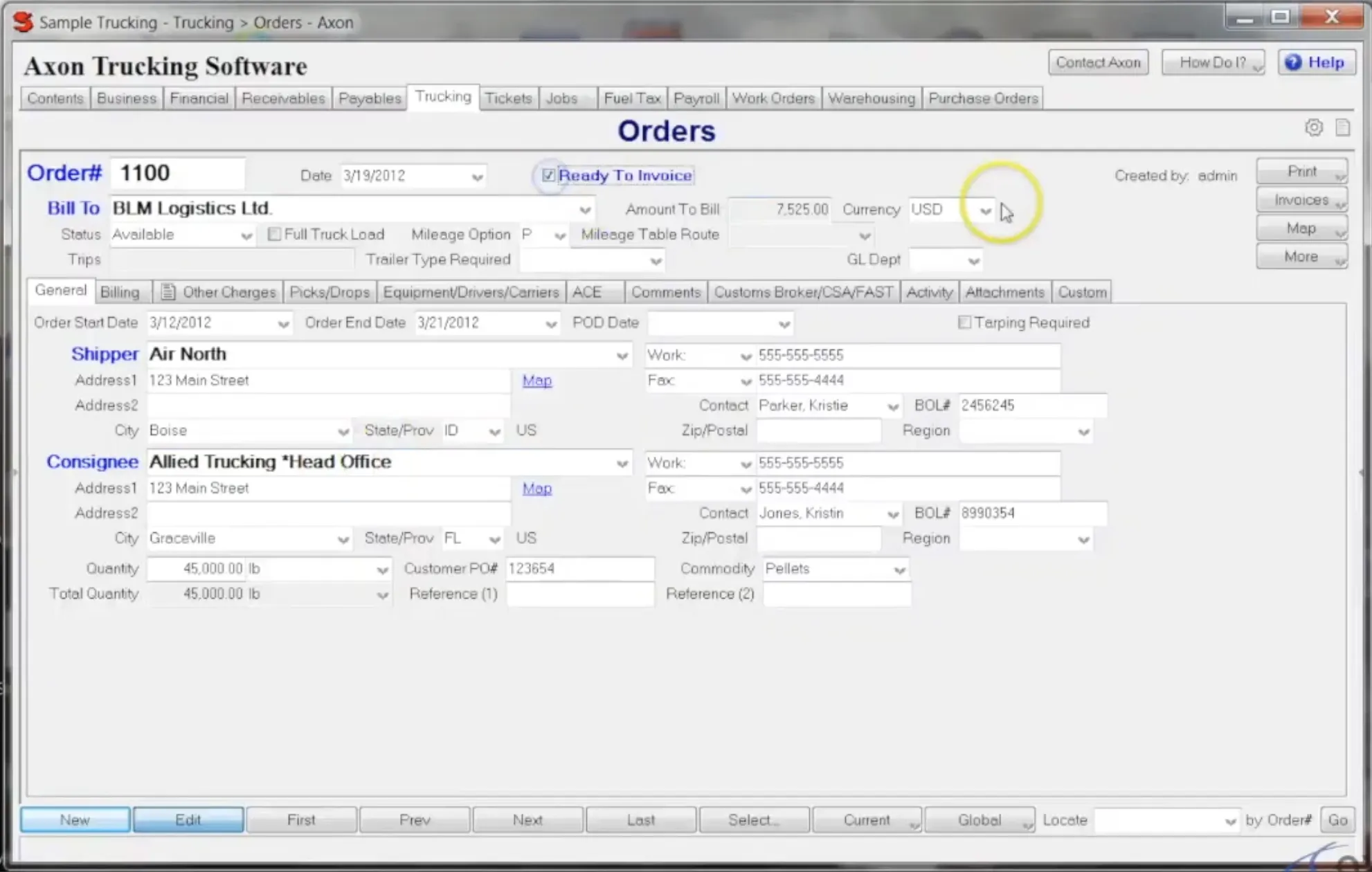
Axon is a long-established trucking system with deep functionality for carriers handling truckload, LTL, oilfield, livestock, and heavy-load shipments. It offers dispatching, routing, fuel management, maintenance tracking, and reporting, supported by mobile access.
Axon does not list fixed plans publicly. Pricing is quote-based and depends on fleet size, number of users, and required modules. Some users claim Axon dispatch management software is more expensive than other options on the market.
What processes it supports
Axon supports end-to-end trucking operations built around structured workflows, such as order setup, trip execution, driver pay, billing, accounting, IFTA reporting, and fleet maintenance. Its visual dispatch, real-time asset tracking, and integrated financial and compliance tools work best in operations that rely on centralized, tightly connected systems.
What it struggles to support
Despite its breadth, Axon is based on predefined workflows. Adapting the system to customer-specific logic or rapidly changing processes can be challenging and often requires compromises. On top of that, the development team is often hard to reach.
Users also say Axon doesn’t work well with other tools, so data ends up stuck in silos. Taxes and reports might take extra effort as exporting to Excel isn’t smooth.
Where companies typically outgrow it
At some point, teams might want the system to bend a little. With Axon transportation dispatching software, that’s difficult to do. There’s a steep learning curve, and the platform expects everyone to work in a very specific way. As needs around integrations, reporting, and custom workflows grow, that rigidity becomes more noticeable.
TruckLogics: A dispatch solution for small fleets and growing carriers
What it does well
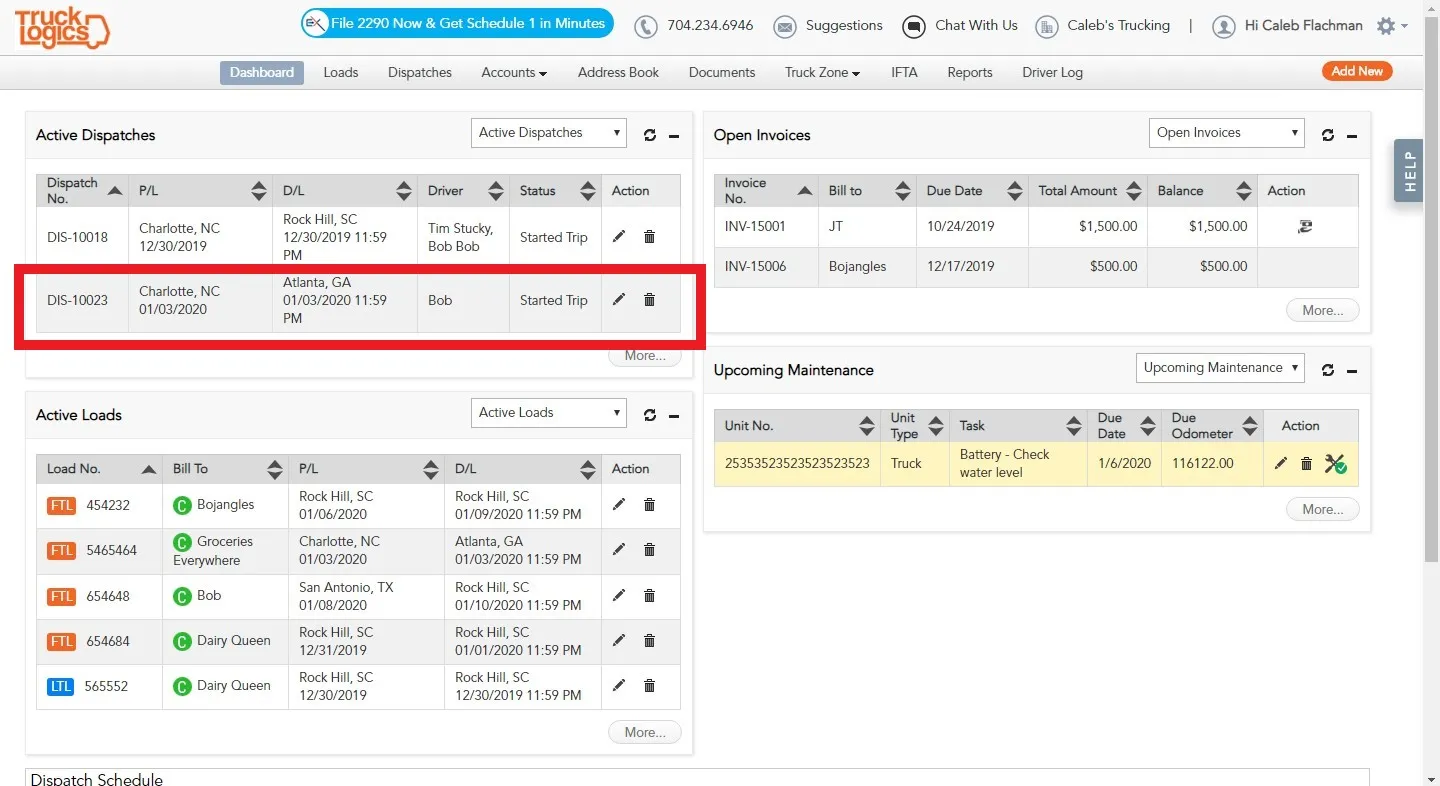
TruckLogics is a solid starting point for trucking companies that want to establish order in daily operations. It brings dispatching, invoicing, IFTA reporting, expense tracking, account and driver management, as well as LTL and FTL dispatch, into one system.
TruckLogics uses tiered pricing based on fleet size. Pricing is detailed and starts at $35.96 per month when billed annually. There are also separate pricing options for leased operators, brokers, and quarterly IFTA reporting. For the full breakdown, it’s best to check their pricing page directly.
What processes it supports
TruckLogics handles the core dispatch loop for small to mid-sized carriers. As one user noted, it "covers everything you need when you operate a trucking company, from load information to tracking, to drivers' app, to mileage, to expenses."
It makes day-to-day dispatch easier and keeps drivers in the loop. Through the driver app and portal, they can check load details, rates, and upcoming settlements independently. This transparency reduces payroll confusion and cuts down on repetitive calls to dispatch.
It also works well when brokers, carriers, and owner-operators need visibility in one system. Each party can access what they require without dispatchers playing middleman.
What it struggles to support
Following the reviews, TruckLogics shows weaknesses around driver settlements and mobile reliability. Users mention gaps in settlement tracking, like missing YTD gross figures and unclear profit‑sharing calculations. The driver app is also a frequent pain point with crashes, missing active loads, and invoices not showing on the dashboard.
Where companies typically outgrow it
Friction usually builds if teams depend heavily on the mobile app and responsive support. Drivers lose trust when the app is unreliable, and unresolved settlement issues compound over time. Many users also report slow or ineffective support, making it hard to fix ongoing problems. At that stage, the system starts to feel risky for growing, driver-centric operations.
All the trucking dispatch software solutions we’ve covered bring real value. So yes, they deserve to be on this list. But a good product doesn’t automatically mean it’s right for your operations. The best dispatch software for trucking companies is the one that works the way you already do.
Read more about logistics API integration: moving beyond standard SaaS limitations.
Why custom dispatch software fits your business (not the other way around)
Custom dispatch software development gives you the freedom to build (and pay for) only what your operation needs. Here’s why custom dispatch software development services solves the limitations that hinder generic dispatch platforms.
It fits your workflows
A custom system is built around how dispatch works in your company, including exceptions, regional rules, and customer-specific logic.
It removes operational blockers
There are no locked fields, artificial limits, or “this isn’t supported” moments. If your operation needs a specific rule, data field, or approval step, it’s built into the system.
It scales with your growth
As you add new regions, services, fleet types, or business models, the system evolves with you. You don’t need to upgrade plans or renegotiate contracts. New requirements are handled through development, on your timeline and according to your priorities.
It integrates with your existing stack
Custom dispatch solutions connect with the systems you rely on, like ERP, WMS, CRM, billing, analytics, telematics, and more. Data flows automatically between systems, eliminating manual exports and duplicate entries.
It solves your exact problems
Do you manage both refrigerated and dry freight? Work with customers who have strict delivery windows? With custom dispatch software development, you pick what challenges your system should target.
These benefits didn’t come from a whiteboard. They came from years of building custom logistics software solution for our clients.
Our experience in custom dispatch software development
Stfalcon has built taxi platforms, bus ticketing solutions, TMS, delivery apps, and other complex logistics systems. Here are a few examples of what that looks like in practice.
NP Shopping: Redesigning a delivery app for Ukraine’s leading postal company
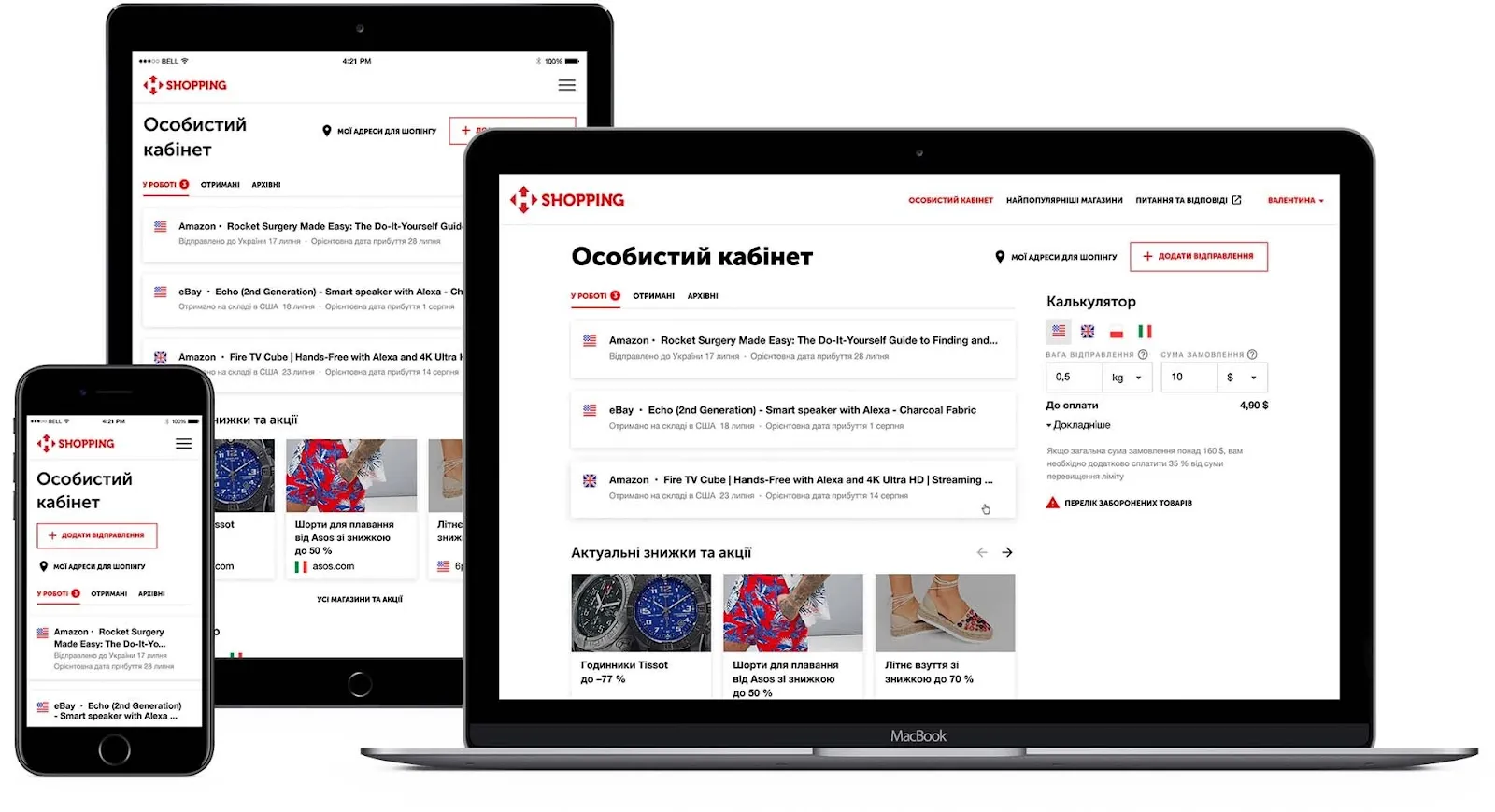
Nova Poshta Shopping (NP Shopping) is a service by Ukrainian logistics leader Nova Poshta that helps people buy goods from international online stores. Over time, the service became harder to use, which increased the load on customer support. That’s why Nova Poshta decided to improve the app and turned to Stfalcon for help.
We started with deep user and product research. Our dedicated logistics software development team went through the full customer journey, conducted in-depth user interviews, analyzed analytics, support requests, and social feedback, and mapped everything into a CJM. This research guided all design decisions.
 Read the full case study
Then, we built a low-fidelity prototype and conducted user testing to validate solutions quickly. Based on the results, we redesigned key areas of the product, including the homepage, personal dashboard, package pages, and email notifications. We also introduced a full Q&A section using Zendesk and integrated real-time user feedback tools.

Building a bus ticket platform for Germany’s first low-cost intercity bus operator
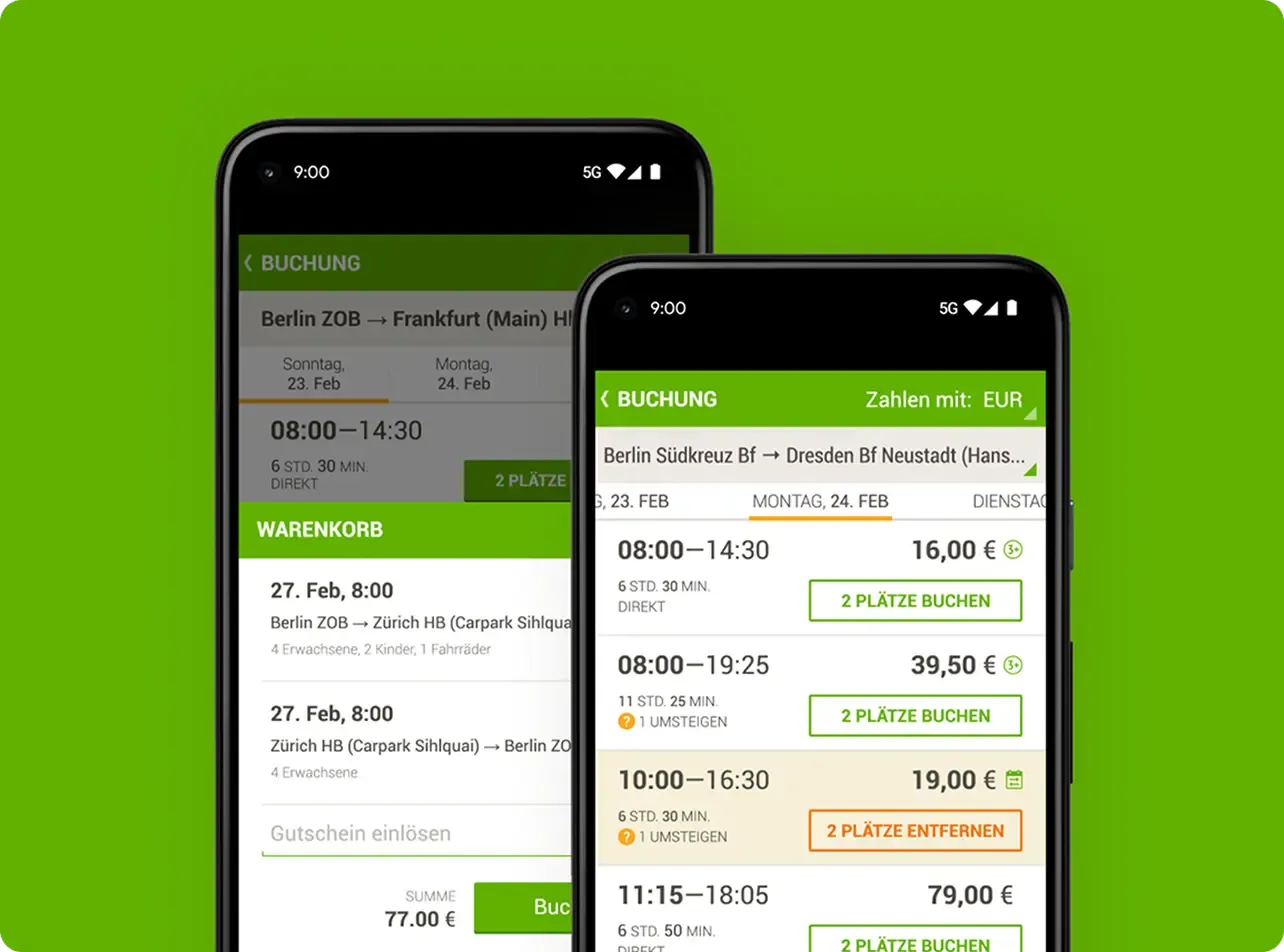
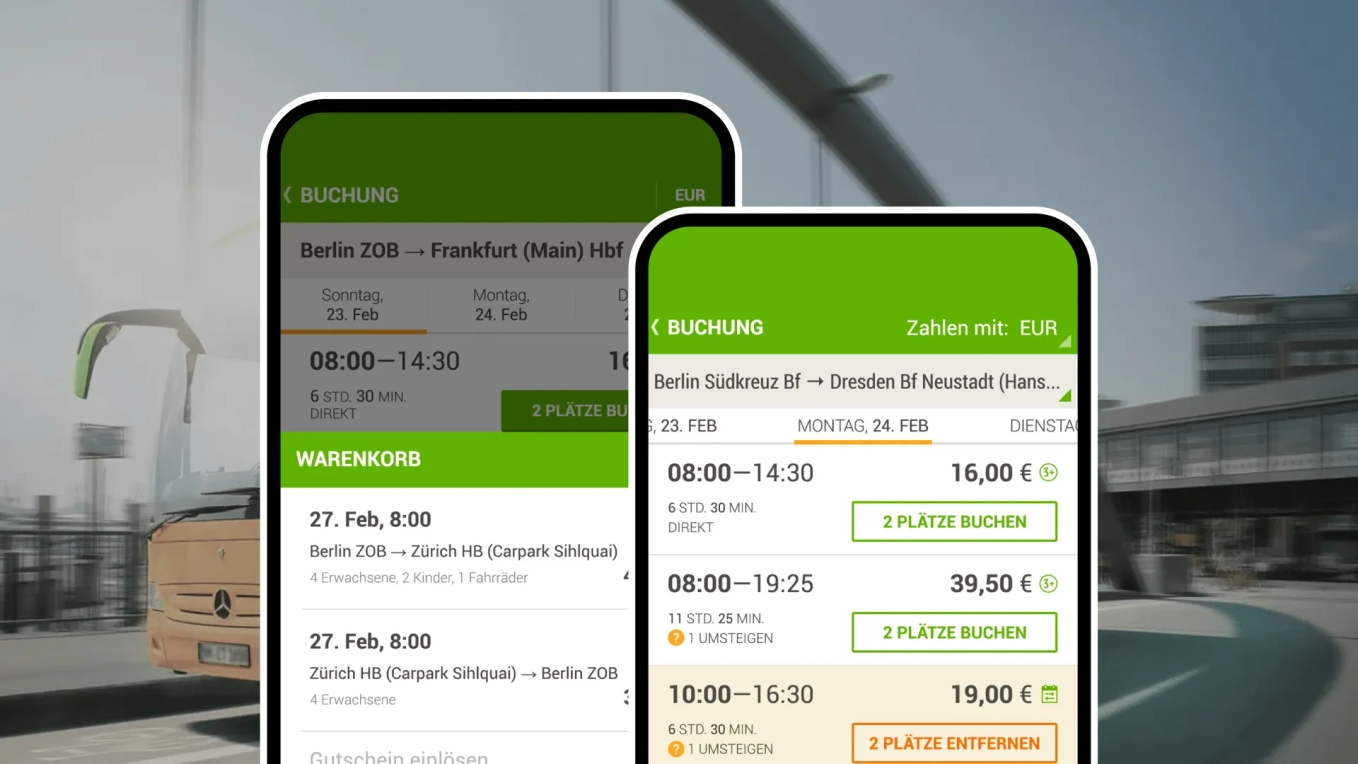
When a Berlin-based startup entered the German long-distance bus market, the industry was just opening up to competition. The company had to build a reliable booking platform with route planning, seat availability, ticket sales, and real-time updates before larger players moved in.
 Read the full case study
We partnered with the client at an early stage to build a custom ticket booking platform for web and mobile. Working closely with their internal team, we designed the core booking logic, routing flows, and a scalable backend capable of handling rapid growth.
As new routes were added, we continuously extended the platform, improved performance, and supported traffic spikes during promotions and peak travel periods.
The platform we’ve built helped our client win over 40% of the bus market share, the largest share among operators at the time.

There’s nothing accidental about these results. The most successful transportation and logistics companies don’t rely on ready-made tools. They invest in custom systems that give them control over their operations and a real competitive edge.
The bottom line
Off-the-shelf dispatch software is always an option. There are dozens of tools on the market, and many of them work well. But every ready-made platform has a ceiling. You'll hit it when you need a workflow the system wasn't designed to support.
When that moment comes, you have two options: work around the limitation (while paying a monthly fee) or build a system that fits.
Our advice? Don't wait for that moment. Invest in custom dispatch software development from the start. Yes, the upfront cost is higher. But you build an operational infrastructure that compounds in value as your business grows.
We at Stfalcon help logistics companies design and develop dispatch software that scales with demand, adapts to new workflows, and integrates with the tools you already use.
Build custom dispatch software that works your way
Let’s design a dispatch system around your workflows
Alina
Client Manager

FAQs about the best dispatch software for trucking companies
How can dispatch software help streamline operations for logistics companies?
At a basic level, trucking company dispatch software replaces manual coordination, like spreadsheets, phone calls, and ad-hoc notes, with a single system for assigning loads, planning routes, and tracking execution in real time. Dispatchers see where vehicles and drivers are, what’s delayed, and what needs attention, without jumping between tools.
More importantly, good dispatch software reduces friction across teams. Drivers receive clear, up-to-date instructions, customers get accurate status updates, and back-office teams work with the same data for billing, settlements, and reporting. That cuts down errors, rework, and constant back-and-forth.
What are the benefits of using cloud-based trucking dispatch software solutions?
Cloud-based truck dispatch software helps logistics companies run faster, leaner, and with more visibility. Key benefits include:
- Remote accessibility: dispatchers, drivers, and managers can access the system from any location, making it easier to manage operations across terminals, regions, or remote teams.
- Real-time visibility: live updates on routes, vehicle locations, and delivery status help teams respond quickly to delays, exceptions, and changing conditions.
- Lower upfront costs: cloud solutions usually avoid large infrastructure investments and are faster to deploy compared to on-premise systems.
- Easier updates and maintenance: software updates, security patches, and new features are handled automatically, reducing IT overhead.
- Faster scalability: adding users, vehicles, or regions is usually straightforward, without installing new hardware.
How does the best freight brokerage dispatch software integrate with other systems like accounting, ELD, and GPS tracking?
As a rule, top fleet dispatch software solutions have seamless integrations with leading ELDs, accounting systems, fuel cards, and GPS tracking. It enables dispatchers to manage the whole business on a single screen. For companies investing in custom trucking dispatch system development, integrations are typically planned from the start. Existing systems can be connected first, with the option to add more integrations as needs evolve.
What type of customer support is offered for the dispatch software?
Customer support for truck dispatch software is usually a set of tools that are utilized to gather, manage, respond to, and report on customer support requests. It may be in the form of a help desk with tickets, an FAQs section, and also multi-channel support for smooth communication with customers. These channels usually include live chat, messaging, email, and integrations with social media.
How does the best trucking company dispatch software assist with load planning and route optimization?
Dispatch software for trucking companies often uses advanced algorithms that optimize routes for efficient deliveries. Such a solution analyzes the sequence of stops a driver follows. It then creates more efficient routes to improve driver or even fleet efficiency to enhance customer service. The software takes into account various criteria, like truck capacity, warehouses, locations, distance, delivery time windows, traffic conditions, and even business goals and constraints.