A founder (we’ll call him Mark) had two proposals on his desk. Same scope, same timeline, one is $40,000 cheaper. He went through both, looking for the catch. By the end of it, he still couldn’t explain the gap.
The difference became visible three months into development, when the dispatch system couldn’t handle 40 simultaneous orders without queuing failures, and the courier app dropped GPS position whenever a driver went underground.
Neither of those problems is unique, and teams that have dealt with food delivery app development before expect them. Teams that haven’t discovered them on your budget.
With 16 years of providing on-demand delivery app development services, so we won’t learn on your cost. We know what the cheaper quote usually doesn't include, and we will cover it in this food delivery app development guide.
TL;DR
- Cheaper quotes for food delivery apps usually miss the infrastructure that breaks first: smart dispatch assignment, offline courier flows, ETA logic, and integrations.
- A feature list can look identical across vendors. The difference shows up when real orders, couriers, and restaurants start moving through the system.
- Dispatch needs a scoring engine, because at volume, “first available courier” logic fails.
- Dead zones are part of daily delivery work, so courier apps require offline mode from the start.
- ETA has to update from real signals, like restaurant status, courier wait time, and route conditions.
- White-label SaaS looks cheaper early, but per-order fees and vendor limits compound as volume grows.
- Ask vendors specific questions about dispatch load, offline mode, discovery outputs, and cost-saving architecture decisions before you sign.
What makes food delivery apps hard to build
The online food delivery market is heading toward $1.51 trillion, so it’s no surprise many teams offer food delivery mobile app development. But a few have truly built them before to know where complexity lives.
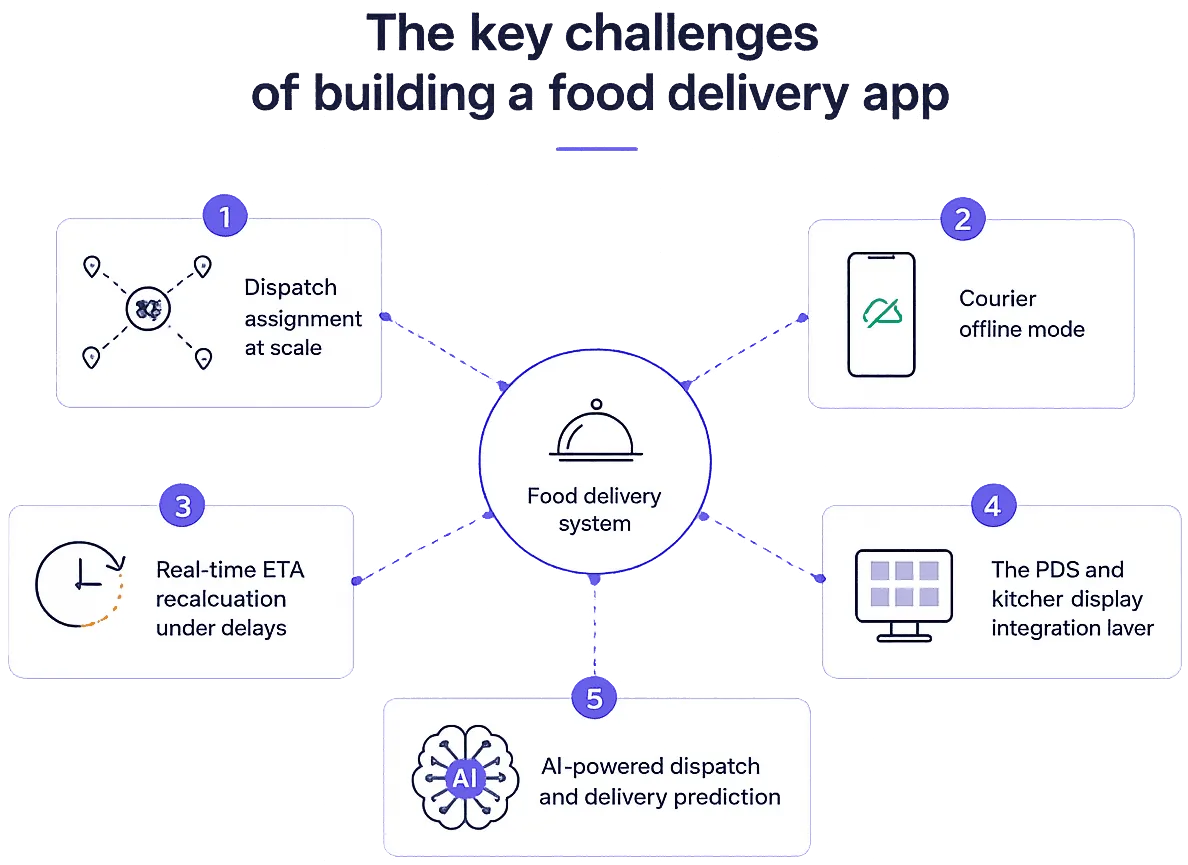
Dispatch assignment at volume
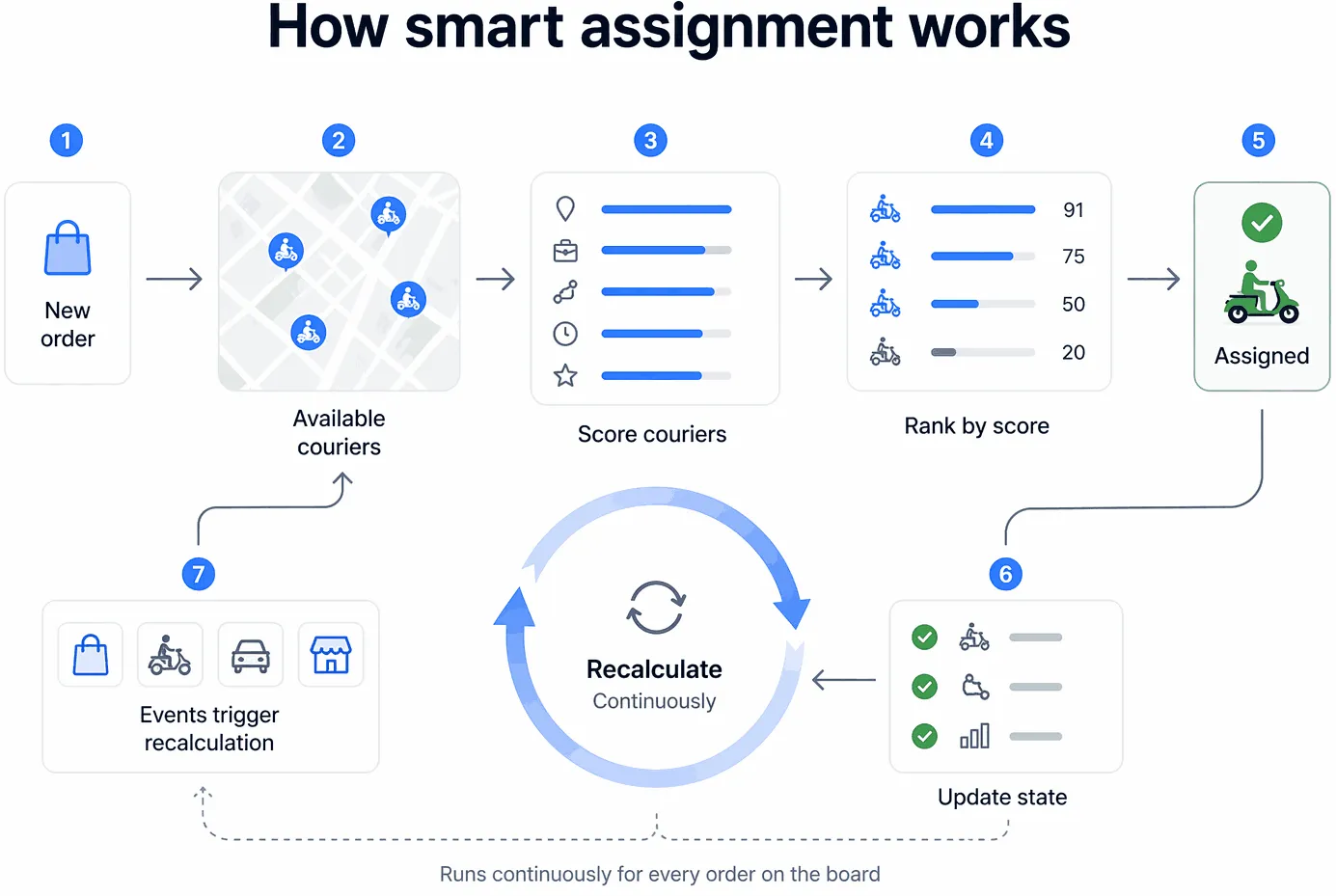
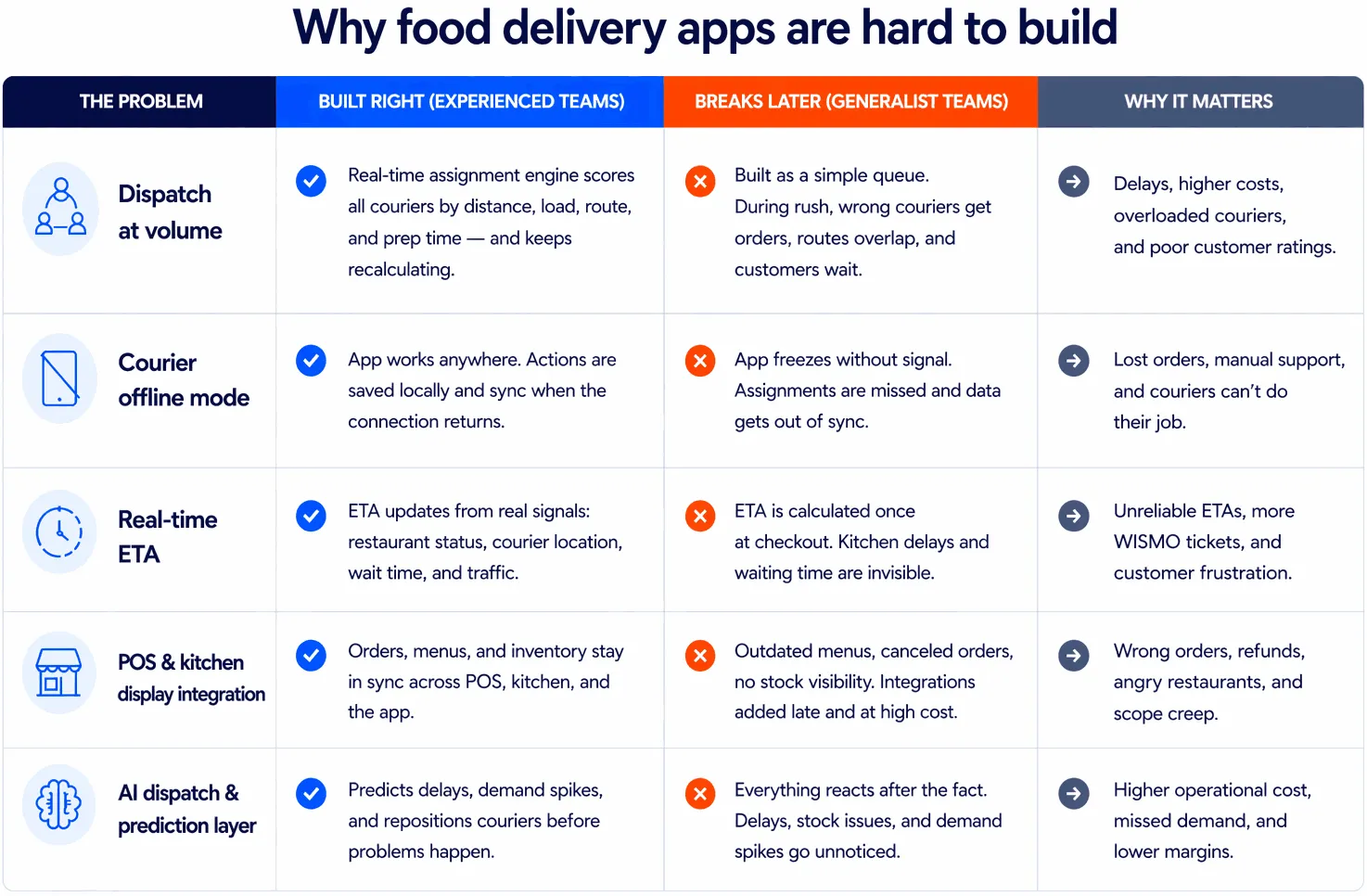
When 40 orders come in during a 20-minute dinner rush, the dispatch engine has to assign each one to a courier. It also has to account for proximity, current load, route overlap, and restaurant prep times. All in near real-time. A team that's never worked with dispatch logic before will wire this as a simple queue: first courier available gets the next order. That works at 5 orders per hour. At 50, it fails.
To build it right, our logistics software development company needs an assignment engine that scores every available courier based on how close they are, how many active orders they're carrying, how far the pickup is from their current route, and so on. And hands the job to whoever scores highest.
Courier app offline mode
Imagine this. A courier walks into a building lobby and signal drops → the app freezes mid-assignment → the customer's screen still says "arriving soon". It will for the next 20 minutes, because the courier and the server have lost each other.
Dead zones like parking garages and elevator shafts are part of everyday routes, and an app that depends on a live connection will fail there.
To prevent this, the app needs a local state layer. The courier can accept orders, update statuses, and keep moving, even offline. Those actions are stored on the device, then synced once the connection comes back. If something changed on the server in the meantime, the app needs rules to resolve it without losing data or duplicating work.
Real-time ETA recalculation under delays
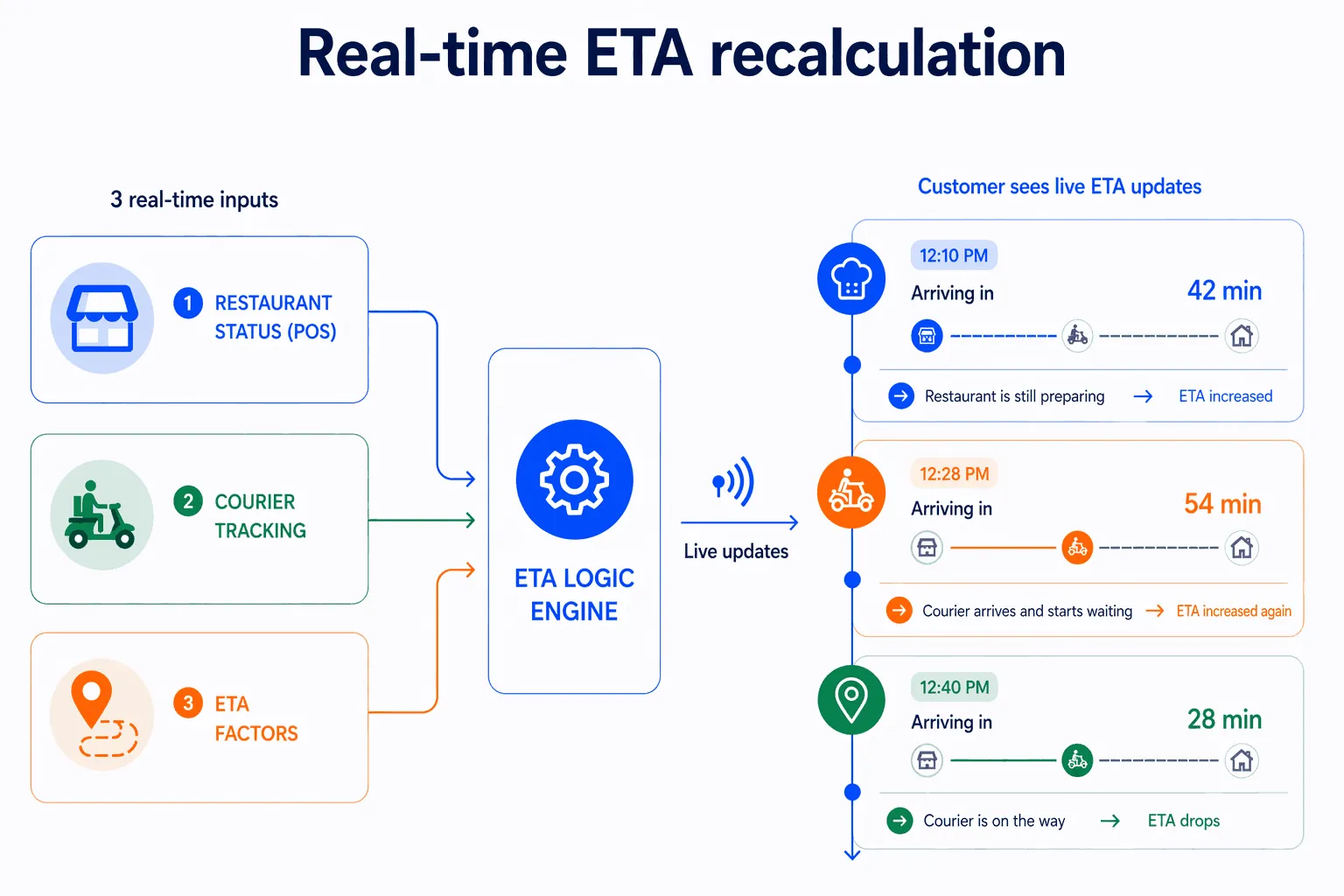
A customer sees a 30-minute ETA. The restaurant takes 22 minutes to prepare instead of 10. The courier waits. The ETA shown to the customer is now wrong by 12 minutes, but the app doesn't know it yet because the ETA logic was built against estimated prep time, not actual.
Instead, the app needs to update the delivery time based on real signals. If the restaurant is still preparing, the ETA shifts. If the courier is waiting, that time is added. Once the courier starts moving, the ETA switches to route-based timing.
To make this work, the system connects three inputs: restaurant status, courier tracking, and ETA logic. The backend recalculates delivery time whenever one of these changes occurs, so the customer sees what’s happening.
The POS and kitchen display integration layer
A food delivery app that doesn’t connect to the restaurant’s existing systems creates manual work. Staff copy order details from the delivery platform into the POS by hand, while kitchen displays don't show delivery orders.
Each POS system has its own API format, authentication method, and data refresh logic. Some restaurants don't run modern POS systems at all. You can't scope these integrations properly until you know which systems your app needs to connect to. And that conversation should happen during discovery. Teams with industry experience know this.
AI-powered dispatch and delivery prediction
As we’ve mentioned earlier, rule-based dispatch doesn’t work in 2026. The platforms that set the current standard replaced that logic years ago. For example, DoorDash. It’s a technology company that connects customers with restaurants, convenience stores, and retailers for on-demand delivery. They built DeepRed, an ML-powered dispatch engine that matches each order with the most suitable Dasher (DoorDash’s term for independent delivery drivers) based on real-time conditions.
It works like this: first, it constructs potential offer candidates by scanning nearby available Dashers and existing orders. Then an ML layer predicts order ready times, travel times, and the likelihood a Dasher will accept the offer. Finally, an optimization model scores and ranks all candidates, makes batching decisions, and determines whether to dispatch immediately or wait for a better Dasher.
It doesn’t stop at dispatch. AI systems now flag likely kitchen delays before a courier starts waiting, reposition couriers ahead of demand spikes, and pull menu items automatically when inventory signals they're about to run out.
For a new platform, this doesn't need to be built on day one. But the data architecture that makes it possible has to be designed with it in mind from the start.
With the right partner, you avoid the tricky parts and don’t pay to learn them the hard way. Let’s see where those tricky parts might pop up.
Features required for an on-demand food delivery platform in 2026 and why they matter
When the team is dealing with an on-demand food delivery app development project, they are building three apps working together: the customer app for placing orders, the restaurant app for managing the kitchen, and the courier app for completing deliveries. Each one can fail in a different way if it’s built without delivery experience.
Customer app
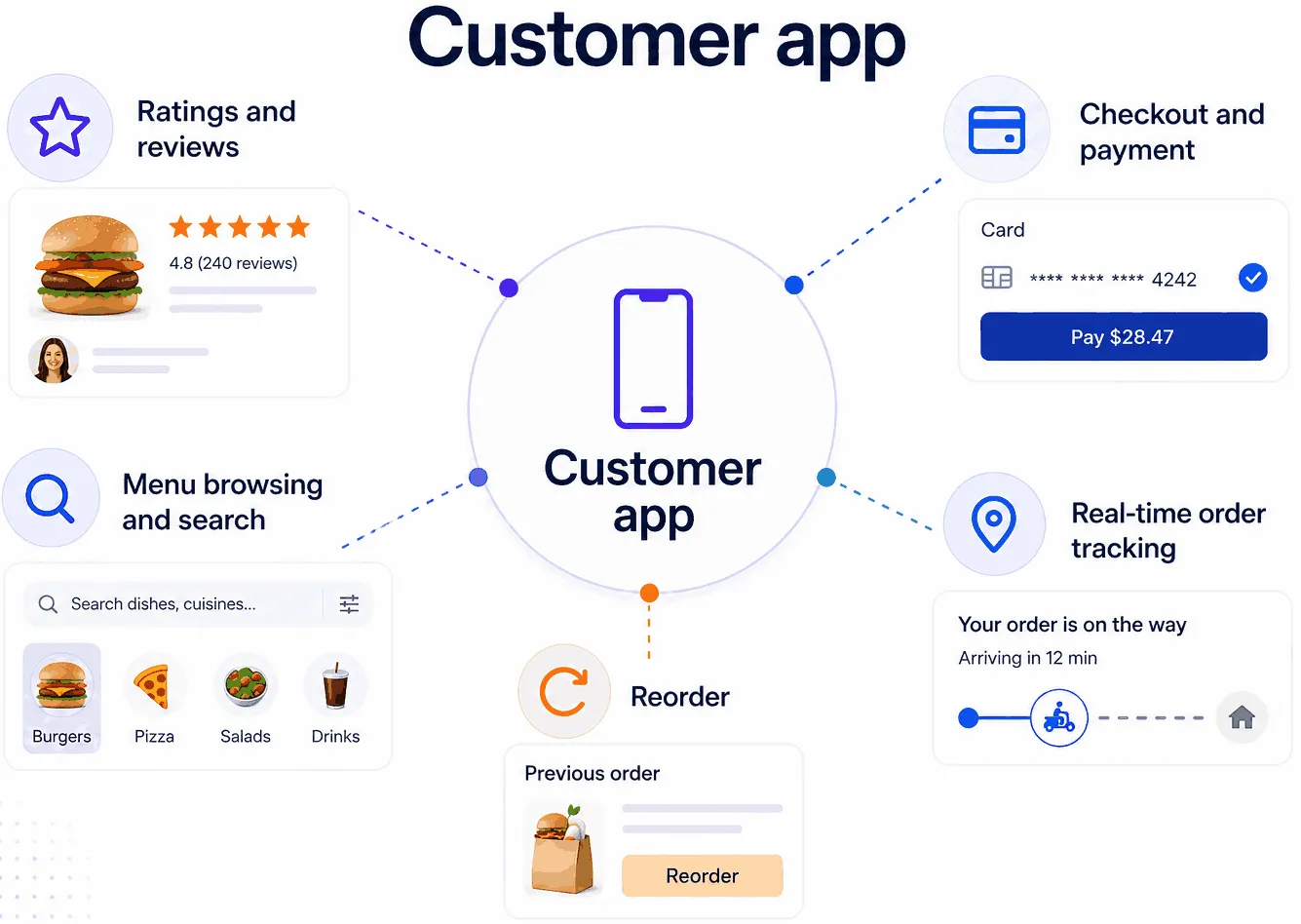
Customer app, the part we all know and love. You browse the menu, pick what you want, pay, and then track your order every 30 seconds until it arrives. That’s the core flow. Sounds simple, right? But each step comes with its own set of surprises.
Menu browsing and search
Customers browse restaurants by cuisine, rating, or delivery time, then filter by dietary requirements, price range, or promotional offers.
When the menu doesn't run on real-time data, customers see items that are sold out. The order goes through, then gets cancelled, and most customers don't try again.
Checkout and payment
At checkout, you pick your address, choose how to pay, maybe add a tip or promo code, and confirm the order. It needs to support multiple payment methods, like card, wallet, cash on delivery, and handle failed transactions without losing the cart.
If the payment isn’t synced with order creation, the system can charge the user, but fail to create the order or create it without confirming payment.
Real-time order tracking
After placing an order, the customer sees a live map with the courier's position and a continuously updated ETA. It reflects prep time, courier wait, and current route conditions.
Without proper tracking integration, real-time updates break, and customers have no way to tell if anything is wrong.
Reorder
Reorder should be one tap. The customer doesn't have to rebuild the cart or re-enter their address.
If reorder takes more than a tap, most users won’t use it. That means fewer repeat orders and lost revenue.
Ratings and reviews
After every delivery, the customer gets a prompt to rate the experience, like food quality, packaging, portion size, delivery speed, and courier behavior.
If ratings aren’t linked to specific couriers, you don’t know that two couriers account for half the late delivery complaints.
Restaurant panel
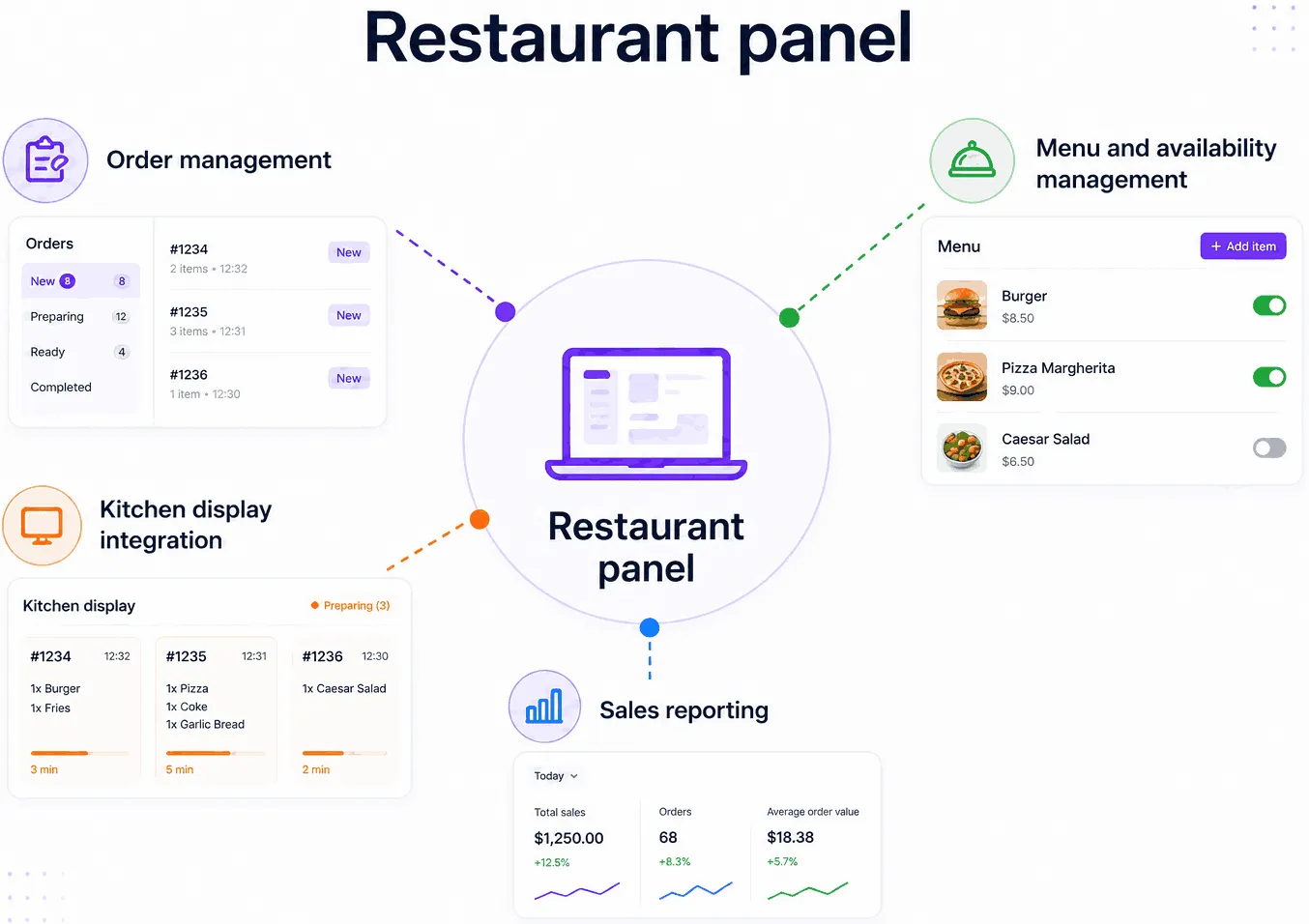
The restaurant panel is the part the customer never sees but feels with every order. Get it wrong, and the effects play out in wrong orders, late pickups, and frustrated couriers waiting at the counter.
Order management
Every incoming order lands on the restaurant's screen in real time with controls to accept, reject, or flag for delay. When the kitchen accepts, a prep timer starts, tracking progress against the estimate that was sent to dispatch and the customer's ETA. If the kitchen is running behind, staff can update the prep time on the active order, and that change flows automatically into courier dispatch and the customer-facing ETA.
If order status and prep time aren’t synced in real time, dispatch keeps using outdated estimates. Couriers arrive too early or too late, and the delay becomes visible once the order is already off track.
Menu and availability management
The restaurant controls everything that appears on the platform, including item names, descriptions, photos, pricing, portion options, and modifiers. Availability can be toggled per item in real time, so when something runs out mid-service, it disappears from the customer app immediately.
When availability changes don't sync instantly, customers order items the kitchen stopped making an hour ago. The order gets cancelled after payment, and the restaurant gets a complaint.
Kitchen display integration
Incoming orders route directly to a screen in the kitchen. The display shows order details, timing, and status. For restaurants already running a POS system, the integration connects both ways: orders flow in, inventory updates flow out.
Scope kitchen display integration early. Otherwise, it can resurface as a hard requirement in month two after the architecture is set. That leads to unplanned scope, added cost, and rework.
Sales reporting
The restaurant sees daily order volume, revenue by item and time slot, peak hour patterns, average order value, and cancellation rates.
When reporting is added after launch, numbers might conflict, and it raises questions about whether the platform's data can be trusted.
Courier app
The courier app should run when there is a low signal, one hand on a bike, and a phone screen in direct sunlight. It needs to be fast and functional even when the network isn't.
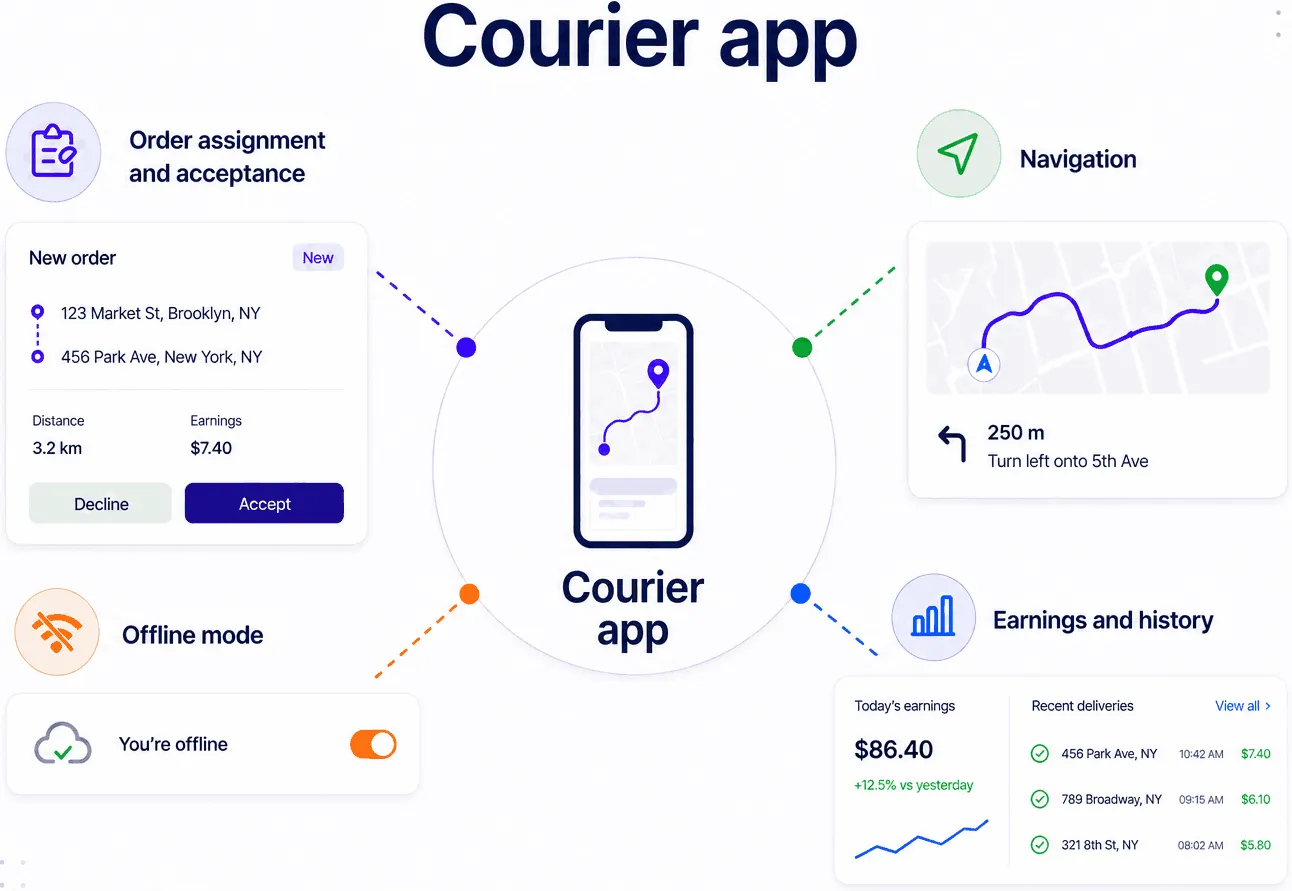
Order assignment and acceptance
When a new job comes in, the courier sees the pickup location, restaurant name, estimated prep time, distance, and payout. They accept or decline within a set window. If there's no response, the dispatch engine reassigns automatically and moves on.
A simple queue instead of a scoring engine leads to poor courier assignment. Orders go to drivers who aren’t nearby or are already overloaded.
Navigation
The app routes the courier from their current location to the restaurant, then to the delivery address. The route updates in real time and factors in wait time at the restaurant, so the ETA is correct for the customer.
Navigation that ignores pickup wait time breaks ETA accuracy the moment the courier arrives and the food isn’t ready. The app shows no adjustment until movement resumes. By then, the delivery is already running late.
Offline mode
The app keeps working when the signal drops. New assignments, status updates, and delivery confirmations are stored locally on the device and synced once the connection returns.
A system that depends on a live connection goes dark in low-signal areas.
Earnings and history
Every completed delivery adds to a running breakdown of base pay, tips, and bonuses. The total updates in real time, and the courier can see the full history by day or week without contacting support.
Earnings that update late create doubt. Couriers don’t know if a delivery was counted, so they reach out to support. And as the fleet grows, so do those requests.
Each of these features depends on how the system is designed and built. Here’s the approach we follow at Stfalcon.
How online food delivery app development from Stfalcon looks like
We break development into five stages, with a clear outcome at every step.
Discovery
Our team starts online food delivery app development with a deep look into your delivery workflows, existing tech, and business goals. From there, we define a technology roadmap that guides everything that follows.
During discovery, we often find requirements that weren’t in the initial brief, but scoping them early saves rework costs later. During the SMILEFOOD project, for example, the discovery phase revealed that a significant share of users placed a second order within 20 minutes of the first. That insight directly shaped the one-tap reorder flow, which is now one of the app's highest-engagement features.
Output → feature specification, user flow diagrams, technical architecture decision log, risk register, and a development timeline tied to specific milestones.
Design
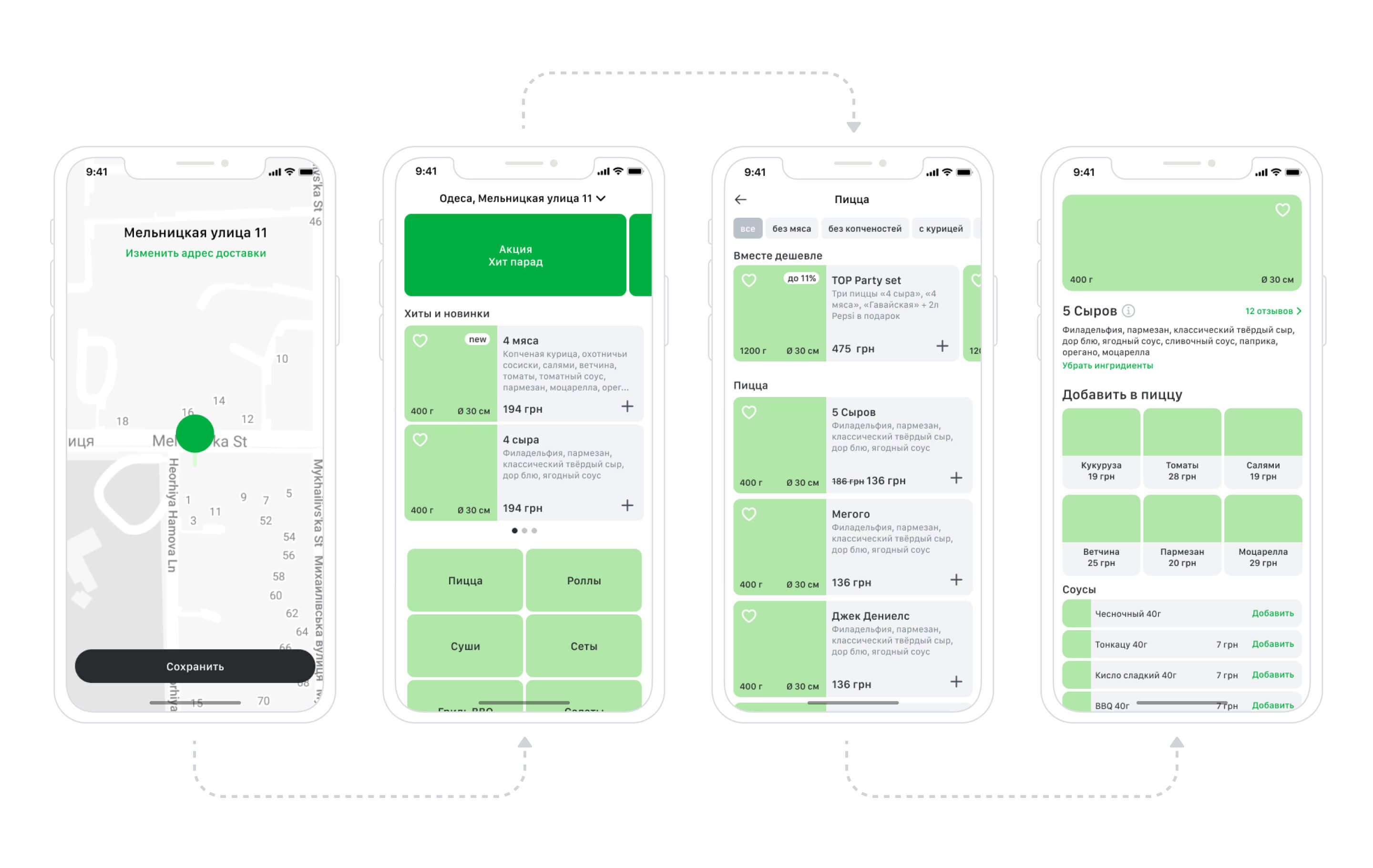
We take the flows defined during discovery and turn them into concrete user journeys. For each role, such as customer, courier, or operator, we map what they do step by step. Then we prototype those flows and test them early. If a courier needs two extra taps while on the move, we fix it right there.
At the same time, we define what handles dispatch, how data flows between services, and where integrations sit. By the time development starts, the product logic and the system structure are clear to start building.
Output → clickable prototype, usability testing, solution architecture.
Development
With the architecture in place, the team moves into development. Backend, frontend, mobile, and DevOps work against the same structure, so decisions stay consistent as the system grows.
We don’t start from zero on delivery infrastructure. Core parts like dispatch logic, real-time tracking, user verification, and payments have already been built and used in live products. We reuse and adapt them to your setup, saving roughly 30% compared to building everything from scratch.
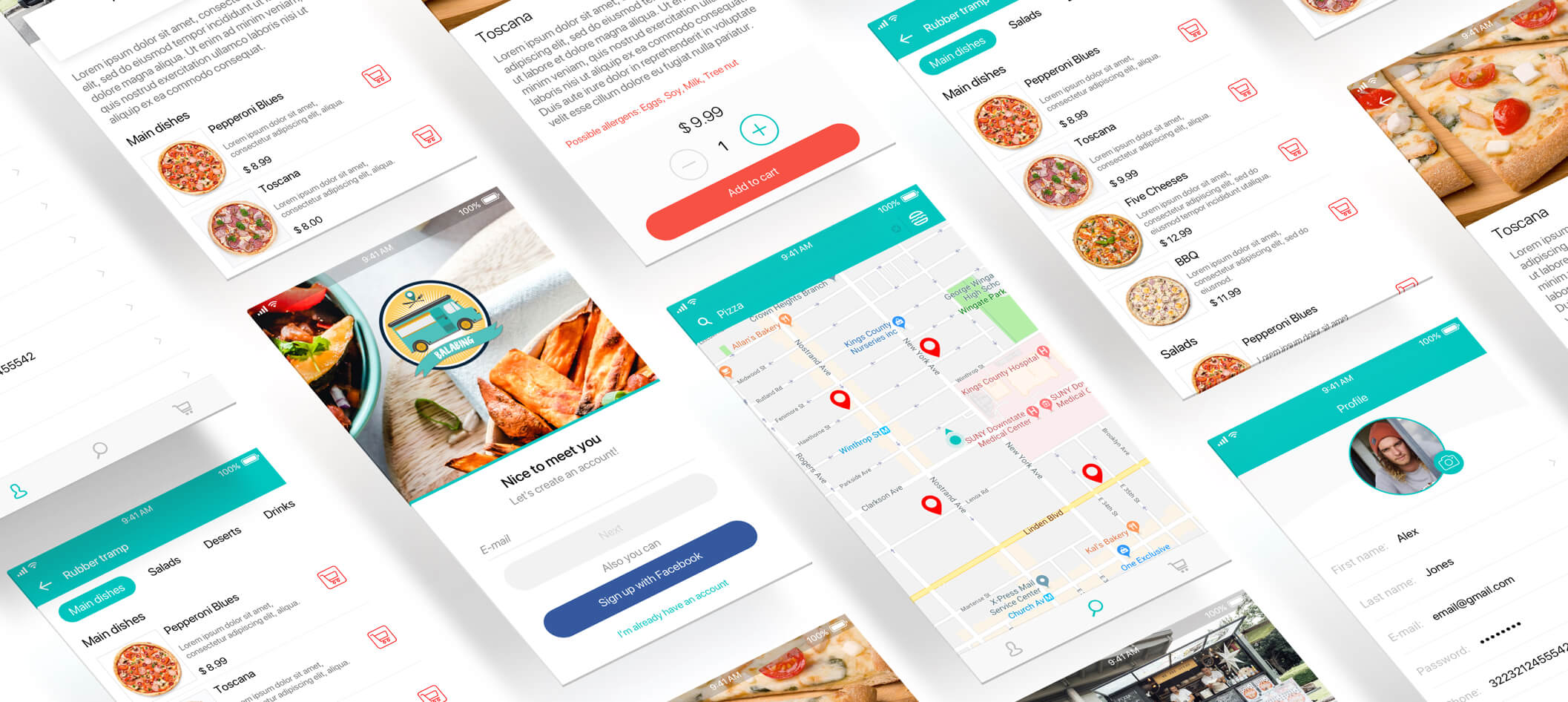
Working on Balabing, for example, we used Clean Architecture with shared Domain and Data modules across the client and vendor apps. This let us reuse the same business logic, which sped up development and made future changes easier to apply across both apps.
Output → custom on-demand delivery app with a tailored tech stack and all required third-party integrations.
Testing
For food ordering and delivery app development, testing goes beyond standard QA. It includes scenarios that many teams often miss, like offline mode for couriers, handling duplicate payment callbacks, and keeping ETA accurate when kitchens run late. Stfalcon’s QA covers these as part of standard acceptance criteria.
The app is also put through security checks and performance optimization, so edge cases and vulnerabilities don't surface in production.
Output → QA report, load and performance test results, security audit, and a release-ready build.
Release and post-launch
The system goes live and starts handling real orders, couriers, and restaurant activity. By this point, the core flows are ready, so the focus shifts to how the system performs.
The team handles deployment to app stores, final environment setup, and release coordination. We also monitor performance, stabilize the system, and keep it reliable as real usage begins. This phase is a controlled rollout, so our team is still involved.
This phase above is what you're paying for. But it's not the only option to get a food delivery app. Here's what the alternative cost, and when building your own stops being the expensive choice.
What on-demand food delivery app development costs (and when custom beats SaaS)
White-label platforms look affordable at the start. Let’s take one of them as an example. YelowXpress starts at $99/month on their Growth plan. That number is real. What it doesn't show is the 1.3% per-order fee on top, a $2,499 one-time setup fee, and $0.11 on every order above 3,000 per month.
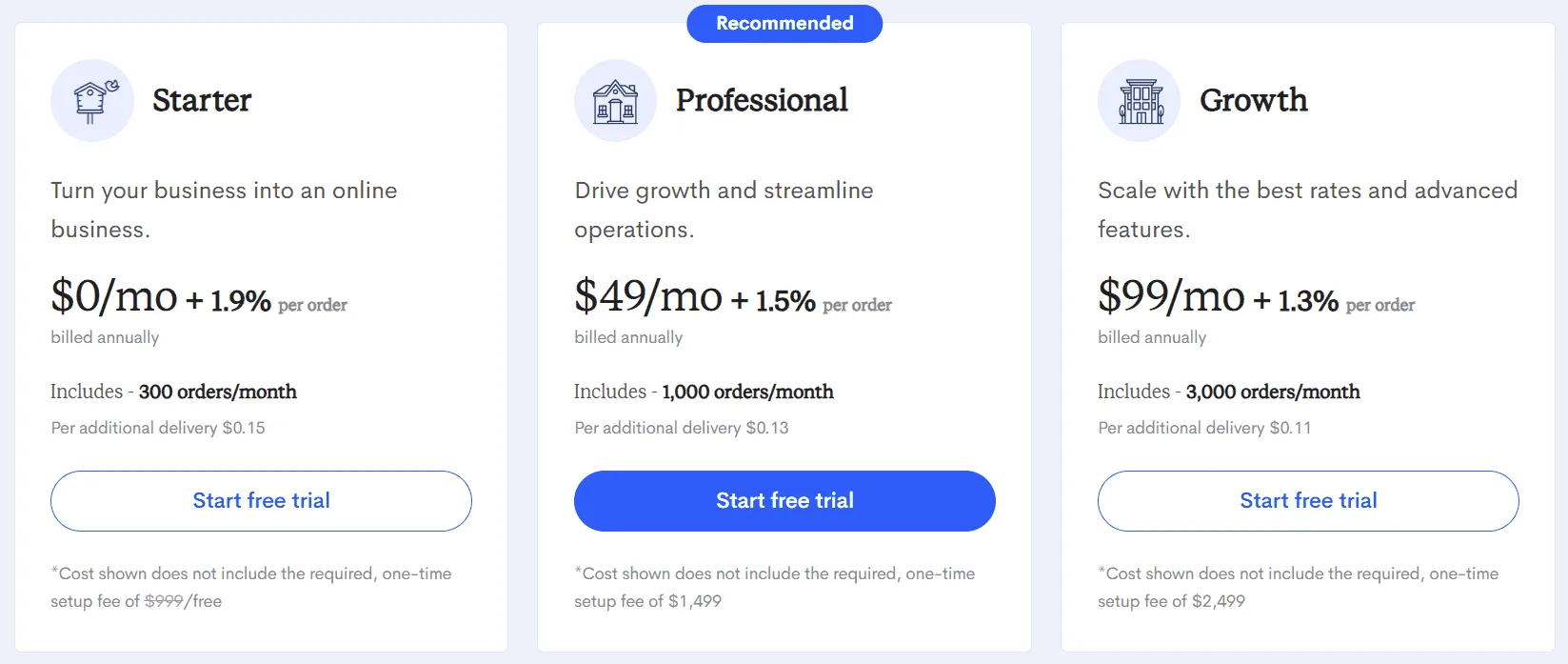
DoorDash reports that the average order value on its platform is under $40, so we use that as a baseline for calculation. At that figure, the 1.3% fee adds $0.52 to every order processed.
Here's what that looks like with YelowXpress based on their website pricing:
| At 5,000 orders/month | At 20,000 orders/month |
|---|---|
| Subscription: $99 | Subscription: $99 |
| Included: 3,000 orders | Included: 3,000 orders |
| Overage: 2,000 × $0.11 = $220 | Overage: 17,000 × $0.11 = $1,870 |
| Per order fee: 5,000 × $0.52 = $2,600 | Per order fee: 20,000 × $0.52 = $10,400 |
| Monthly total: $99 + $220 + $2,600 = $2,919 | Monthly total: $99 + $1,870 + $10,400 = $12,369 |
| Year 1: $2,919 × 12 + $2,499 (setup, added only once) = $37,527 | Year 1: $12,369 × 12 + $2,499 (setup, added only once) = $150,927 |
| Year 3 cumulative: ~$107,583 | Year 3 cumulative: ~$447,783 |
In practice, companies don’t intentionally choose a 3,000-order plan and then pay overage. They pick a plan based on expected volume. But growth, seasonality, or demand spikes might push them beyond that limit. Even then, overage isn’t the main cost driver. It’s the per-order fee. And it scales with every order.
If you choose customized food delivery app development with Stfalcon, you pay around $80K–$120K for the development, plus ~15% of the project cost annually for maintenance. Now, let’s run that against the SaaS platform over three years.
| Year 1 | Year 2 | Year 3 cumulative | |
|---|---|---|---|
| YelowXpress (5K orders/mo) | ~$38,000 | ~$35,000 | ~$108,000 |
| YelowXpress (20K orders/mo) | ~$151,000 | ~$148,000 | ~$448,000 |
| Custom build (Stfalcon) | $80,000–$120,000 | $12,000–$18,000 | $116,000–$174,000 |
There's also what the numbers don't capture. With a white-label platform, you can't modify dispatch logic, add a custom courier verification flow, or integrate with a POS system the vendor doesn't support. When you need those changes (and most growing operators do), the options are waiting for the vendor's roadmap or paying to migrate off entirely.
Numbers aside, the clearest way to understand what custom development delivers is to look at what's been built.
Some of our food delivery mobile app development projects
Here are some on-demand food delivery app development projects we’ve worked on, each addressing different challenges.
SMILEFOOD
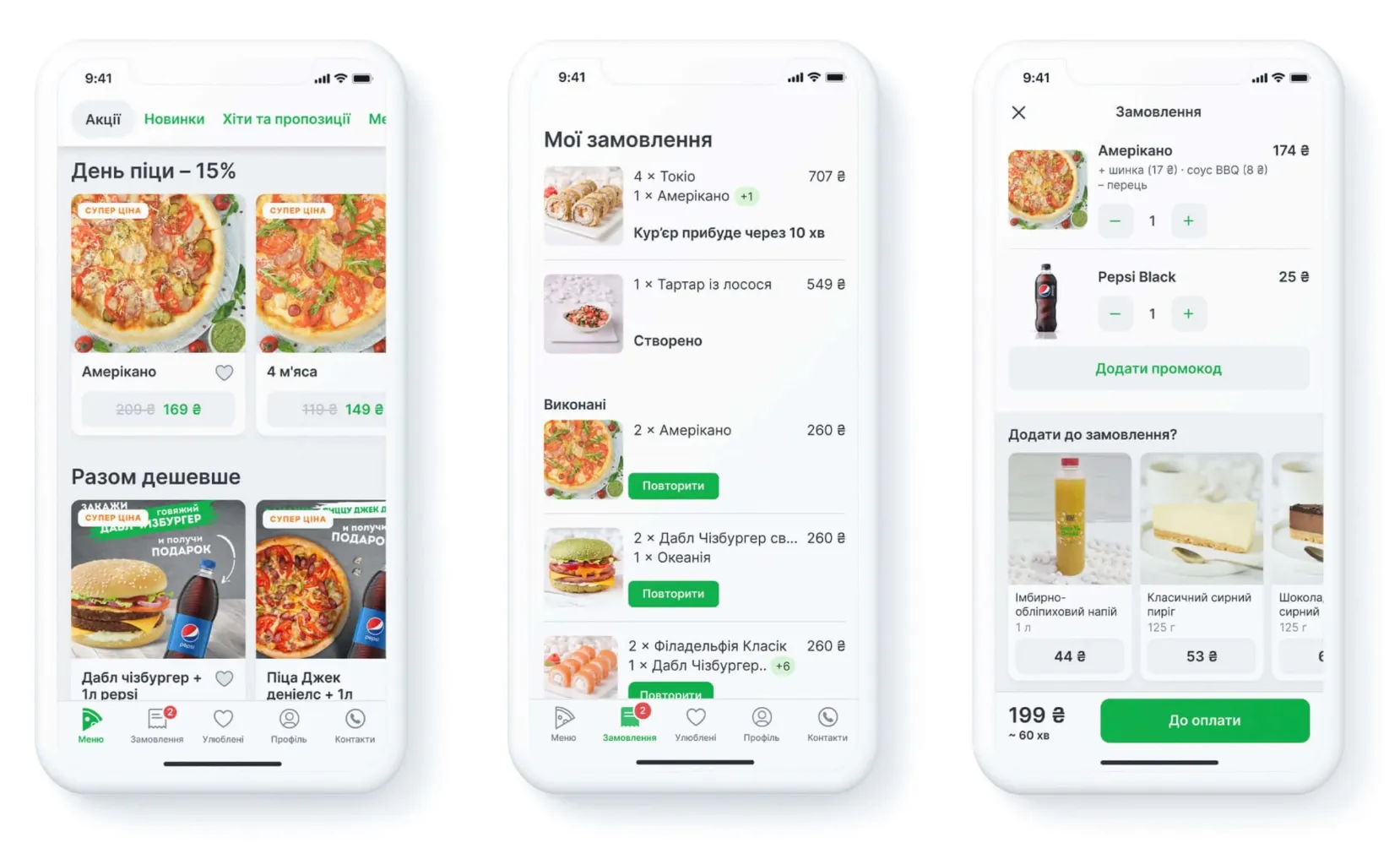
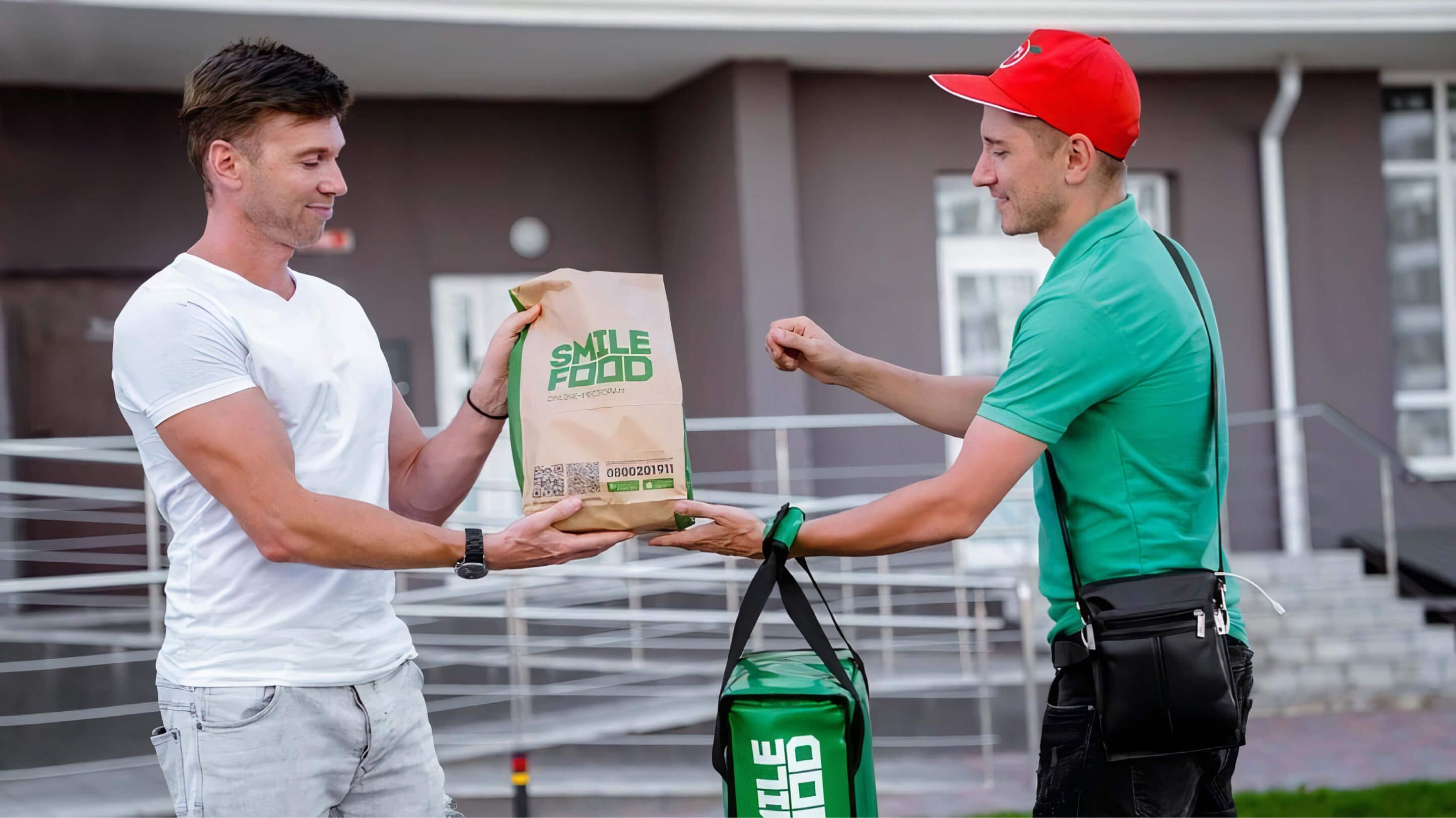
SMILEFOOD is an online food ordering service that came with a common problem: their existing mobile app was holding them back. Built on Ionic as a copy of the website, it became unstable and harder to maintain with each update.
We began with discovery. The team mapped the order flow, wrote user stories, and estimated two build options: separate native Android and iOS apps, or a single Flutter app. From there, the focus shifted to design. We defined how the app would work in practice, including courier tracking, custom orders, integration with the existing database, and a migration plan to a new tech stack.
As a result, SMILEFOOD got a complete app design with key edge cases resolved upfront, a UI kit for development, and a plan for connecting the new system and migrating the existing user base.
 Read the full case study
Balabing
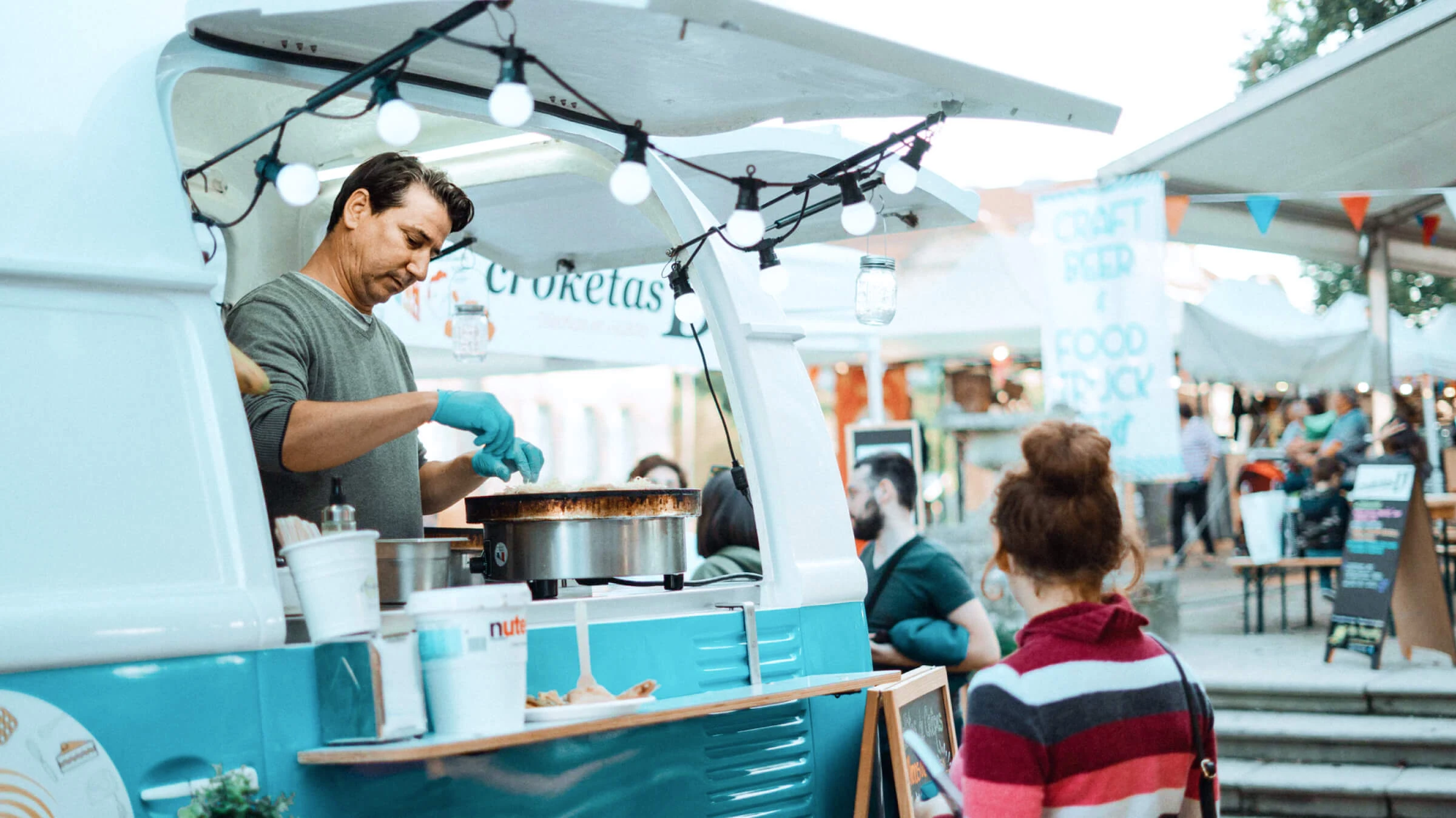
Balabing started with a simple observation: food trucks attract crowds, and those crowds turn into lines. Ordering takes time, and waiting becomes part of the experience. The idea was to remove that wait.
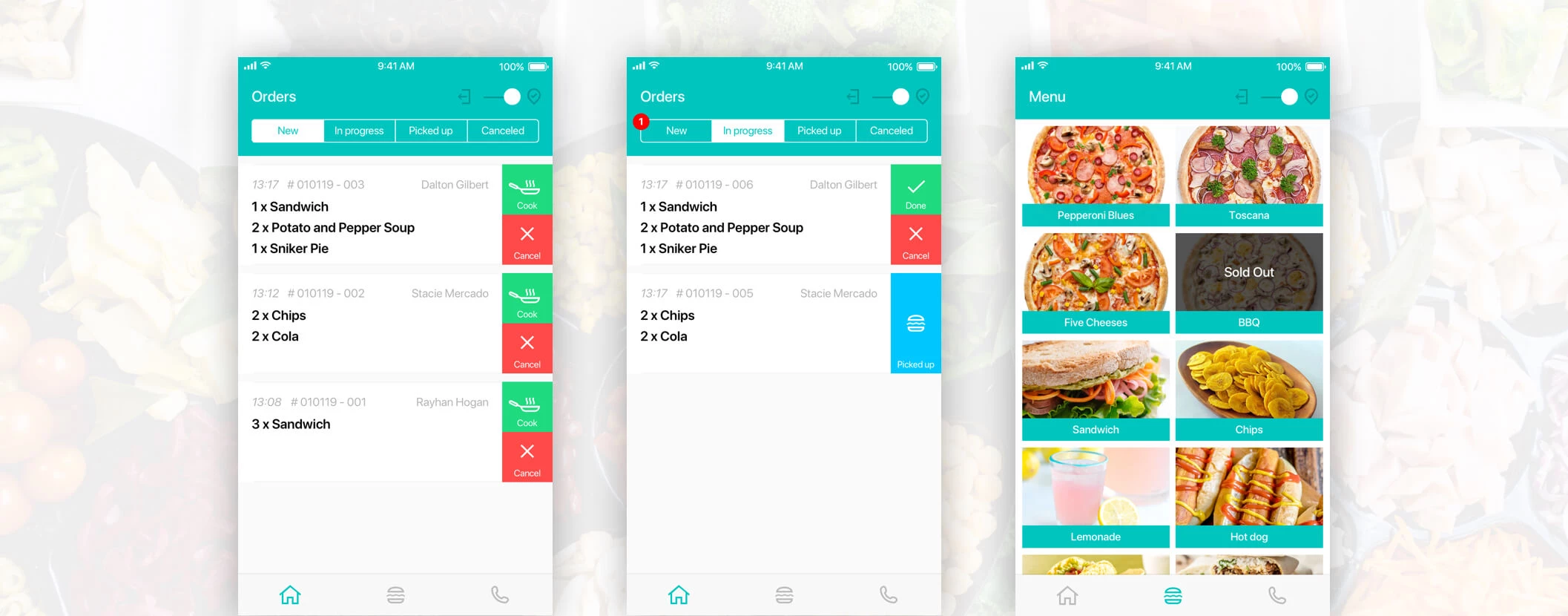
To make that work, Balabing turned to Stfalcon. We had to build a platform that lets customers order ahead in a few taps, while keeping orders, menus, and pickup timing in sync on the operator side.
The system was built as two connected parts. Mobile apps for iOS and Android handled ordering and tracking. A web admin panel gave the team control over menus, orders, and daily operations.
Behind it, real-time updates and location tracking kept everything in sync. The first version launched as an MVP and already met the client’s expectations. It gave them a working product in the market and a base to expand from as the platform grows.
 Read the full case study

Global food delivery platform
A global platform processing over 500 million orders per year had a breakdown in the communication layer between restaurants and their food suppliers. Restaurants were managing supplier orders through email and spreadsheets, while suppliers had no visibility into what was needed.
We built the system around the tools they were already using. We combined chat, product catalogs, and order creation into one flow. To release an MVP faster, we used ready-made services for chat (Stream) and catalog (Shopify), integrating them with existing supplier channels.
As a result, Stfalcon developed the order management layer that connected both sides within the existing infrastructure. Hundreds of restaurants began using it even before the development was fully complete.
 Read the full case study
If you don’t see similar food delivery projects in a vendor’s portfolio, it’s better to check their understanding. Some teams have the experience but don’t show it. Others don’t have it at all.
Stfalcon answers all five with specific projects and architecture decisions you can ask about. The dispatch logic, courier infrastructure, and POS integration patterns have been built and rebuilt across 16 years of logistics projects. As a transportation & logistics software development company, we know where these systems break, and how to build them so they don’t.
Ready to build a food delivery app? Start with the numbers
A 30-minute call with us covers scope risk flags, a realistic timeline, and a cost range you can take to stakeholders.
Alina
Client Manager

Every agency will tell you they've provided end-to-end food delivery app development before. These questions find out how deep that goes.
Questions to ask a development team before you hire one
How do you handle dispatch assignments under concurrent load? What algorithm do you use, and what’s the highest order volume you’ve tested it at?
A specific answer names the algorithm type, a real project, and a volume figure. A vague answer means they haven’t built it at scale.
How do you implement the courier app offline mode?
If the answer is "we'll sync when the connection returns," ask what happens to the server state while the courier is offline and whether conflicts are resolved automatically. Generic answers here show up as production bugs.
What does your discovery phase produce?
A list of features is not a discovery output. User journey maps, validated assumptions, architecture recommendations, and scope risk flags are. If discovery is a one-week scope call, the risks get discovered during development at developer rates.
How are your modules licensed and owned?
Pre-built modules speed up delivery. But some vendors retain ownership of those modules, meaning you're licensing code, not owning it. The contract should give you full ownership of everything deployed to your codebase.
Can you walk me through an architecture decision that saved a client money?
Experienced teams have these stories: pre-built modules, a particular API design, a data model that made adding features cheaper than rebuilding. If they can't name one, long-term cost hasn't been part of their thinking.