On the third day of russia’s full-scale invasion of Ukraine, air raid sirens couldn’t reliably reach everyone. In large cities, they were often barely audible in sleeping districts; in smaller towns and villages, much of the equipment was outdated.
At night, the problem was especially frightening: if a missile was heading toward your city while you slept, would a siren wake you up?
For Stepan Tanasiychuk, founder of Stfalcon, the answer was simple: a phone could wake people up. The idea for a nationwide air alert app emerged on the evening of the third day of the full-scale invasion. Within days, Stfalcon partnered with Ajax Systems and Ukraine’s Ministry of Digital Transformation, and the app was live and soon installed by millions.
This is the story of how the Air Alert app went from an idea to a critical notification system in 48 hours.
TL;DR
- On the third day of russia's full-scale invasion, sirens weren’t enough to reach all citizens. Stfalcon's founder saw that a phone could solve the issue.
- The app had to override silent mode, which on iOS requires Apple's Critical Alerts entitlement. Ajax Systems already had it, so they offered to ship the app through their App Store account.
- From idea to official release, it took 48 hours. 40,000 users on launch day, 140,000 the next, over 2 million within 11 days, close to 5 million by late April 2022.
- Coordination was a challenging part, as every regional administration had to be connected individually, through the Ministry of Digital Transformation, one introduction at a time.
- Air Alert grew into a full alerting infrastructure with five threat types, a national air raid map, a public API, a home-screen widget, and increased-danger warnings that track approaching targets by coordinates.
- The app grew beyond alerts, too: its English-language version was voiced by Mark Hamill, a Star Wars actor, and it became a channel for fundraising campaigns for Ukraine's defence.
- Key numbers: 26M+ installs and 6M+ active users as of February 2025, with wins at the Security & Fire Excellence Awards and European Excellence Awards, and saved human lives thanks to the app’s alerts.
The App Store problem that only Ajax Systems could solve
A warning app is only useful if it can wake you up when you're asleep. All other features come second. If the alert stays silent at 3 a.m., when a danger is approaching, none of it matters.
On iOS, there is a special type of notification for exactly this: Critical Alerts. They can bypass silent mode and Do Not Disturb, but Apple requires a separate entitlement, and getting it can take around two weeks.
Stfalcon didn't have that entitlement, nor the time to get it. But there was another Ukrainian company that had it: Ajax Systems.
Stepan Tanasiychuk, Stfalcon’s founder and CEO, already knew Ajax's technology well. He used its security system himself, and its notifications could cut through every sleep mode on his phone. For a project that needed to wake millions of people in the middle of the night, it was exactly the technology they needed.
So he called Ajax.
The answer was yes. Ajax could provide the infrastructure, servers, and operator software that were already in place. By the next day, Ukraine’s Ministry of Digital Transformation was supporting the project.
Within hours, a chat with more than 40 people was formed, and the work was divided. Ajax took care of the infrastructure and backend side, while Stfalcon focused on the mobile app and, as the project grew, on testing, rollout, and integration with government institutions.
Obviously, there was no discovery phase or 6-month roadmap. We had a problem that needed to be solved immediately, and we had to figure it out as we went.
48 hours to get people a warning
The team had an idea, so now they had to get it onto people's phones.
We spent the fourth day of the invasion turning the idea into a product, then another day implementing and testing it. Within 48 hours, Air Alert was officially released.
The app was published through Ajax Systems' App Store account, so the Critical Alerts entitlement was tied to the developer account, which saved at least 2 weeks.
On Android, we took a different route and reached out to Ukrainian employees at Google, who connected us with the people who could help get the app reviewed quickly.
And once the app was live, the work only accelerated. On the launch day, Air Alert had around 40,000 users. The next day, it reached 140,000.
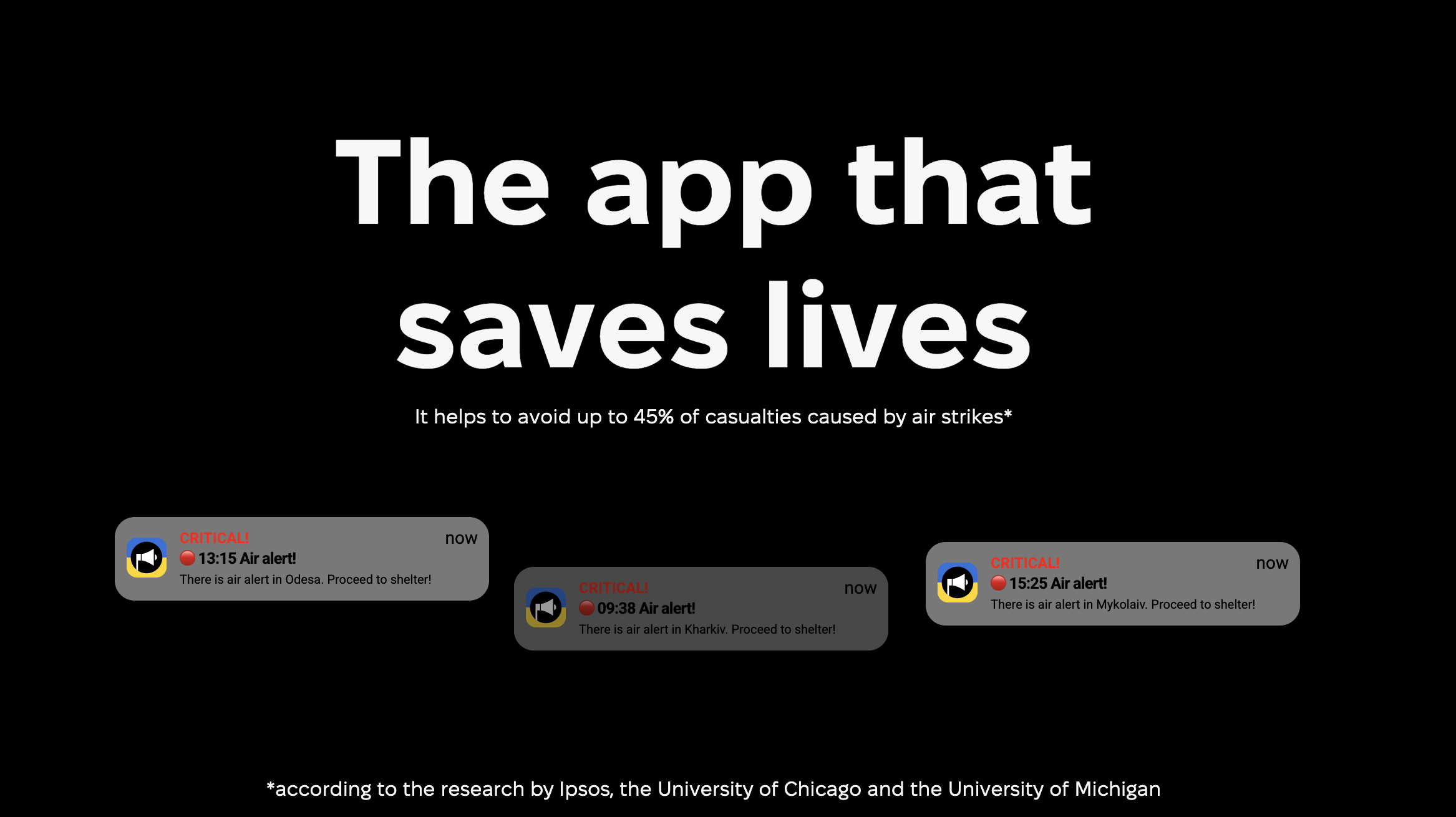
11 days after the idea first appeared, more than 2 million people had downloaded it. By late April, the number was approaching 5 million.
The growth wasn’t driven by a marketing campaign or a carefully planned acquisition strategy. It followed the spread of the service itself. Every new region connected meant hundreds of thousands more people who could receive a warning.
The challenge was to connect the next region and keep the system working as more and more people came online.
The hardest part: getting the whole country connected
Technology was only half the problem. An air raid warning starts with a person.
When the military detects a threat, the information is passed to the duty centre at the regional administration. An operator sends the alert through the system, and it reaches everyone subscribed to the relevant region, district, or territorial community. When the threat is over, the operator sends the all-clear the same way.
So, the Air Alert app doesn’t decide whether there is a threat by itself. It carries the official warning from the people responsible for issuing it and delivers it to those who might not hear the sirens.
And that meant the app was only as useful as the network behind it.
Every regional administration had to be connected, and each region had its own people, procedures and chain of communication. Getting the whole country onto the system became a coordination problem as much as a technical one.
There was no central switch to flip. Each of Ukraine's regions runs its own civil defence operation, with its own people and chain of approvals, and Stfalcon had no relationship with any of them. The Ministry of Digital Transformation opened the first doors. From there it went person to person: an introduction in one region led to a contact in the next, an operator who had the system working vouched for it to a colleague who didn't.
Within a few days, the whole country was connected.
Build a notification system that reaches everyone
We'll share our Air Alert experience
Alina
Client Manager

How Air Alert App works
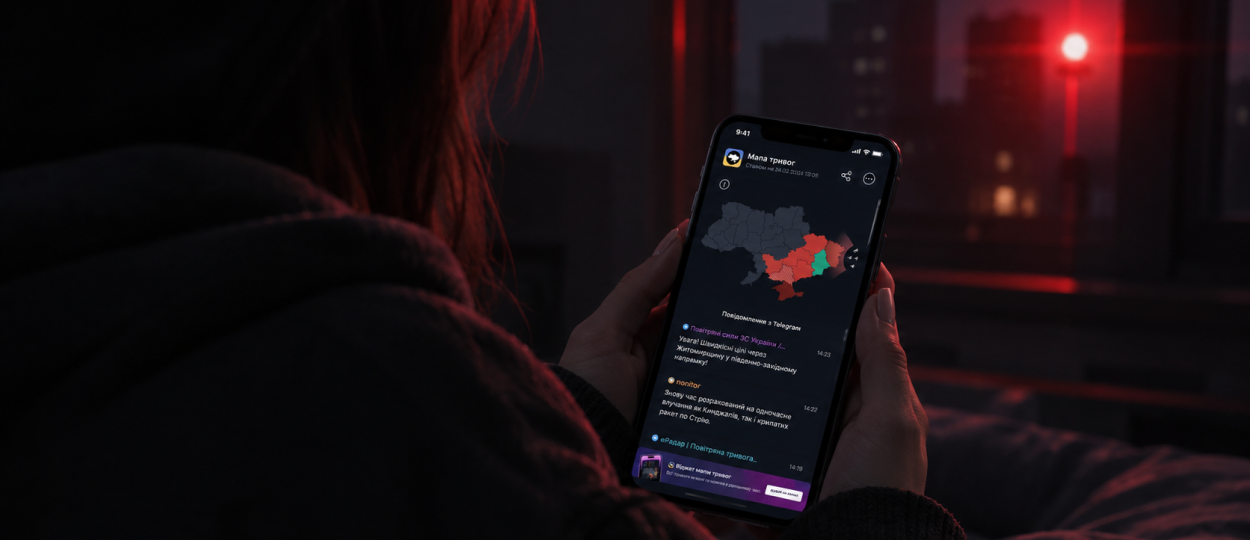
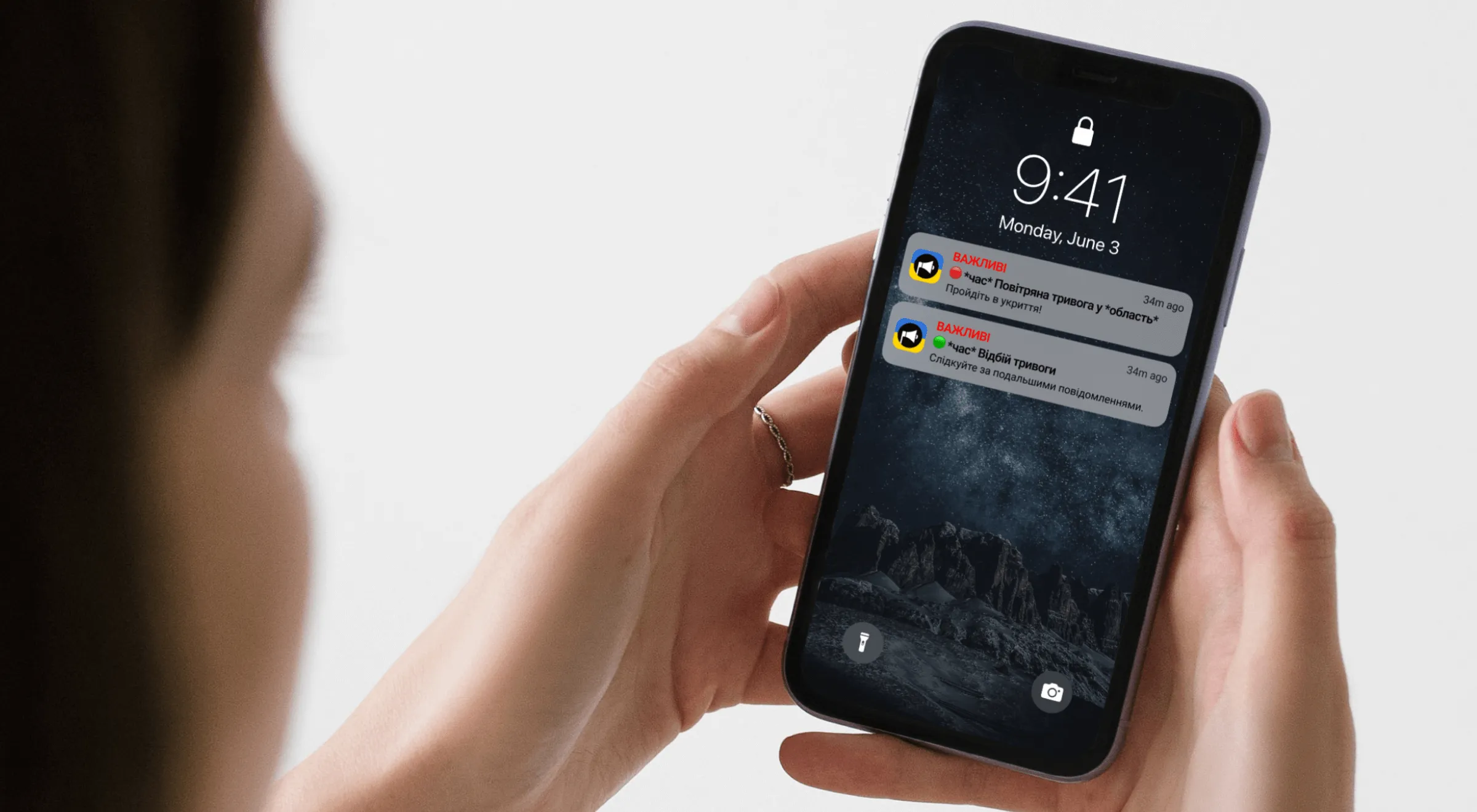
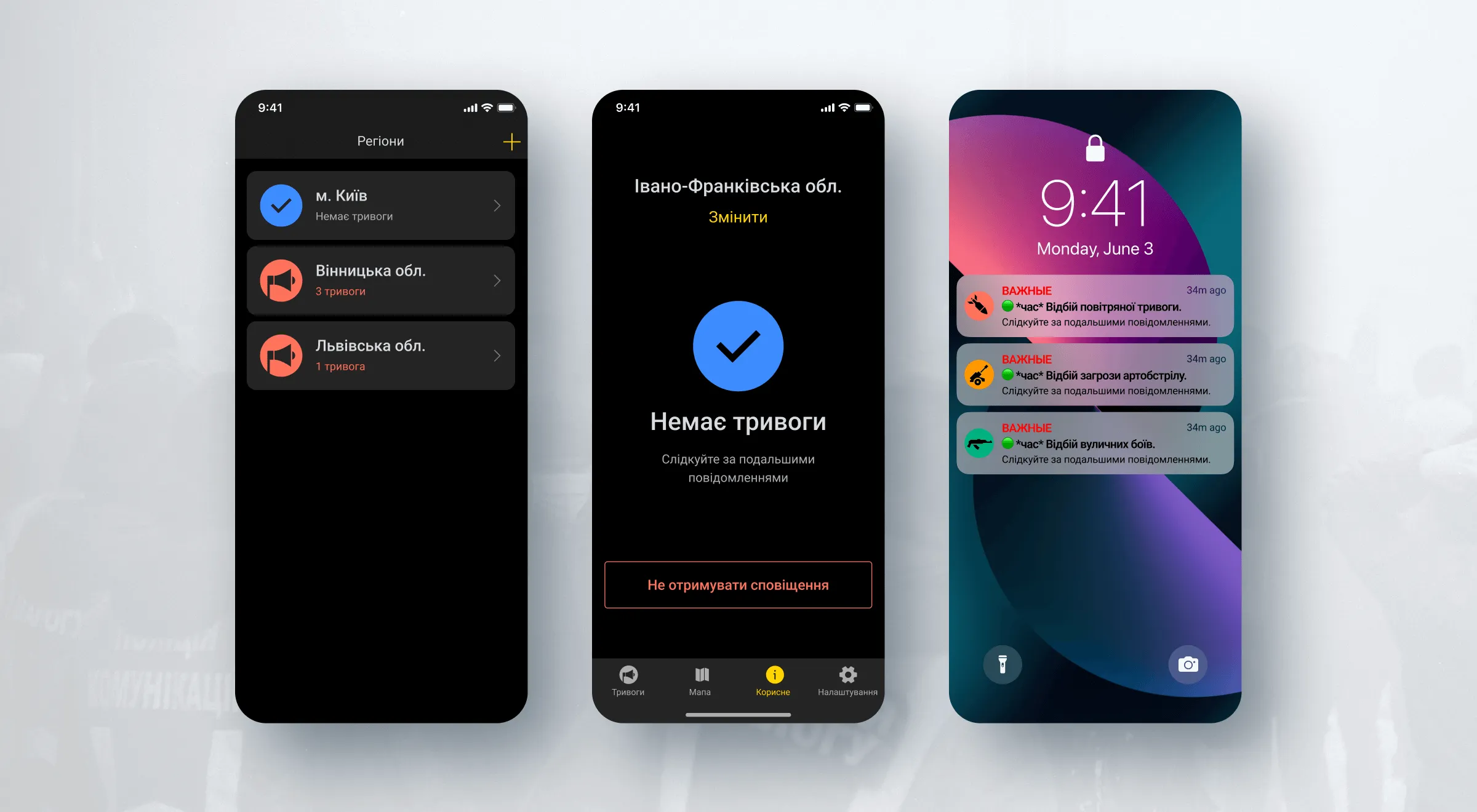
The core of Air Alert is simple: you choose the region, district, or community you want to follow. When an alert goes off, the app sends a notification. When it ends, it sends another. No registration or geolocation is required.
The feature that mattered most was Critical Alerts, which can sound even when a phone is on silent or Do Not Disturb. Mobile carriers also agreed not to charge users for the app's data, so checking alerts doesn't consume their mobile plans.
The product soon grew beyond air raids. By August 2022, it supported 5 types of threats:
- Air raids
- Artillery shelling
- Street fighting
- Chemical threats
- Radiation danger
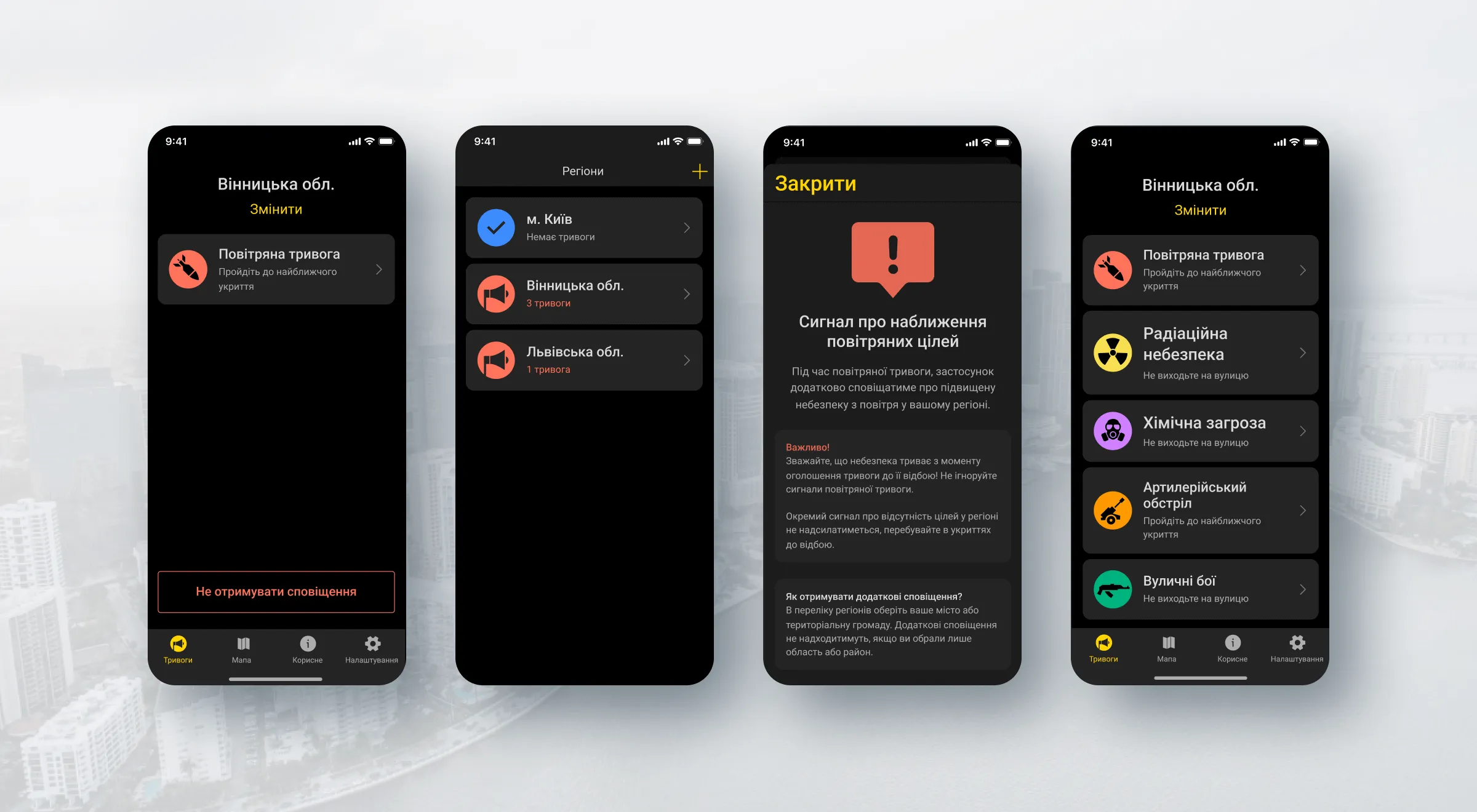
Each had its own sound and a short message explaining what to do. That mattered because the response to a chemical threat isn’t the same as the response to shelling.
We also built the official alert map of Ukraine, a live view of the entire country, colour-coded by region, showing where alerts are active right now, what type of threat each one is, and the history of when alerts started and ended.
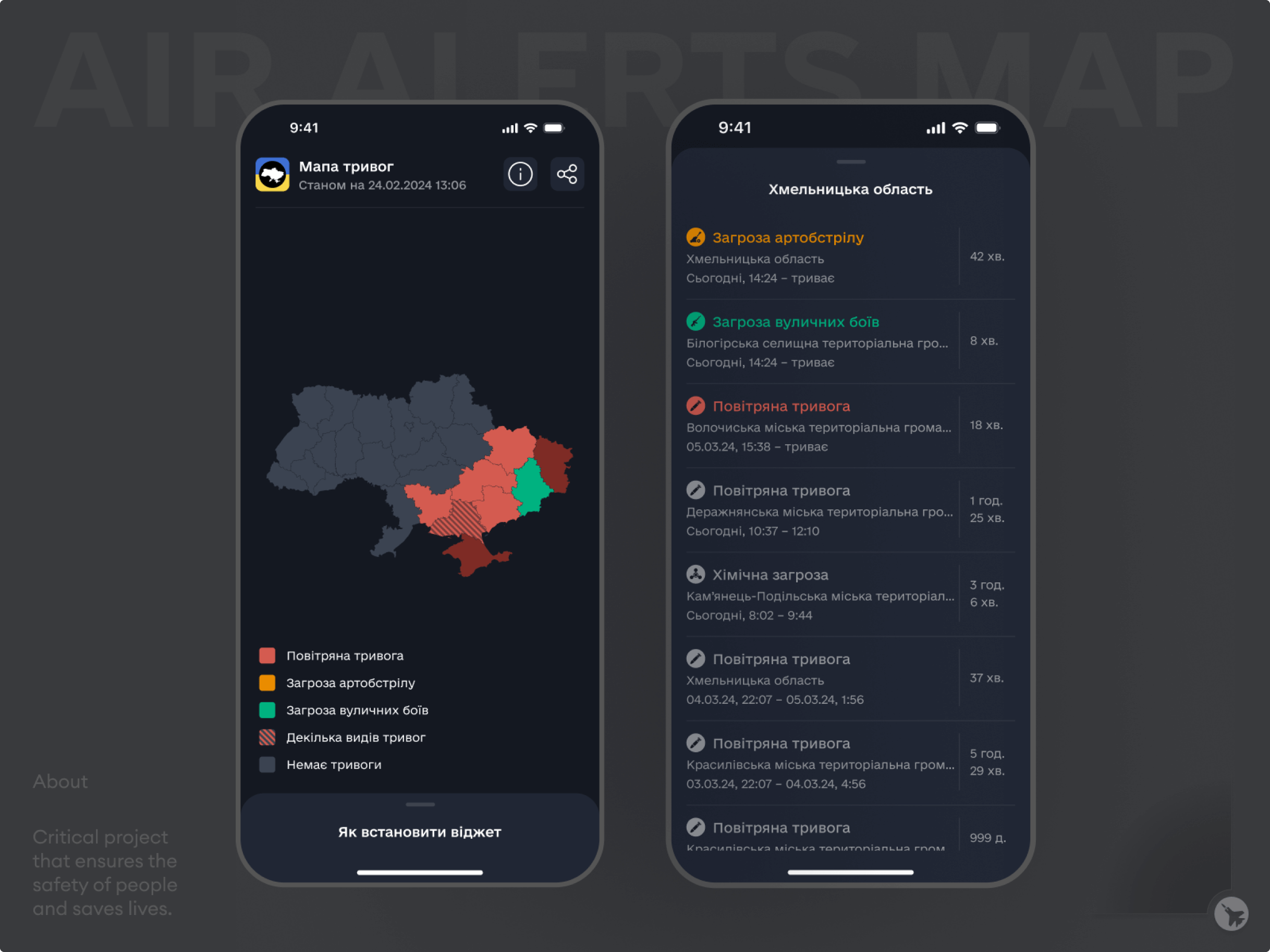
Alongside it, we released a public API so that other services could build on official alert data.
But while the interface was simple, everything underneath it became increasingly complex because the app had to handle millions of users.
The team had to find a way to absorb those spikes without slowing down the alerts.
How we handled millions of alerts at once
Millions of notifications had to leave the system at once, creating a significant load on the push-notification infrastructure. To handle this, we split users into groups and delivered notifications asynchronously through queues, spreading the load instead of sending everything at once.
The air raid alert map had a different problem. Most of the time, its traffic was predictable, but the moment an alert started, millions of people could open it at the same time, so traffic went from normal to extreme within seconds and stayed there for the duration of the threat. To absorb these spikes, we used caching, distributed infrastructure, and dedicated DevOps work.
Even the home-screen widget became its own engineering project. It took six months to build, but now it refreshes every minute across the five alert types.
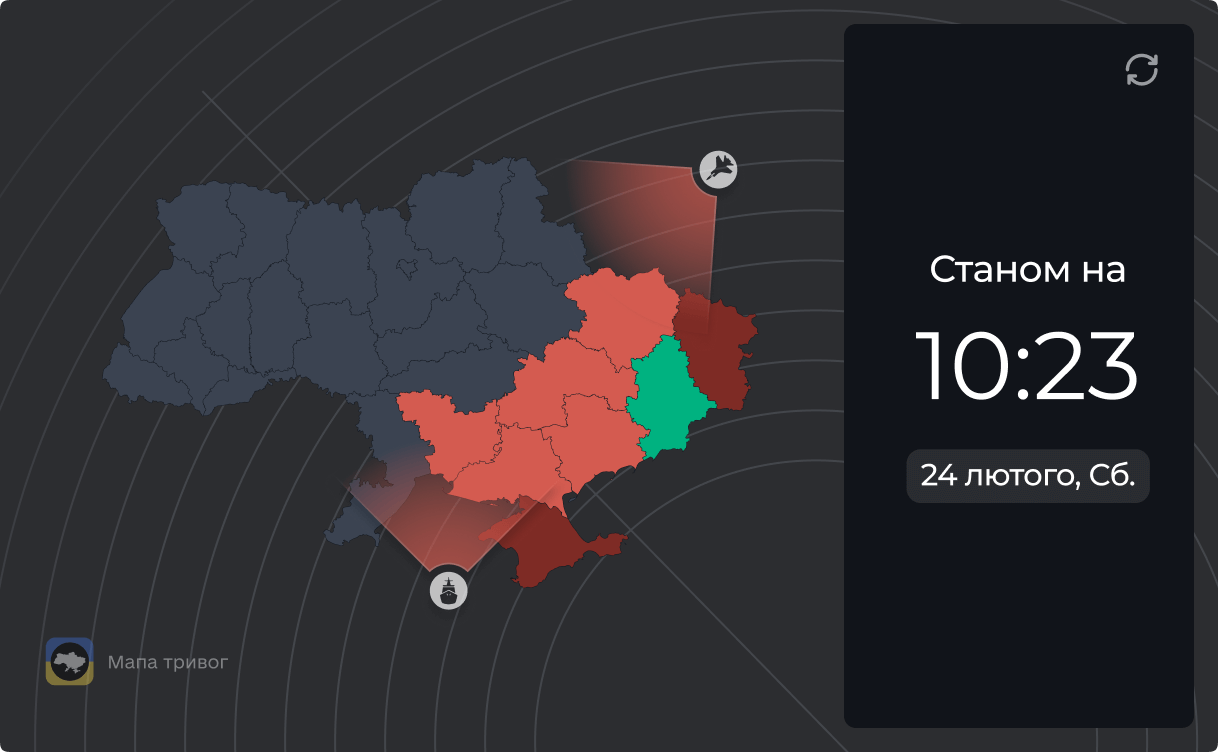
By this point, Air Alert is no longer just a mobile app, but a whole infrastructure for millions of people.
The war changed, and so did the product
As the war continued, it became clear that Air Alert had to evolve with it. The threats were changing, and the app had to keep up.
In frontline regions, an air raid alarm could remain active almost constantly. After a while, another generic “air raid” notification stopped telling people enough. Regional administrations and the State Emergency Service needed a way to distinguish between different kinds of danger.
So the product began to evolve around what was happening on the ground.
Air Alert introduced increased-danger warnings that could notify people when a missile or drone was approaching their area. It added custom notifications for regional administrations and Civil Defence, including warnings about hazards such as flooding.
Users can subscribe to several regions at once, which is especially useful for those who travel or have family in another region.
We also added to the app a Telegram bot for finding nearby shelters and, later, a psychological self-help kit based on Ukraine's national “How Are You?” programme.
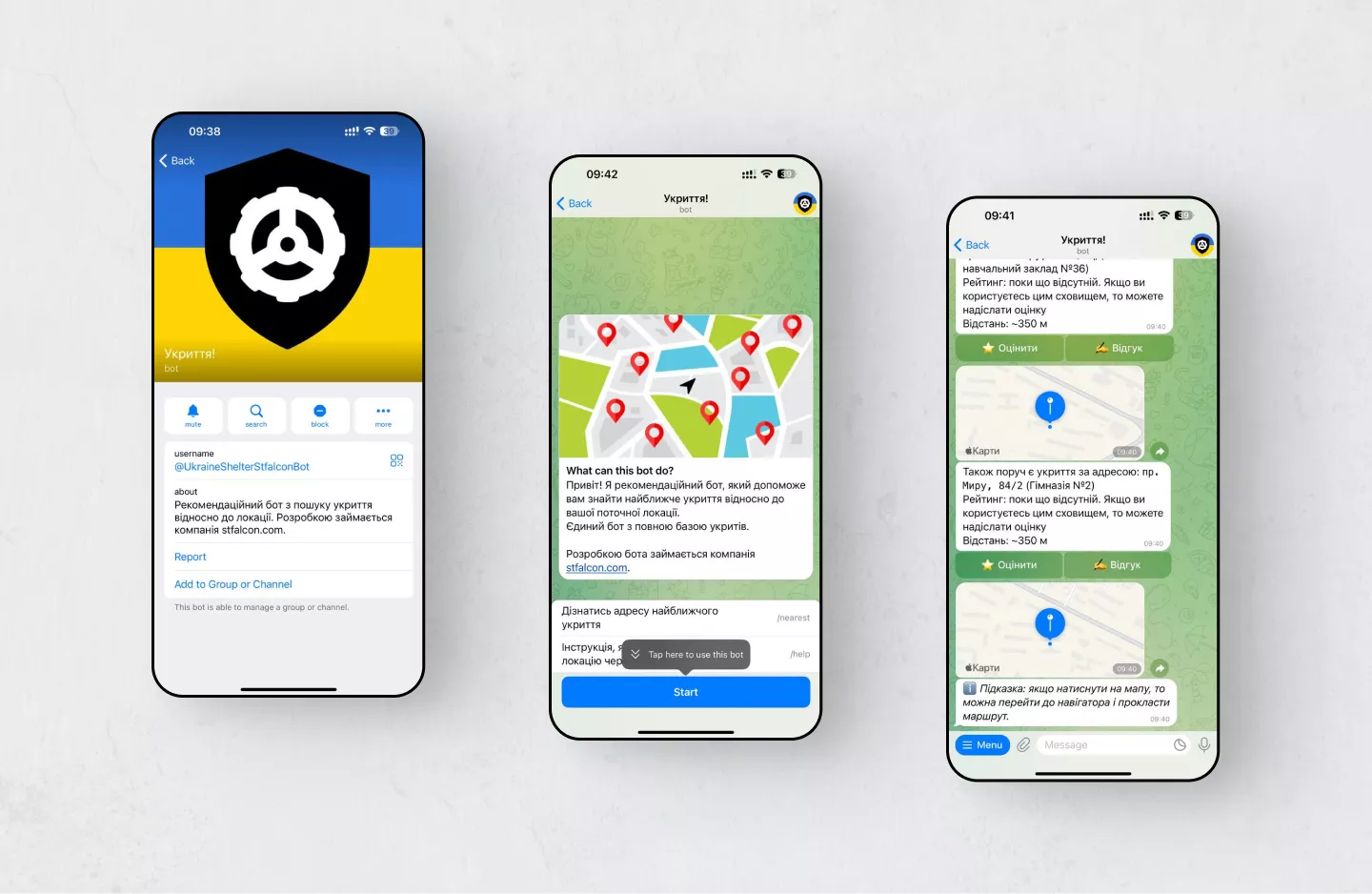
In 2024, we added a daily reminder for the national minute of silence, with adjustable voice, language and volume settings.
Today, the app is also a fundraising channel and voiced by the Star Wars legend
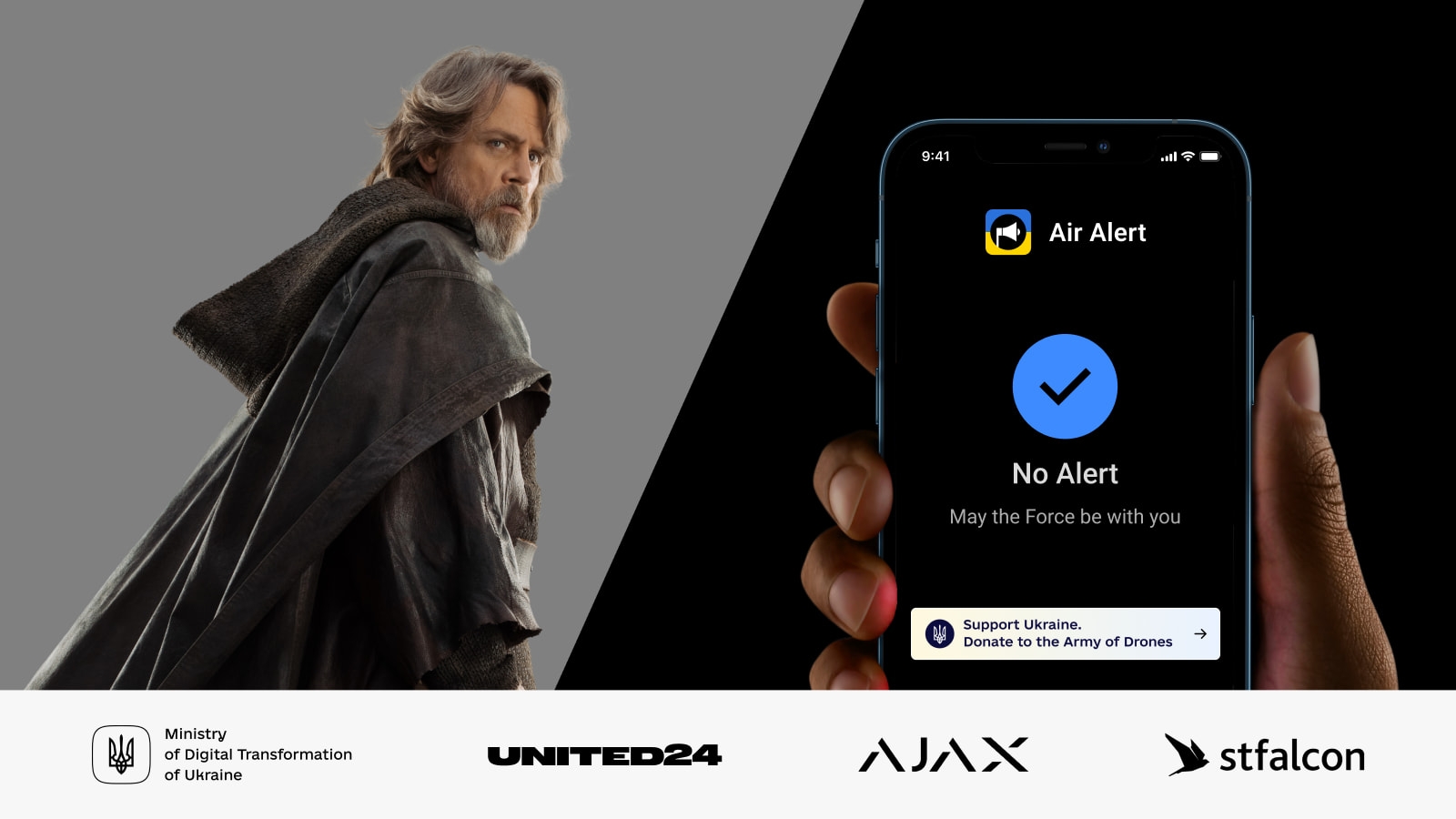
Then came one of the more unexpected turns in the story: the English-language version of Air Alert was voiced by Mark Hamill, the actor best known for playing Luke Skywalker.
But the collaboration didn’t stop with recording notifications.
Hamill and UNITED24 later organized a fundraiser for reconnaissance drones, and the Air Alert team added the campaign to the app, raising ₴10 million.
In 2023, the app also helped promote Timothy Snyder's “Safe Skies” campaign, which raised funds toward a situational alert system for Ukraine's air defence forces.
By then, Air Alert was more than an app to receive warnings. It has become a channel for connecting millions of people to protect Ukraine.
Awards followed, but saved lives matter most
By February 2025, Air Alert had been downloaded more than 26 million times and was actively used by more than 6 million people. More than a hundred people had worked on it.
There was recognition as well. The app won at the Security & Fire Excellence Awards in London in 2023 and at the European Excellence Awards in 2024.
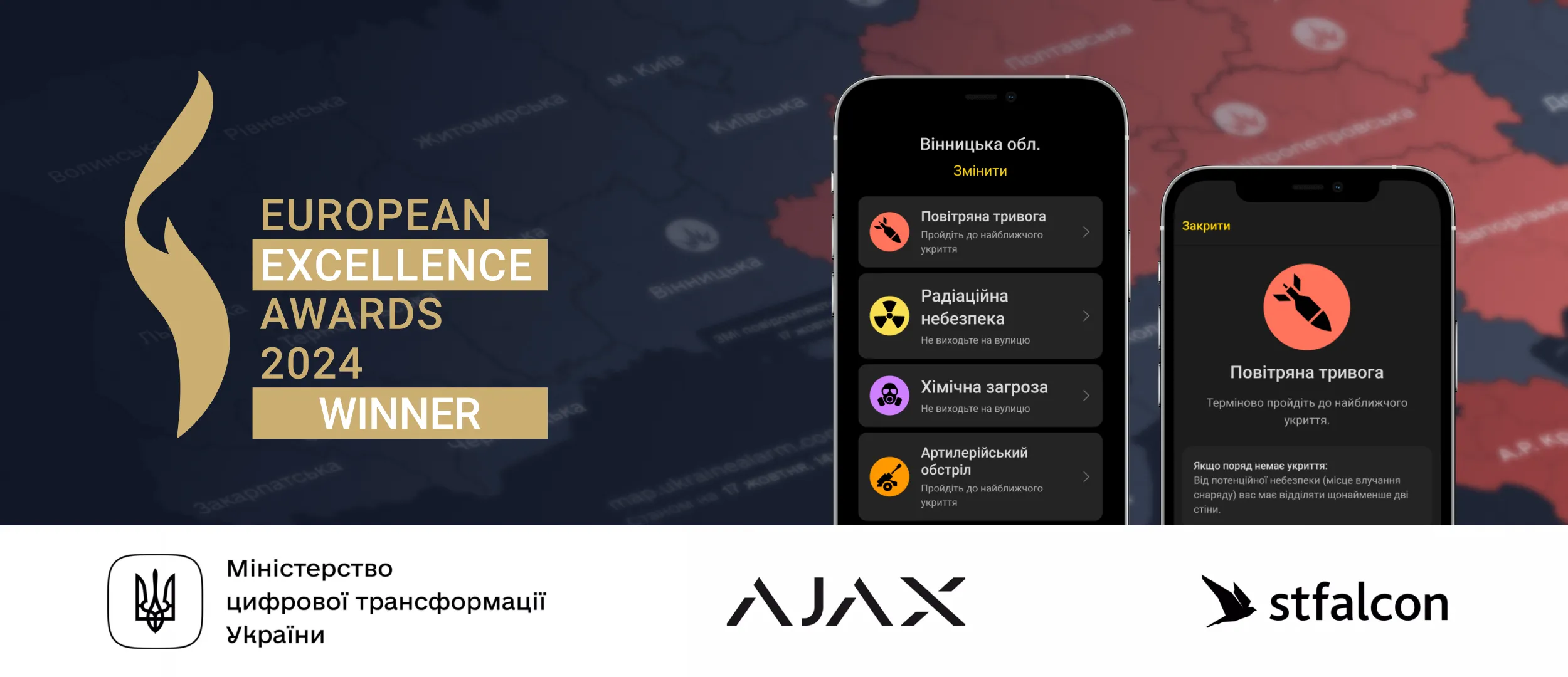
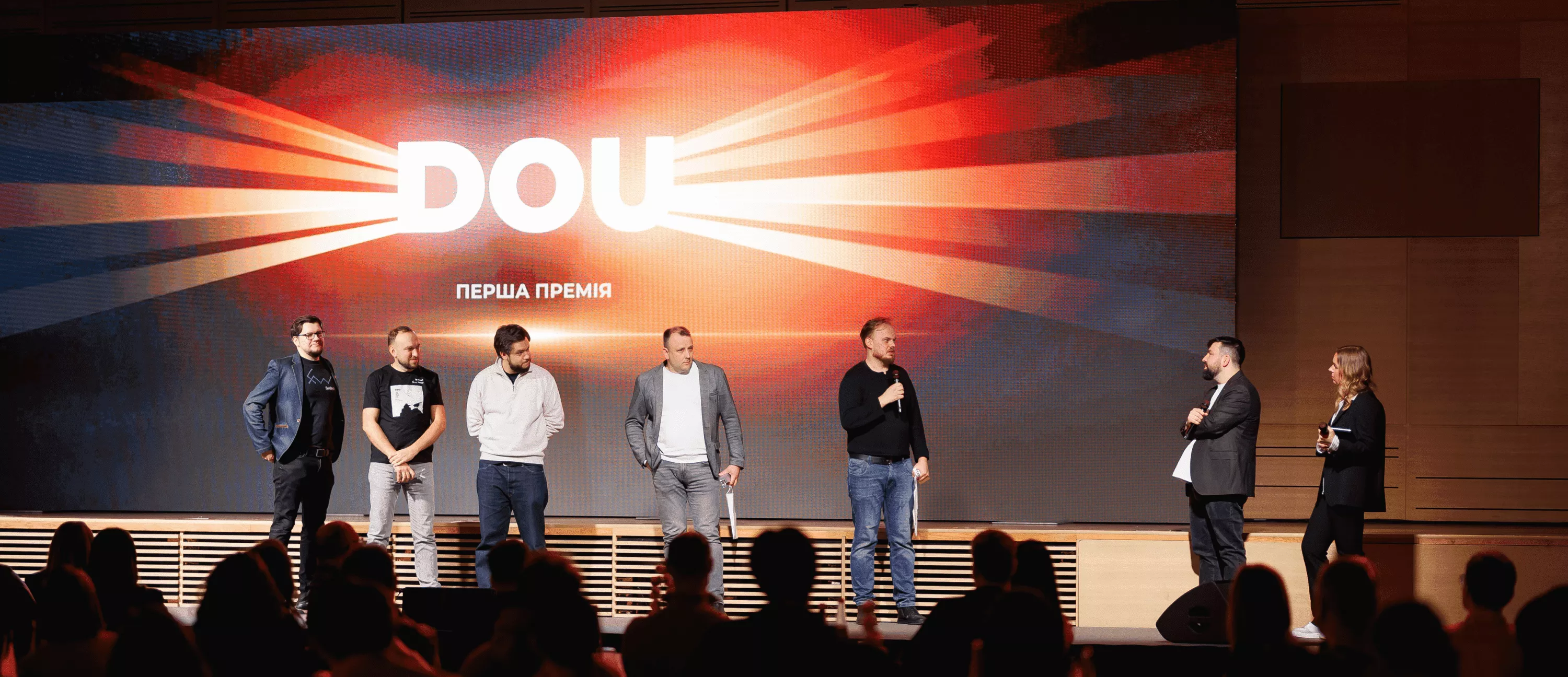
It received a prize at the first DOU Awards for socially oriented projects. In July 2023, Ukraine’s Ministry of Digital Transformation formally recognised Stfalcon as critically important to the functioning of the economy and the life support of the population. Google Play featured the app in its #WeArePlay campaign.
Those numbers and trophies show the scale of what was built, but the real measure arrives in quieter forms.
Shortly after the increased-danger feature went live, a review appeared on Google Play. The new function tells people when a threat is approaching their specific area, calculated from coordinates and resolved to a local quadrant. When a target enters that zone, the phone sounds again.
One user wrote that the notification arrived, they took cover, and a Shahed then struck next to their building. The warning, they said, had saved their life.
Awards matter, but none of them carries the same weight as a message from someone who received a warning, reached shelter, and made it through the attack.
What Air Alert changed at Stfalcon
Before the war, Stfalcon's work was largely measured by familiar software questions: Was the product delivered? Did it work? Did the client get what they needed?
Air Alert introduced a different standard.
When software becomes part of a civil defence system, an outage is no longer just a business problem, and a bug is more than a usability issue. This time, we had to think about reliability, communication, and support differently because the consequences can extend far beyond the product itself.
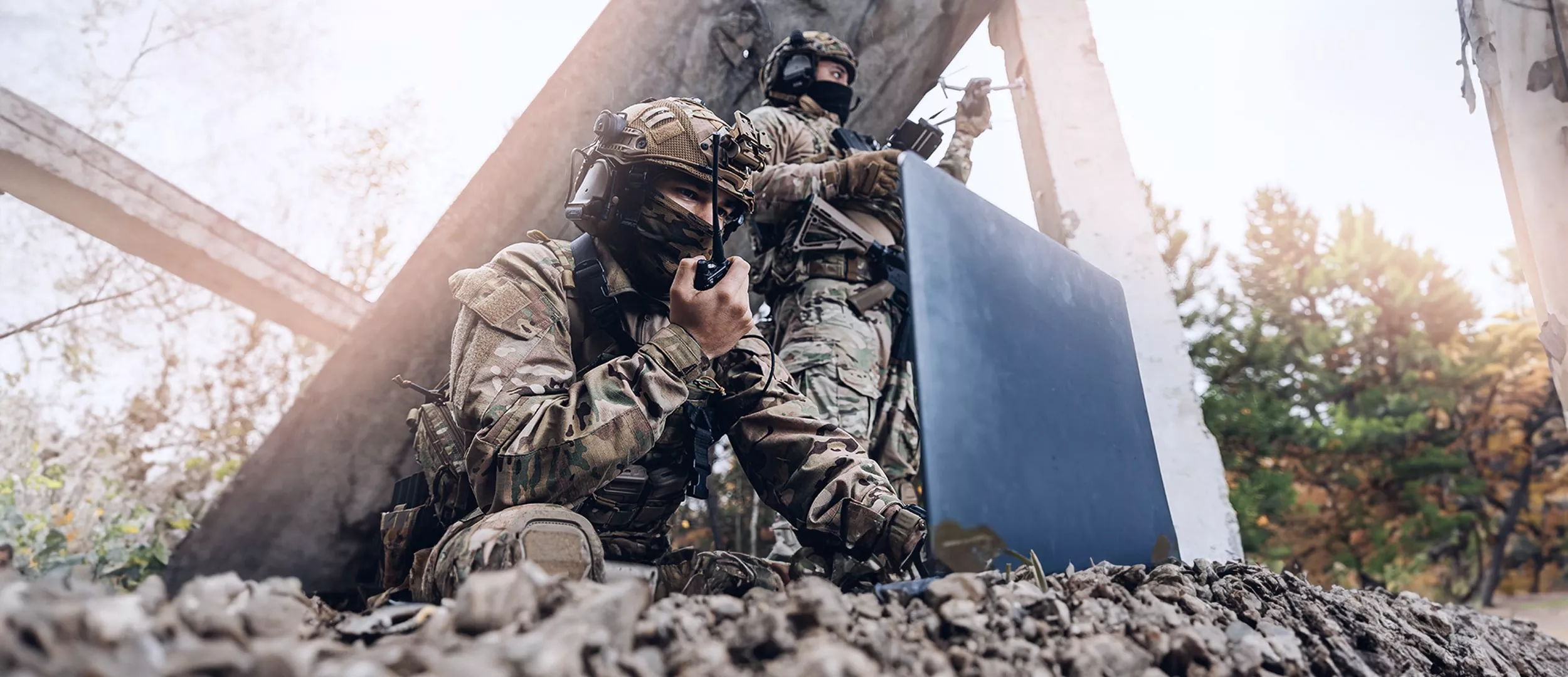
That experience changed the company and also changed what we build. Air Alert was the first of several projects in the emergency and defence sector, each solving a different part of the same problem:
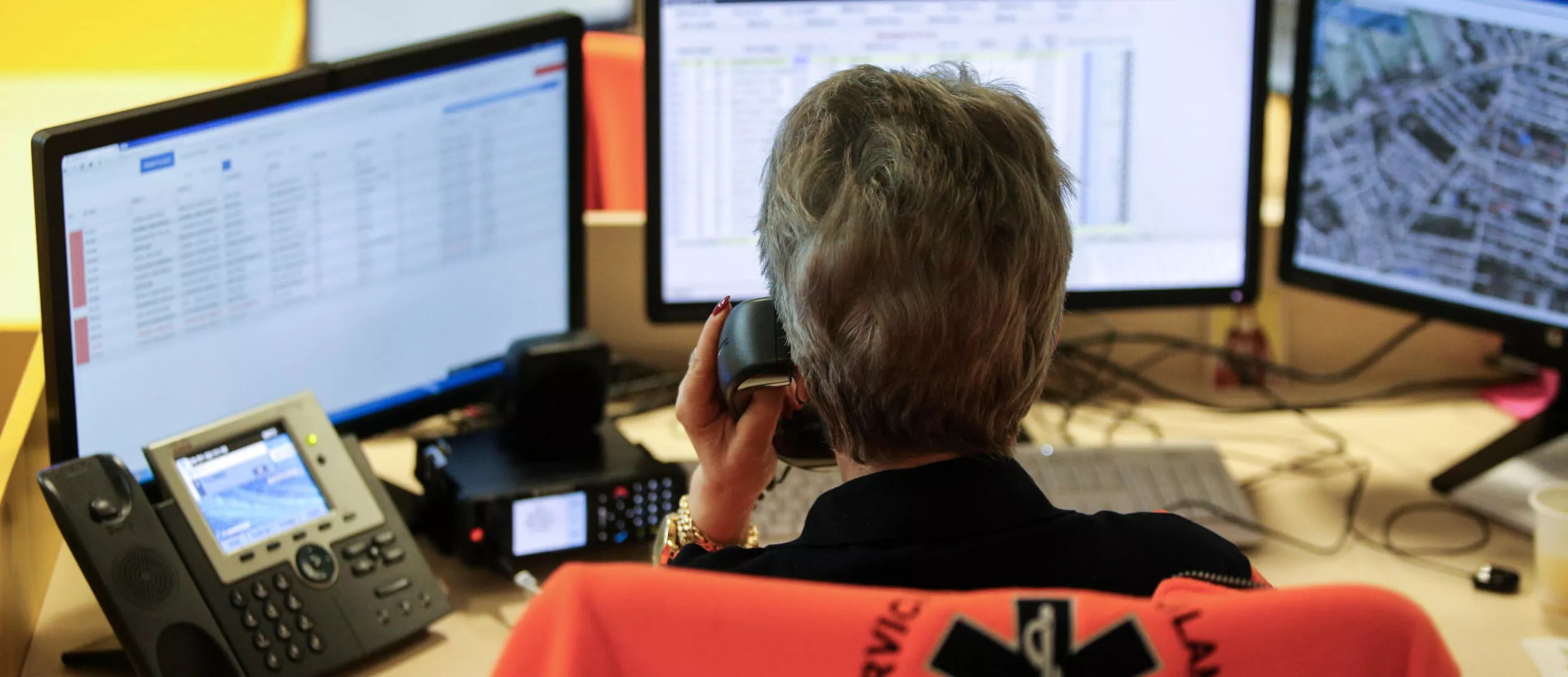
- System 112 — an emergency response platform developed for Ukraine's Ministry of Internal Affairs, handling emergency calls and coordinating the services that respond to them.
- eRaketa — a service that lets anyone who spots a missile or drone overhead report it to air defence forces for further response.
- A device for remote control of street sirens — built at the request of a regional military administration, it solved the problem of switching street warning sirens remotely and can also alert people inside large enterprises and shopping centres.
- A solution for automating access to shelters — an automated lock integrated with the Air Alert notification system that unlocks a shelter the moment a threat is detected, so people aren't left standing at a bolted door during an alarm, and closes again once the all-clear comes through.
Emergency and defence work is now a permanent part of what we do. We build for government institutions and defence-sector clients, and the standard is the same across all of it: these systems have to work at the moment everything else is failing.
Since then, we have shared our experience through consultations and technical discussions with multiple Ukrainian and foreign teams.
We are ready to share what we learned
Teams from other countries have already asked how this was done, and we've answered on architecture, delivery at scale, the state-level integration, the operator workflow, and more. We're glad to keep doing it, for as long as it's useful.
If you're building a public warning or emergency notification system, we'll tell you everything we learned. And if you're working on something else entirely, like logistics, transport, IoT, or any critical system where downtime isn't an option, we'd be glad to talk about that too.