The biggest lie in TMS software pricing is the “price per month.” $999/month? Sounds safe. $10,000/month for enterprise? Still cheaper than building, right? Not necessarily.
The real cost of transportation management system software is never just the license. We’re talking about implementation, integrations, operational exceptions, pricing metrics (users, shipments, freight spend), add-on modules, and what happens when your shipment volume doubles.
A SaaS TMS looks affordable until the subscription turns into a scaling tax.
That’s why Stfalcon compared SaaS vs custom TMS costs using real pricing data and long-term ROI scenarios. With 17+ years of building transportation systems for companies like Ecolines and Nova Post, we’ve seen where costs accumulate, and distilled that insight into this guide and our free SaaS vs Custom calculator.
If you’re choosing between buying a SaaS TMS or building a custom one, this guide will help you calculate the 3–5 year cost and determine which option makes financial sense for your case.
TL;DR
- The biggest mistake in the TMS software price is comparing the monthly subscription vs. build cost. The real comparison is the 3–5 year total cost of ownership.
- SaaS pricing compounds with growth: users, shipments, freight spend, integrations, and add-on modules create a scaling cost curve.
- Custom TMS requires a higher upfront investment ($200K–$300K typical for mid-scale), but the cost stabilizes and doesn’t increase per shipment or per user.
- For growing logistics companies, SaaS can become more expensive than custom by year 3–4, depending on volume and integrations.
- Instead of guessing, use our SaaS vs Custom calculator to model your growth and see when the economics flip.
Why the market pushes you toward SaaS TMS
If you look at how TMS vendors position themselves, the messaging is consistent:
- Start fast
- Avoid heavy upfront investment
- Pay monthly
- Reduce IT risk
SaaS is marketed as the “modern” option. It removes CapEx, promises predictable subscription costs, and eliminates the need to hire a development team. As a bonus, onboarding looks quicker than building from scratch.
For many logistics companies, especially under budget pressure, this framing makes SaaS feel like the rational choice.
But here’s what gets overlooked:
The risk doesn’t disappear. It simply moves into OPEX. Instead of investing upfront, you commit to a cost model that scales with your operations. And in logistics, operations always grow. Or they die.
So SaaS shifts cost from CapEx to OPEX. And OPEX in transportation scales with:
- Shipment volume
- Freight spend
- Number of users
- New markets and new modes
So in the end, the more successful you become, the more expensive your TMS becomes.
| What SaaS promises | What happens at scale |
|---|---|
| Low upfront cost | Long-term OPEX grows with every shipment |
| Fast onboarding | Customization adds delays and costs |
| Predictable monthly fee | Pricing tied to volume, freight spend, and users |
| No IT risk | Operational dependency on vendor |
| “Best practices” templates | Workflows bend to software, not to your ops |
But this doesn’t mean you should ditch SaaS. For smaller operators or standardized workflows, it can be efficient. But once complexity and volume increase, the economic model changes dramatically.
That said, let’s see what SaaS costs imply beyond subscription.
3 elements that drive the cost of a transportation management system
When executives compare SaaS vs custom, they often compare monthly subscription vs development budget. And that’s where they are doing it wrong.
The real cost of a transportation management system is driven by 3 structural components:
- Pricing logic
- Implementation & onboarding
- Integration & exception handling
Let’s unpack them.
1. Pricing logic
Most SaaS TMS vendors use combinations of:
- Per-user pricing ($50–$300 per user/month)
- Per-shipment pricing ($0.50–$2 per shipment)
- Percentage of freight spend (0.5%–2%)
- Tiered usage brackets
- Paid add-on modules
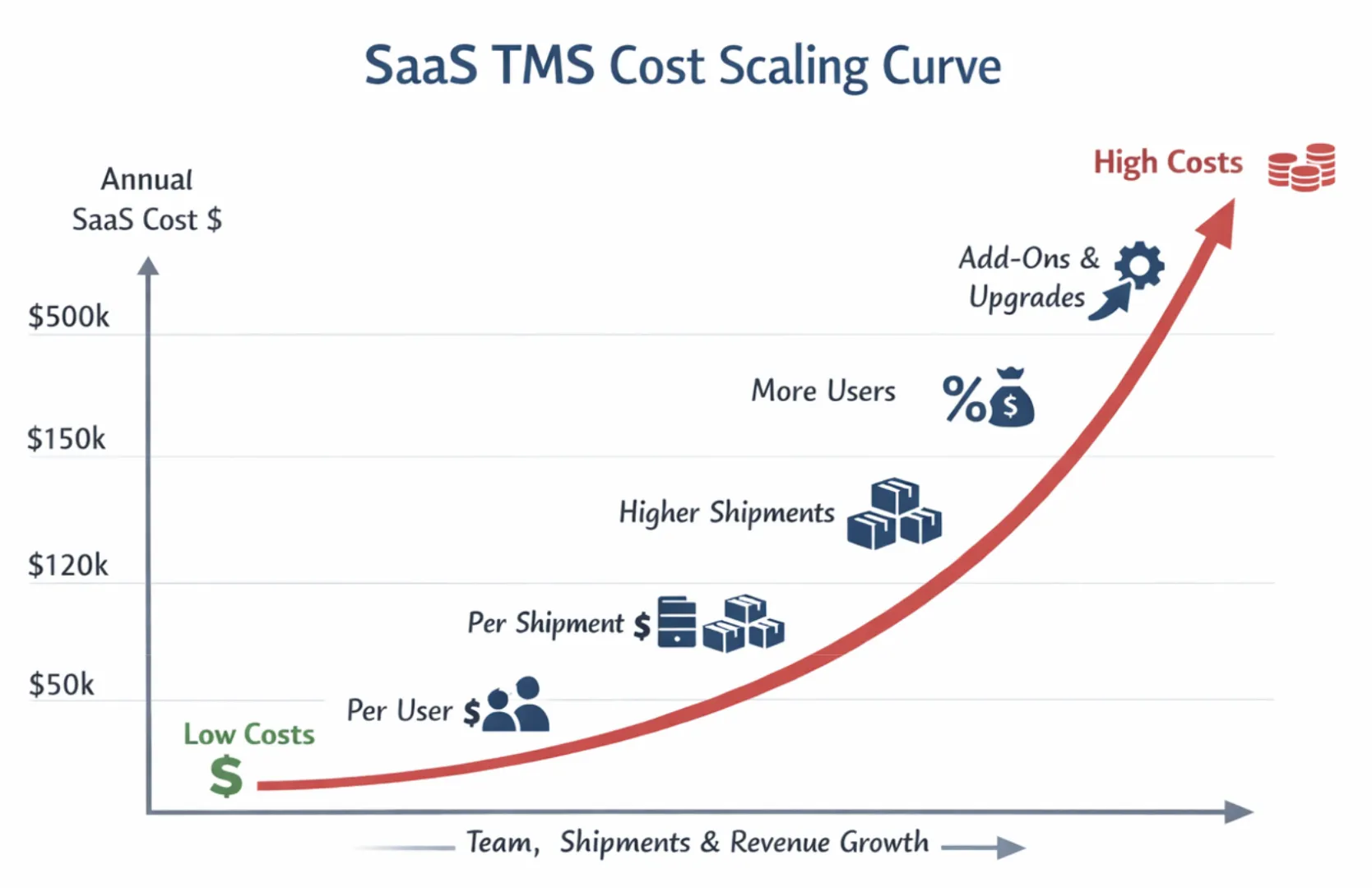
Individually, these seem manageable. But combined, they create a scaling curve tied to team expansion, shipment growth, and revenue growth.
2. Implementation & onboarding
SaaS is often sold as plug-and-play, when in reality, mid-sized logistics companies typically face:
- Setup fees: $10,000–$50,000
- Data migration: $5,000–$25,000
- Training: $5,000–$20,000
- Integration packages: $10,000–$40,000
Realistic onboarding range: $30,000–$120,000 before the first shipment runs. And that’s for standard integrations only.
If your operation includes custom ERP logic, non-standard WMS flows, multiple telematics providers, or complex pricing contracts, costs will increase.
3. Integrations & operational exceptions
30–40% of daily operations in logistics involve exceptions:
- Carrier no-shows
- Appointment changes
- Split loads
- Rejected deliveries
- Rate disputes
SaaS TMS rarely covers all integration needs out of the box. Each integration may cost $5,000–$25,000 for setup, but you also have to consider API usage fees.
Let’s see the subscription pricing for some popular TMS solutions.
SaaS transportation management system cost comparison
Most SaaS TMS vendors do not publish full pricing breakdowns. Instead, they provide starting tiers, “from” pricing, or request-based quotes. That makes it difficult to estimate long-term cost.
Still, public information and buyer reviews give us enough signals to understand how pricing typically behaves.
Below are 3 well-known vendors with publicly referenced pricing entry points.
Shipwell
Shipwell entry tiers start around ~$1,000 per month. At this level, companies typically receive access to core TMS functionality with limited volume and standard integrations.
FreightPOP
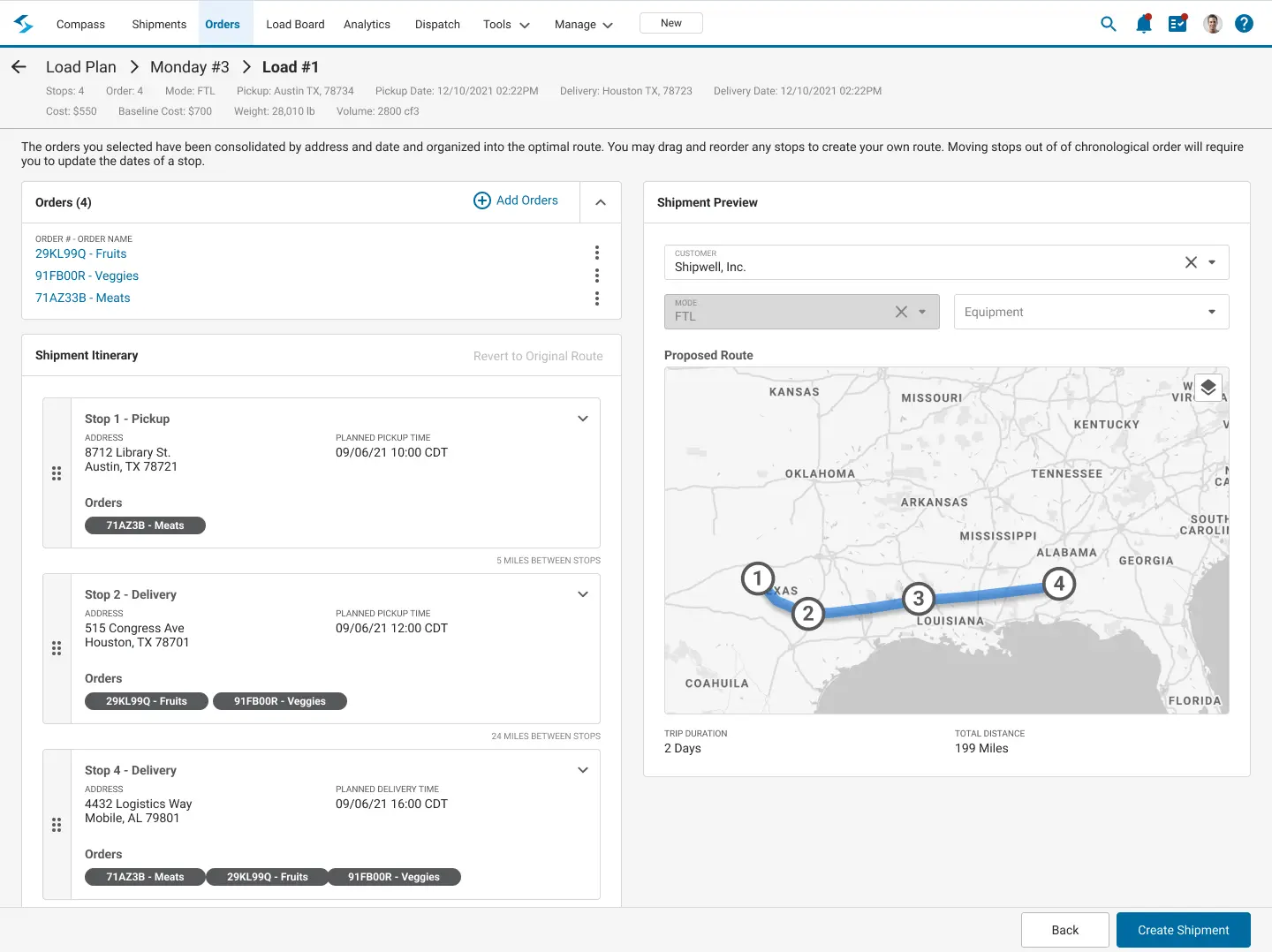
FreightPOP’s publicly referenced pricing via Shopify listings starts at $15,000 per year. But like other SaaS logistics tools, its pricing is tied to shipment volume and carrier connectivity.
Cargoson
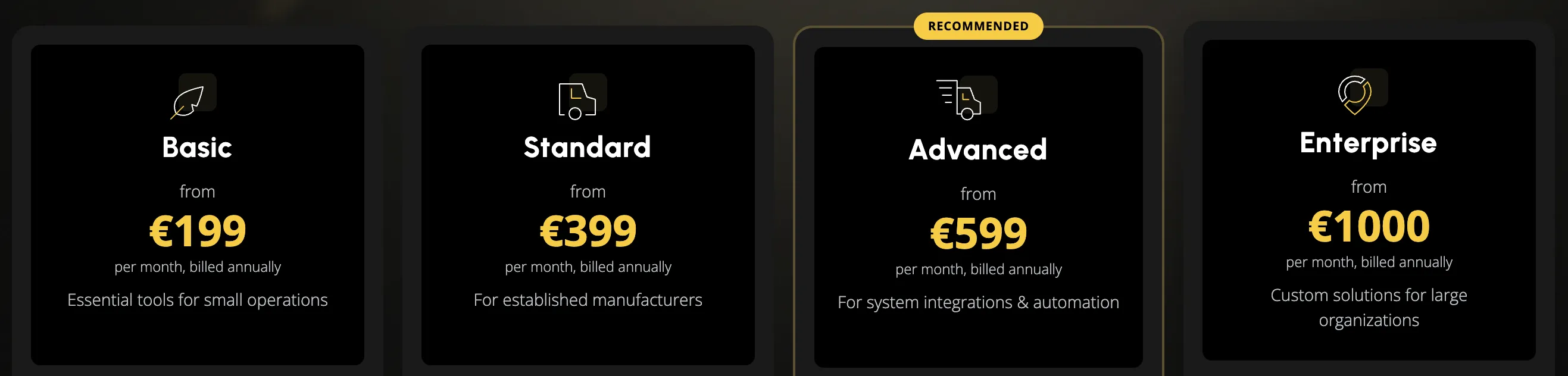
Cargoson TMS software price tiers start from €199/month (Basic), €399/month (Standard), €599/month (Advanced), and €1,000/month (Enterprise), billed annually.
News flash: The transportation management system software cost is more than that
At first glance, €199–€599 per month appears highly affordable.
But notice the built-in scaling triggers:
- Shipment caps (100 → 1,000 → 3,000)
- User limits (2 → 5 → 10)
- API access locked behind higher tiers
- Advanced automation gated at premium level
As volume grows or integrations become necessary, companies naturally move up tiers. This is not hidden pricing, but it clearly demonstrates the structural SaaS model: growth activates higher subscription bands.
And in many cases, SaaS makes you pay for features you won’t use, all while not providing the needed customization.
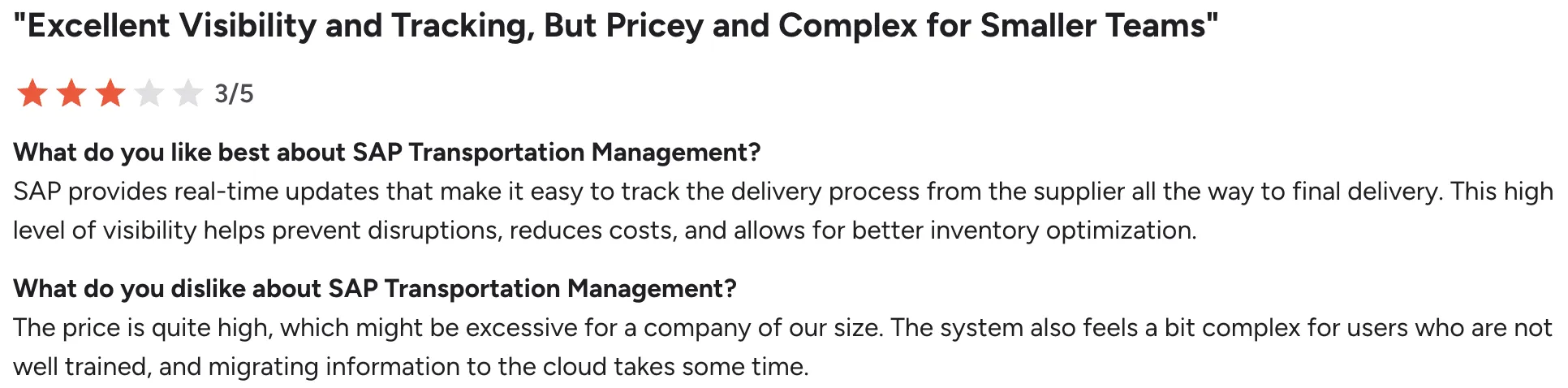
For companies processing tens of thousands of shipments per month, even transparent tier models must be evaluated over a 3–5 year horizon.
3–5 year cost horizon: SaaS vs custom TMS software
Consider an example of a moderate-growth logistics company starting at 1,000 shipments per month, growing 20% annually.
Before a single shipment runs, SaaS TMS typically requires upfront onboarding costs. Setup and configuration often range from $10,000 to $40,000, data migration can add $5,000 to $20,000, ERP or WMS integrations usually cost $10,000 to $30,000, and even basic workflow customization may require another $10,000 to $40,000.
In total, onboarding often falls between $35,000 and $130,000, and this is before recurring subscription fees and growth-based tier upgrades begin.
Here’s an approximate SaaS transportation management system cost evolution:
| Shipments / Month | Likely tier | Subscription + add-ons | Total annual cost | |
|---|---|---|---|---|
| Year 1 | 1,000 | Standard (~$450/mo) | $9K–$16K | $45K–$145K (incl. onboarding) |
| Year 2 | 1,200 | Standard (~$450/mo) | $14K–$22K | $14K–$30K |
| Year 3 | 1,440 | Advanced (~$650/mo) | $22K–$45K | $25K–$55K |
| Year 5 | 2,000 | Advanced / Enterprise | $45K–$90K+ | $50K–$110K+ |
Now, what about custom TMS costs?
Custom software follows a different economic logic. There is no per-shipment tax, per-user subscription multiplier, or % of freight spend.
Cost is driven by:
- Business logic complexity
- Integration depth
- Number of modules
- Automation requirements
Not by how successful your company becomes.
Custom TMS pricing varies widely depending on scope:
- $5,000–$20,000 → very basic MVP or prototype
- $200,000–$300,000 → full-featured modern TMS (core modules, integrations, dashboards)
- $400,000–$800,000+ → complex enterprise-level systems with multi-modal support, AI automation, mobile apps, and heavy integration
The often-quoted mid-range for serious transportation management system implementation is $200K–$300K for a production-grade system.
Let’s compare simplified scenarios:
| Model | Year 1 | Year 3 | Year 5 | 5-Year Total |
|---|---|---|---|---|
| SaaS (growth + integrations) | $45K–$145K | $25K–$55K | $50K–$110K+ | $160K–$400K+ |
| Custom ($250K build) | $250K | $30K maintenance | $30K maintenance | ~$370K |
Now adjust for higher shipment volume and more integrations, and SaaS can exceed custom by year 3–4.
Finally, let’s see how custom TMS development is built and how much time it takes.
How much custom TMS costs and how it gets built
Custom development is a structured engineering process where cost is driven by complexity, integrations, and business logic. Here’s how we build transportation management systems at Stfalcon.
1. Discovery (up to 4 weeks)
This is the most underestimated phase, and the one that protects your budget.
During discovery, we map your real operational logic:
- Order lifecycle from intake to settlement
- Dispatch decision rules
- Rate calculation logic (including surcharges and exceptions)
- Carrier selection criteria
- Exception handling (no-shows, splits, reschedules)
- ERP, WMS, accounting, telematics integration points
The goal is to turn operational chaos into structured architecture. Cost-wise, discovery typically represents a small fraction of total build cost, but it defines scope, reduces change requests, and prevents budget overruns later.
2. Design (2–4 weeks)
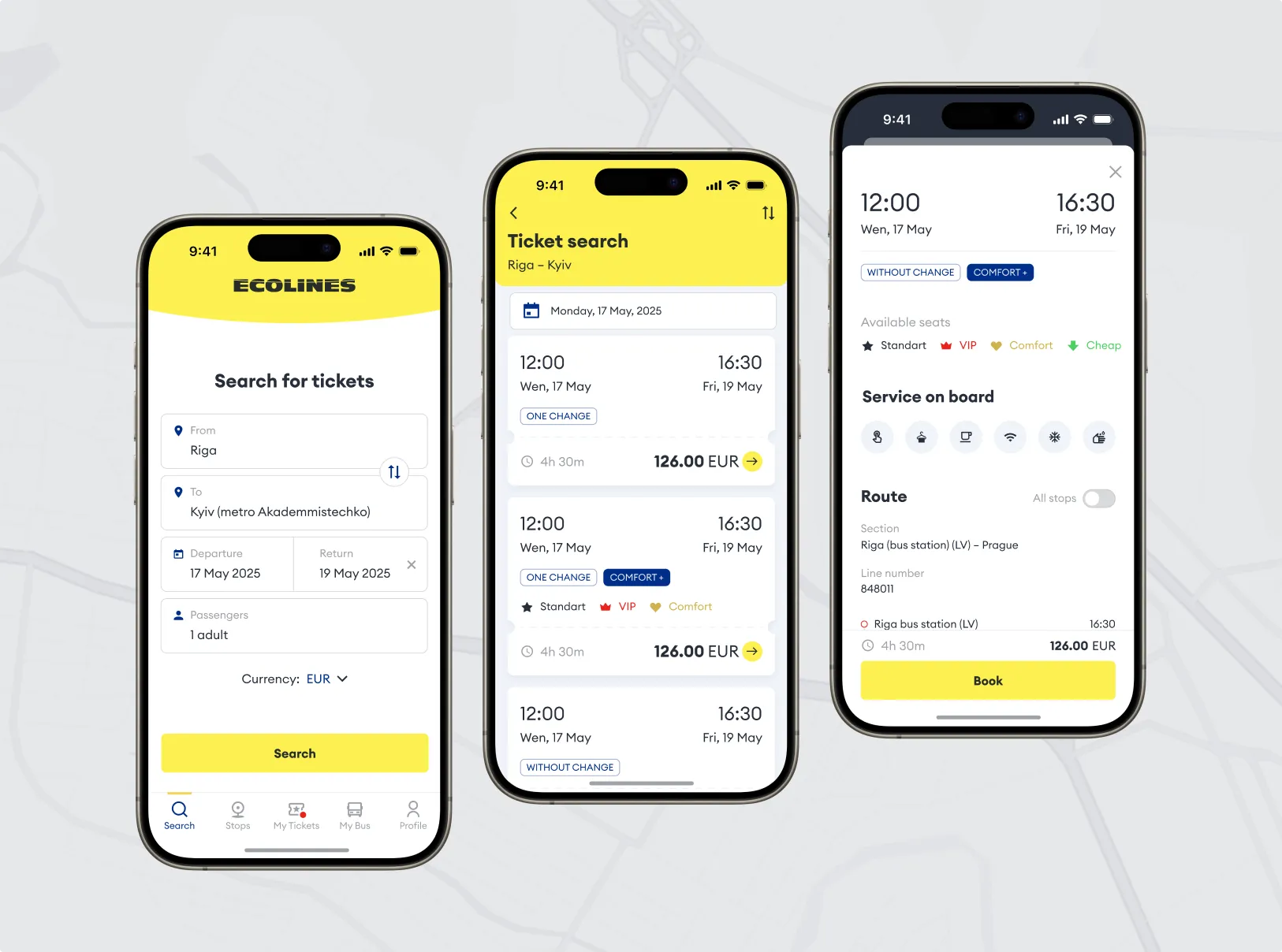
In logistics systems, UI clarity directly impacts operational efficiency. This stage focuses on role-based dashboards (dispatcher, operations manager, finance), admin panels, and workflow optimization. Good UX in TMS reduces manual work, prevents errors, and improves decision speed.
 Read the full case study
3. Development (6–8 months for mid-scale systems)
This is where the core investment goes. For a modern production-grade TMS, typical components include:
- API-first backend architecture
- Web platform for operations teams
- Admin backend
- GIS & real-time tracking engine
- Automated rate management
- Accounting and billing integrations
- EDI/API carrier connectivity
- Optional mobile apps (driver + client)
A mid-scale logistics platform with core modules and integrations typically lands in the $200,000–$300,000 range.
The important difference: once built, there is no per-shipment or per-user multiplier.
4. QA & launch
Logistics systems fail under load if not tested properly. Automated test coverage, user acceptance testing, and phased rollout protect against post-launch operational losses, which in logistics can be extremely costly.
5. Post-launch support & maintenance
After launch, cost shifts from development to:
- Cloud infrastructure
- Monitoring
- Feature iteration
For mid-sized systems, ongoing maintenance and infrastructure range from $30,000–$60,000 annually, depending on scale and hosting model.
Unlike SaaS, this cost does not scale automatically with shipment growth. It scales with infrastructure usage and feature evolution, which are controllable variables.
To see what the development process looks like in practice, consider our Uber-like grain trucking platform built for the CIS market.
How we built an Uber-like grain logistics platform
In the grain transport market, cargo volumes can reach thousands of tons, elevators have strict daily loading limits, and timing is critical. Before digitalization, cargo owners had to manually search for carriers, coordinating multiple trucking companies just to fulfill one large request.
We built a marketplace-style TMS that brought all participants (cargo owners, carriers, drivers, and terminal representatives) into one real-time system. The platform automated what used to be chaotic coordination.
 Read the full case study
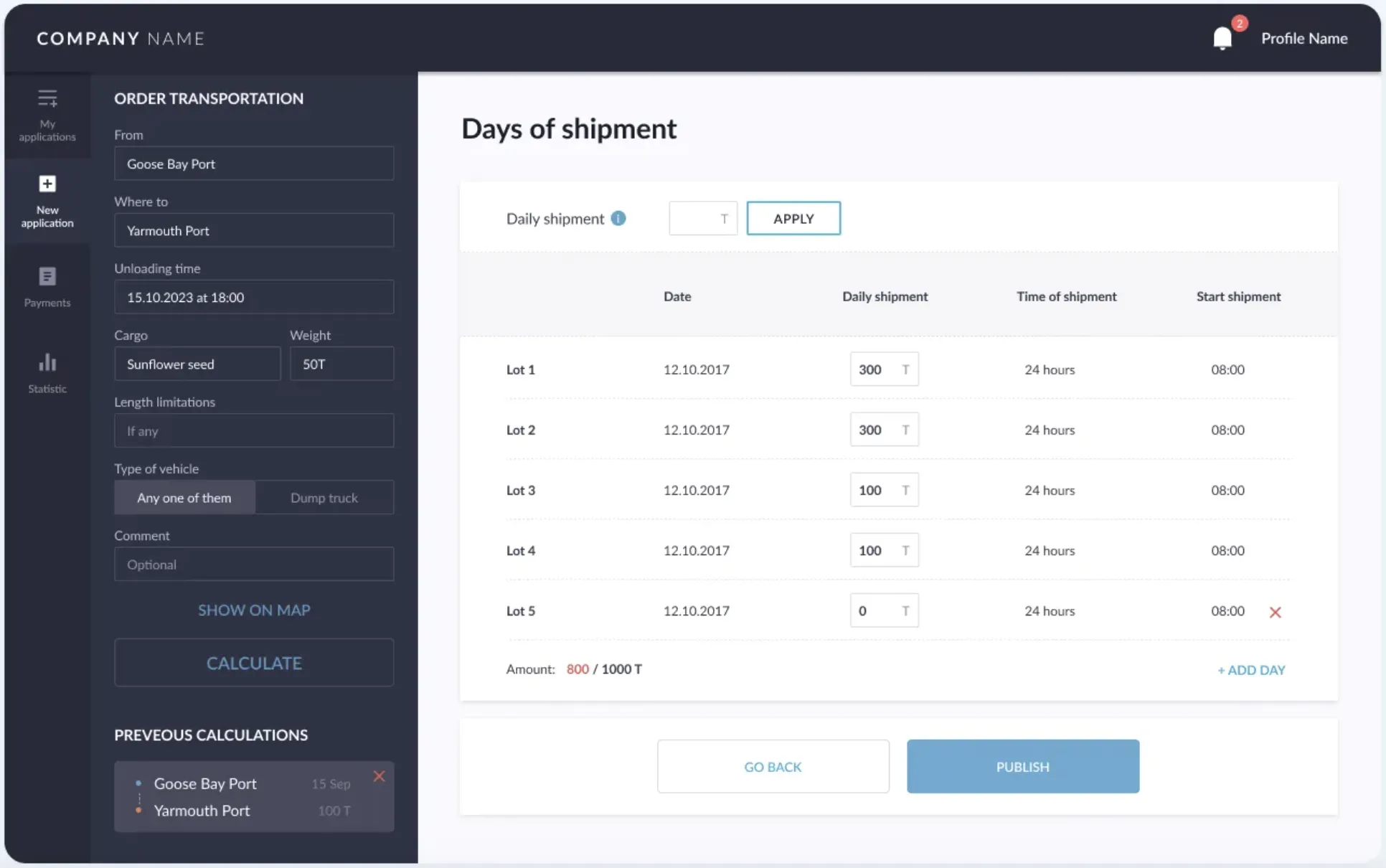
Large transportation requests are now automatically divided into manageable lots based on daily elevator capacity. Carriers claim portions according to truck availability, while cargo owners track the entire process online. Drivers manage deliveries via a mobile app with real-time GPS tracking.
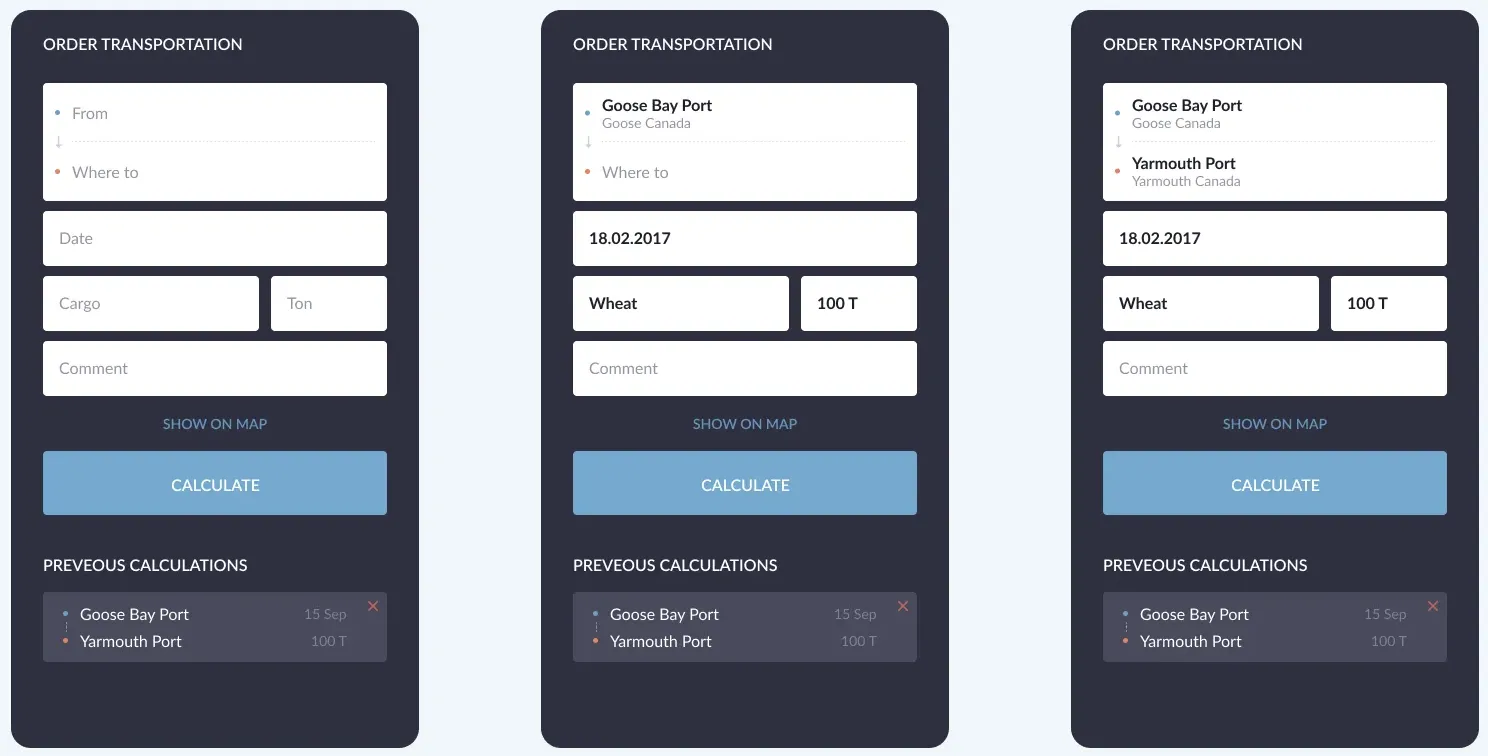
Behind the interface is a full-scale architecture:
- Centralized API
- Web platforms for all roles
- Native mobile apps
- Custom GIS engine processing live vehicle data
- Integrations with accounting systems, banking services, and mapping APIs
The result is a logistics ecosystem that handles high-volume operations without per-user or per-shipment fees. This is the difference custom development makes: you build around your operational reality, and you scale without subscription constraints.
Read more about how to build TMS software that fits your logistics.
Calculate your TMS ROI with our cost calculator
SaaS scales with your users, shipments, freight spend, and integrations. Custom requires a higher upfront investment, but the cost curve flattens over time. The only meaningful comparison is the total cost of ownership over 3–5 years.
To help you calculate it, we built a SaaS vs custom cost calculator.
Enter your parameters and see:
- How much a SaaS TMS will cost as you scale
- When will a custom solution become cheaper than SaaS
- What inflates your budget the most: users, shipments, integrations, or modules
Run the numbers before you commit.
Answer ten questions about your operation. You get a year-by-year comparison of your current SaaS spend against a custom logistics platform built once and owned outright, module by module. Based on Stfalcon's own project-estimation methodology.
Takes about 3 minutes. 17+ years in transportation & logistics stand behind the math.
FAQs about transportation management system costs
How much does a transport management system cost?
The cost of a transportation management system (TMS) varies depending on the model.
SaaS TMS: Typically ranges from $50–$300 per user per month, often combined with per-shipment or % of freight fees. Over 3–5 years, the total cost of ownership (TCO) can reach $150,000–$300,000+ for growing mid-sized logistics companies.
Custom TMS: Development usually ranges from $200,000–$300,000 for a production-grade system, with annual maintenance around $30,000–$60,000.
Is a SaaS TMS cheaper than a custom TMS?
A SaaS TMS is usually cheaper in year 1 because it has lower upfront costs. However, as shipment volume, users, and integrations grow, SaaS pricing scales accordingly.
For logistics companies processing high shipment volumes or requiring complex integrations, a custom TMS is more cost-effective within 3–5 years due to lower total cost of ownership.
How much does TMS implementation cost?
TMS implementation cost depends on the deployment model.
For SaaS solutions, onboarding typically ranges from $35,000 to $130,000, including setup, data migration, ERP/WMS integration, and basic customization.
For custom transportation management software, full-cycle development of a mid-scale system generally costs $200,000–$300,000, including discovery, design, development, testing, and launch.
Are there ongoing maintenance costs with custom TMS?
Yes. Custom TMS platforms require ongoing infrastructure, monitoring, and security updates. For mid-sized systems, annual maintenance and cloud infrastructure typically range between $30,000 and $60,000, depending on scale and traffic.
Unlike SaaS subscriptions, maintenance costs do not automatically increase with shipment volume.
When does custom TMS become cheaper than SaaS?
Custom TMS becomes cheaper when:
- Shipment volume exceeds 20,000–30,000 per month
- Integration complexity increases
- SaaS tier upgrades become frequent
- Per-shipment or % freight pricing becomes material
The exact breakeven point depends on your growth rate and operational scale. Try our TMS cost calculator above to see what will fit your specific case better – SaaS or a custom TMS.