
Geopolitics, shifting regulations, and unpredictable economic shocks have turned logistics into a daily game of risk management. When you can’t predict what new tariff bill or event might hit the headlines tomorrow morning, relying on rigid or outdated systems becomes a strategic liability.
If you want to keep freight moving and react faster than the next disruption, you need a transportation management system (TMS) to support your operations.
Below, we overview of the top transportation management systems that could improve your logistics workflow. This isn’t a feature-by-feature checklist. It's a realistic assessment of what each system delivers and where it suits.
At Stfalcon, we provide custom tms development services for companies whose operations don't fit the mold. That perspective shapes this analysis. We know what the best transportation management systems (TMS) in 2026 can and can't do because we're often called in when they fall short. But we also know when ready-made transportation solutions are a good choice. This guide is built on that honesty.
TL;DR
Most TMS solutions come with a similar set of basic features, so you should choose the ones offering the functionality fitting your business operations specifically.
Our list includes some well-established tools with niche-specific functionality:
- Oracle OTM: Great for global logistics, but it’s rigid and can be tough for smaller, fast-moving teams.
- SAP TM: Works best if you already run on SAP; otherwise, expect a learning curve and some process changes.
- Blue Yonder: Strong choice for retail and e-commerce with solid AI tools, but can feel pricey or less relevant outside those industries.
- Manhattan TMS: Powerful for multimodal shipping and warehouse-heavy operations, though some planning tasks aren’t as user-friendly.
- Navisphere: A good fit for global shippers who want TMS + access to C.H. Robinson’s carrier network, but some users report slow performance.
- Kuebix: Flexible, transparent SaaS pricing with options for all shipper sizes, though user experience varies by user.
- Uber Freight: Easy to use and tightly connected to a large carrier network, but lighter on capabilities for complex logistics.
If you feel like the right match is not in the list, consider exploring custom TMS development. Stfalcon can help with that.
| Top transportation management systems compared | |||
|---|---|---|---|
| TMS | Best for | Key advantage | Main limitation |
| Oracle OTM | Large global enterprises with complex logistics networks | Enterprise-scale orchestration, scalability, and multi-entity support | Rigid workflows and a challenging learning curve |
| SAP TM | Companies already operating within the SAP ecosystem | Deep integration with SAP ERP, finance, warehouse, and sales modules | Requires SAP expertise and may force teams to adapt their processes |
| Blue Yonder | Retail, consumer goods, and e-commerce companies | AI-powered planning, predictive analytics, and broad supply chain functionality | High licensing and implementation costs; weaker fit outside its core industries |
| Manhattan TMS | Warehouse-heavy and multimodal transportation operations | Strong WMS integration, multimodal planning, and extensive API access | Some dispatching and post-planning workflows may be less user-friendly |
| Navisphere | Global shippers that need a TMS and access to a large carrier network | Connection to the C.H. Robinson network, visibility tools, and predictive insights | Some users report slow performance and interface issues |
| Kuebix | Shippers of different sizes, especially SMB and midmarket teams | Flexible plans, pre-built integrations, and an accessible SaaS model | User experience varies depending on the workflow and user |
| Uber Freight | Truckload and LTL shippers that want fast access to carrier capacity | Large carrier network, instant pricing, automated tendering, and tracking | Fewer capabilities for complex global and multimodal logistics |
Best TMS in 2026: 5 questions to start with
Most TMS platforms already have the basics you need. But they also include a bunch of features you’ll never touch. So if you’re considering ready-made TMS solutions, the question isn’t what they offer, but how well it fits your transportation operations.
When you are evaluating potential vendors, it would be great to ask yourself these questions:
Will the system fit the way my business already works?
Your dispatch team has a rhythm. Your customer service reps have their process. Your drivers have their routine. The best transportation management system adapts to these workflows.
What this means: If the system forces you to restructure how your team operates, like changing the order of steps, adding unnecessary approval layers, or making workarounds for common tasks, adoption will fail. Look for TMS platforms that can be configured to match your processes, not cookie-cutter workflows built for everyone and no one.
Can the team use it without a PhD?
If your dispatchers need a week of training to create a shipment or your drivers can't figure out the mobile app, the system is too complex.
What this means: During demos, pay attention to how easily people can complete everyday tasks. Watch how many clicks it takes to build a shipment, update a load, or find tracking info. Ask how long it typically takes for new hires to get up to speed.
Will it talk to other systems?
Your TMS needs live data from your ERP, order management system, WMS, and accounting software. If the integration requires manual exports, daily batch jobs, or expensive middleware, you're signing up for ongoing headaches.
What this means: Ask specifically about integration with your systems. Request references from companies with similar tech stacks. Understand whether integrations are native, API-based, or require third-party connectors. And ask who pays to build and maintain them because someone always does.
What happens when the business grows 3x?
You're not buying a transportation management system for today's volume. You're investing in the infrastructure that needs to scale with your business for the next 3-5 years.
What this means: Ask about performance at 3x and 10x your current shipment volume. Understand how pricing scales because per-shipment models can become expensive as you grow. Verify the system can handle new geographies, transportation modes, and business complexity without requiring a platform migration.
What's the true all-in cost?
The license fee is just the beginning. Implementation, training, integrations, customizations, annual support, and hidden costs often double or triple the advertised price.
What this means: Demand a complete TCO breakdown for year one and ongoing annual costs. Include professional services, internal resource allocation, integration development, training, and support fees. If the vendor can't provide this, assume they're hiding something.
Once you work through these questions, your list of the best transportation management systems will shrink to only those that actually fit. One platform might score perfectly on paper but fail on questions 1 and 2. Another might lack flashy features but nail workflow alignment and user experience.
With that covered, here are the seven platforms that dominate today's TMS landscape.
Evaluating whether custom software is the right move?
Let’s discuss your goals, and we’ll help you choose the best path forward.
Alina
Client Manager

Top transportation management systems in 2026 worth your shortlist
Truth is, even the best transportation management systems in 2026 can't match a system built specifically for your business. But going custom isn’t always the first step. Maybe the budget isn’t there yet, or your business is still growing into its processes.
Meanwhile, ready-made TMS platforms can help you move forward. They give you room to experiment, understand what works, and learn what your team needs. So let’s take a closer look at the top TMS to support you now and help you prepare for what comes next.
Oracle Transportation Management (OTM): Enterprise solution built for global logistics complexity
OTM is the heavyweight champion of TMS platforms, built for organizations moving thousands of shipments daily across continents. It's what Fortune 500 companies deploy when logistics complexity demands industrial-grade orchestration.
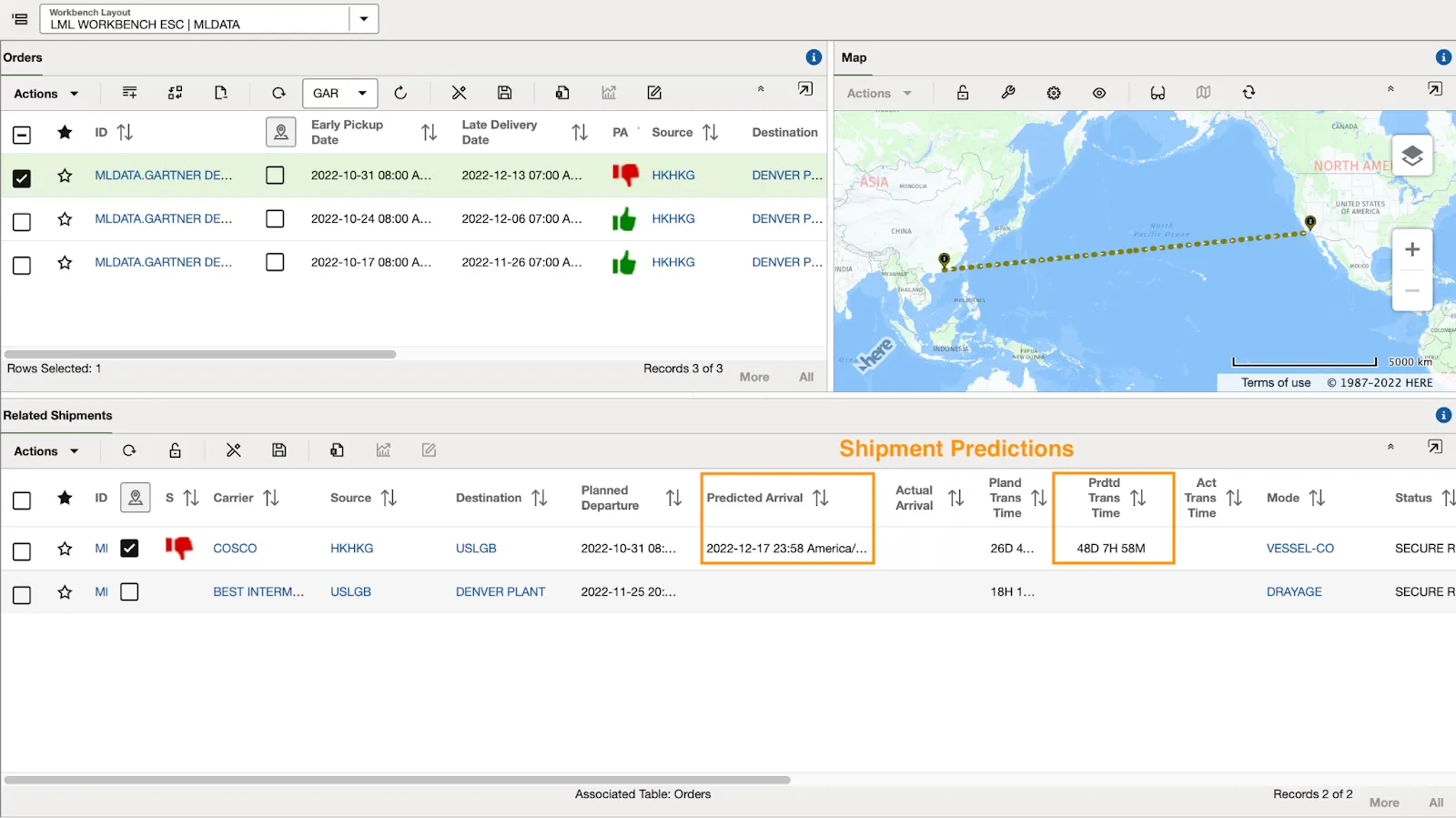
Workflow alignment: OTM is powerful, but rigid. Expect significant process re-engineering to match Oracle's vision of how your logistics should operate. The platform assumes enterprise-scale workflows with multiple approval layers and formal processes. If your operation is lean and agile, you might fight the system daily.
User experience and learning curve: Oracle TMS reviews are mixed, with users praising its features and those reporting issues with the UI. For some people, the Oracle TM “is not just user unfriendly, it’s user hostile”.
Integrations: Oracle-to-Oracle integration is seamless, and there are native connectors for major ERPs and WMS platforms. However, custom connections might require specialist support.
Scalability: Oracle handles high shipment volumes without breaking stride. Multi-entity, multi-currency, multi-language support comes standard.
Pricing and TCO transparency: Oracle keeps OTM’s pricing behind the sales process, so you’ll need to reach out for specifics. What we do know is that it’s not a system known for its affordability.
SAP Transportation Management: Natural choice for companies living in the SAP ecosystem
Like OTM, SAP TM isn't standalone software. It's a piece of SAP's sprawling enterprise ecosystem. If your company already runs on SAP, it's the natural choice. Your procurement data, inventory levels, and financial reporting will all speak the same language.

Workflow alignment: SAP TM inherits SAP's structured, process-driven philosophy. It offers tools for strategic freight management, order management, transportation planning, and more. If you're already using SAP ECC (SAP’s older-generation ERP system) or S/4HANA (SAP’s new-generation ERP platform), workflows feel familiar. If not, you will need to adapt.
User experience and learning curve: Users on Reddit say that SAP TM has a steep learning curve, especially in the planning aspects. They also add that online resources and books may not be enough to master the system.
Integrations: SAP TM integrates with core SAP modules like ERP, warehouse management, finance, sales and distribution, and more. Connections to third-party systems use standard APIs, though they might need SAP expertise to configure. SAP also offers prepackaged integrations to connect to your software landscape.
Scalability: SAP TM runs on SAP's enterprise-grade infrastructure, so it can scale and support complex logistics with multi-leg routes and high freight volumes.
Pricing and TCO transparency: Unlike Oracle TM, SAP provides a pricing page on its official website. Still, it doesn’t reveal features included, actual prices, or a full TCO breakdown.
Blue Yonder: AI-driven supply chain system for modern retail and e-commerce
Blue Yonder is an all-in-one supply chain platform with AI and cloud infrastructure behind it. The platform covers supply chain planning, warehouse and inventory management, order management, transportation management, and fulfillment. The platform integrates AI agents, generative AI, and predictive analytics to automate decisions and anticipate disruptions before they happen.
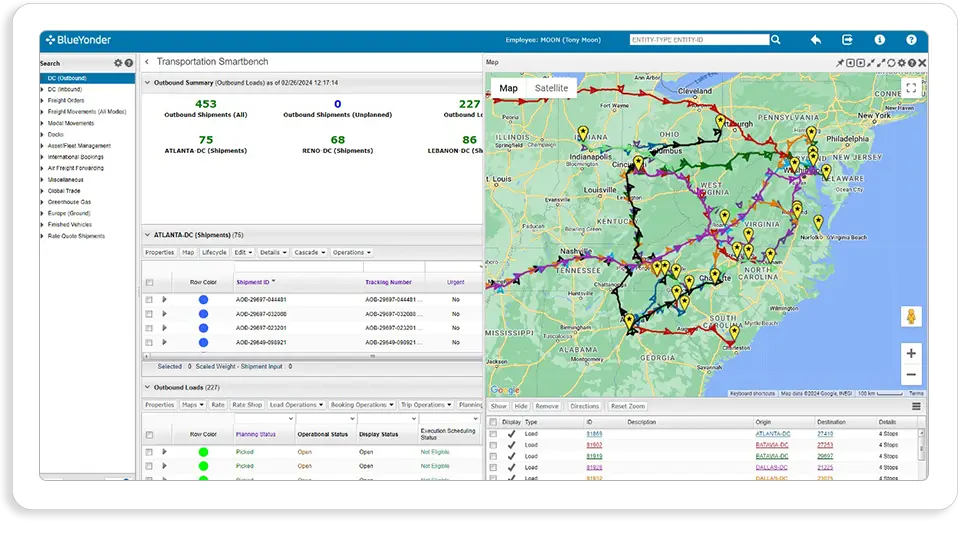
Workflow alignment: Blue Yonder is ideal for retail, consumer goods, and e-commerce workflows like store replenishment, DC-to-DC transfers, omni-channel fulfillment, and last-mile delivery. It’s built for businesses that need tight coordination between demand, inventory, warehousing, and transportation. If you operate in these verticals, it feels purpose-built. Manufacturing or distribution-only operations might find features misaligned.
User experience and learning curve: Blue Yonder is easier to pick up than Oracle or SAP, but users still need training to work at full speed. Thankfully, the platform includes comprehensive training options to help teams get there.
Integrations: Blue Yonder offers a common API set and out-of-the-box data egress tools to connect with existing ERP, WMS, and e-commerce platforms. It also has an extensive partnership network, including Snowflake, Microsoft, ERP systems, WMS/OMS providers, transportation networks, and more.
Scalability: Built in the cloud, Blue Yonder is designed to grow alongside your business. It can handle increasing shipment volumes and more complex networks without requiring major reconfiguration.
Pricing and TCO transparency: Pricing isn’t published, so you’ll need to speak with Blue Yonder directly for an estimate. Reviews indicate the platform is expensive, with steep licensing and implementation costs. Some customers report prices reaching into the “hundreds of thousands”.
Manhattan: Multi-modal TMS to coordinate your transportation network
Manhattan Associates is known for warehouse management software, and its TMS is built to work with it. The platform provides multi-modal transportation planning, real-time shipment visibility, carrier management, automated freight audit and payment, route optimization, load consolidation, and more.
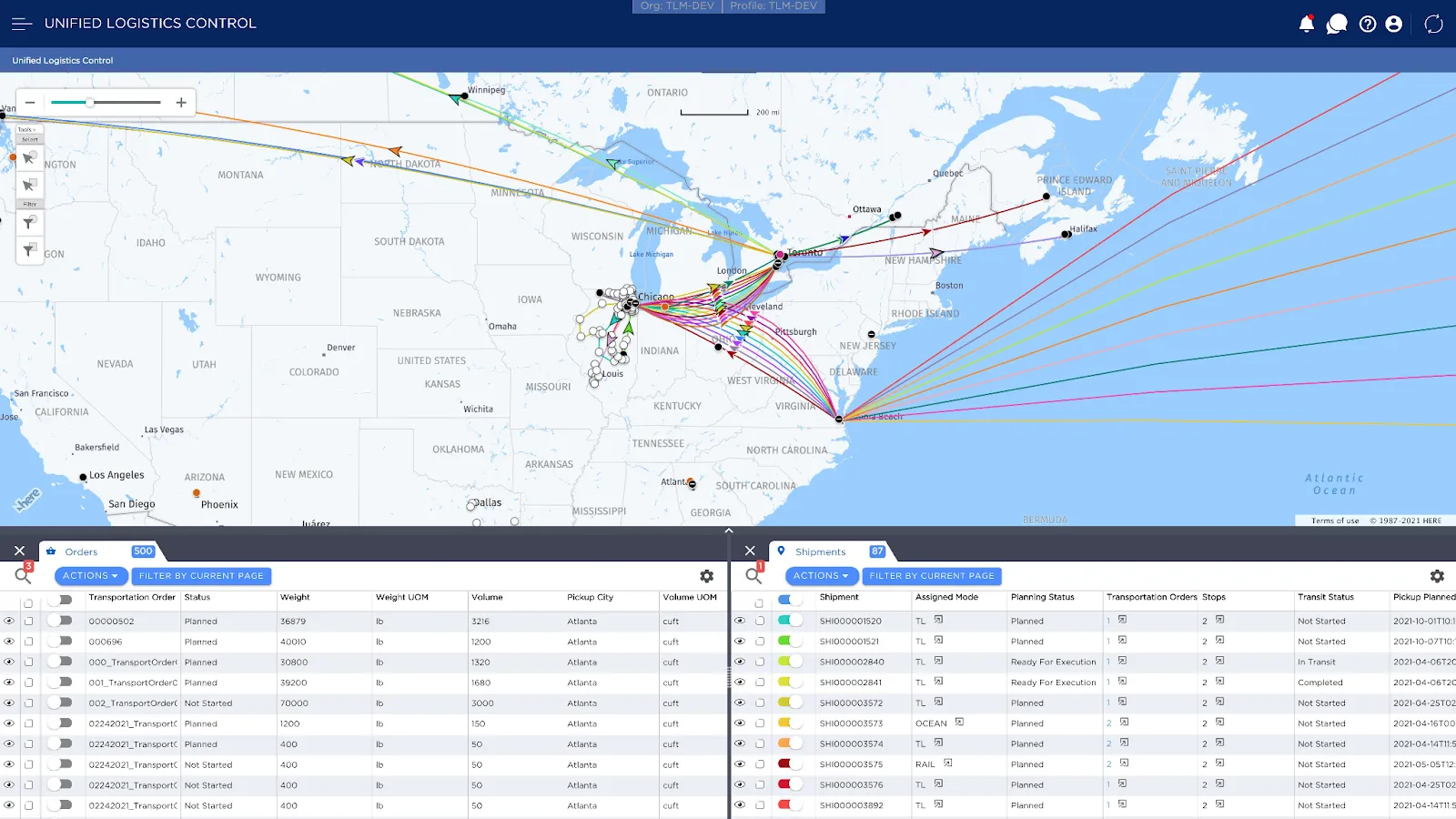
Workflow alignment: Manhattan TMS supports all major transportation modes (truck, parcel, rail, ocean, air) and includes advanced capabilities like cross-docking, backhauls, and continuous moves. It works great in environments where warehouse and transportation operations need to sync, especially when paired with Manhattan’s WMS.
User experience and learning curve: Users say the system is easy to navigate, and most things can be found in just a few clicks. The modern interface is straightforward and doesn’t demand technical know-how. However, some users noted that dispatching and post-planning operations aren't user-friendly and can be prone to errors. The good news is that Manhattan offers educational services and training programs to guide teams through the system.
Integrations: Manhattan offers unlimited API access with thousands of endpoints and extension points.
Scalability: This TMS is built to support everything, from small businesses to global supply chains, so whether you ship occasionally or manage large international operations, it can scale to meet your needs.
Pricing and TCO transparency: Manhattan doesn’t publish official TMS pricing. Everything is custom, and you’ll need to talk to sales for approximate numbers. But based on ITQlick review, the price starts at around $75,000 per year for small businesses, with additional per-user fees for larger deployments. Implementation typically costs $50,000 to $200,000, depending on project size. Mind, these aren’t official Manhattan prices, so if you need exact numbers, you’ll have to ask them directly.
Navisphere: Global TMS + 3PL network for multi-modal shippers
Navisphere by C.H. Robinson is a transportation management system that connects around 200,000 shippers and carriers globally. It provides real-time visibility, automates processes, and offers analytics to help businesses streamline logistics across various modes and regions. Key features include shipment lifecycle management, purchase order automation, and predictive insights for improved efficiency and cost savings.
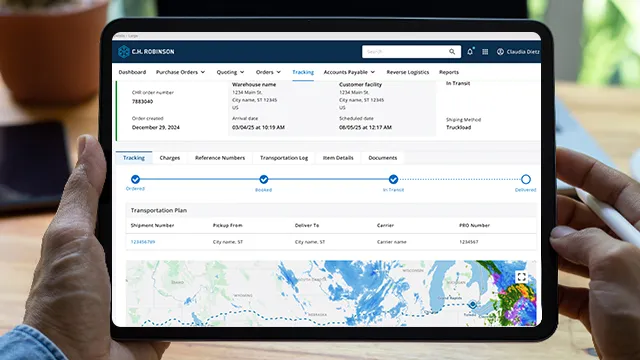
Workflow alignment: Navisphere is best suited for companies with multi-modal and global transportation needs, particularly those that want both a TMS and access to C.H. Robinson’s large 3PL network. It fits shippers and 3PLs that move high volumes and need carrier coordination.
User experience and learning curve: Navisphere is more intuitive than many enterprise platforms, but some users say it takes time to get comfortable with the interface. Some report slow performance, interface quirks, and occasional errors around carrier selection and rate negotiation.
Integrations: Navisphere provides REST APIs that let you plug its transportation and supply chain tools into your existing ERP or TMS. This makes it easy to share data, automate workflows, and access C.H. Robinson’s carrier network from the systems you already use.
Scalability: Navisphere grows right along with you. Sudden demand spike? New market to jump into? The platform scales so you can move faster, adjust quickly, and keep shipments flowing without the usual headaches.
Pricing and TCO transparency: Pricing isn’t publicly available, so it’s difficult to assess costs. For accurate details, it’s better to request a quote.
Kuebix: SaaS TMS with a free trial
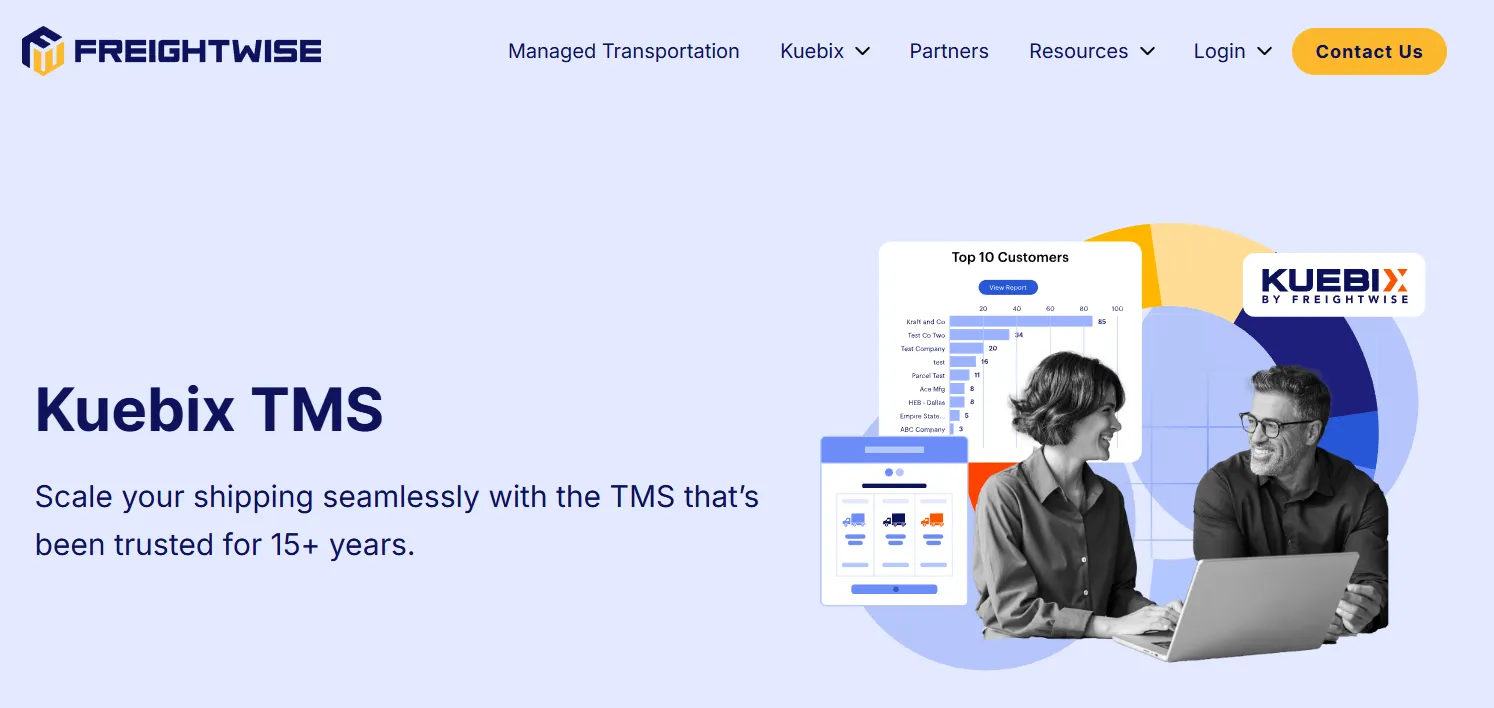
Kuebix by Freightwise is a SaaS TMS for midmarket and larger shippers. It includes capabilities for planning, execution, tracking, visibility, and analytics. Frightwise also provides managed transportation services and OnKue, a “Kuebix lite” solution for smaller businesses.
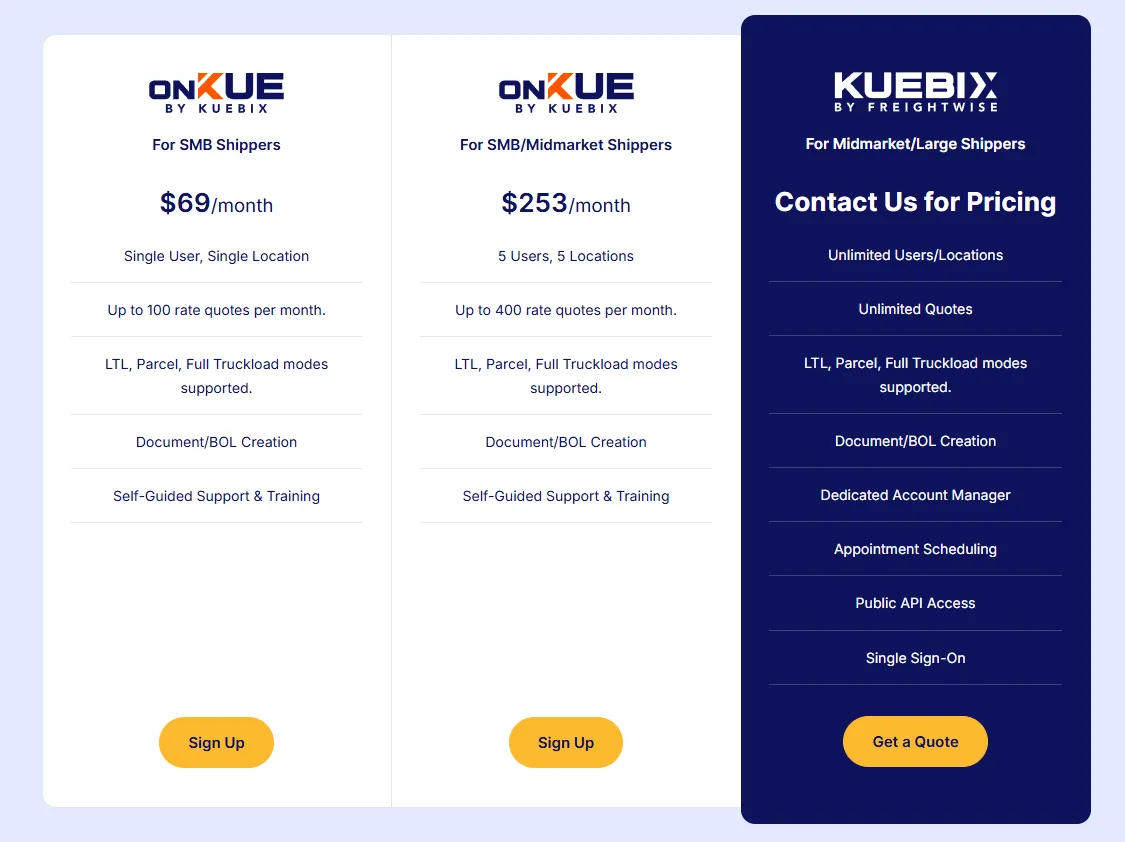
Workflow alignment: Kuebix is a good fit for almost any shipper. Small teams get a simple version for basic freight needs, while midmarket companies can add users and locations as they grow. Enterprises use the full package, with unlimited access, advanced tools, APIs, and dedicated support.
User experience and learning curve: Based on Capterra reviews, feedback is inconsistent. Some users say Kuebix isn’t very user-friendly, while others find the interface intuitive and easy to navigate. In short, the experience varies by user.
Integrations: Kuebix connects with your existing finance and accounting platforms, ERPs, WMS, carriers, and more. Pre-built connectors exist for QuickBooks, NetSuite, and common systems.
Scalability: Kuebix runs on a cloud-based architecture that lets you expand your system as your logistics needs evolve. You can begin with core features and add more advanced capabilities over time.
Pricing and TCO transparency: With Kuebix, you see pricing upfront. The company offers three plans, including a single-user setup for SMB shippers ($69/month), a multi-user, multi-location plan for SMB/mid-market shippers ($253/month), and a fully featured plan with unlimited users and advanced capabilities for large enterprises. The last option requires contacting Kuebix for a custom quote. Plus, Kuebix gives you a two-month free trial, plenty of time to take the TMS for a real test drive.
Uber Freight: Modern TMS connected to carrier network
Uber Freight offers a full TMS that blends planning, execution, visibility, and analytics. What separates it from traditional TMS platforms is that it’s directly connected to a large carrier network with instant pricing, automated tendering, and end-to-end real-time tracking.
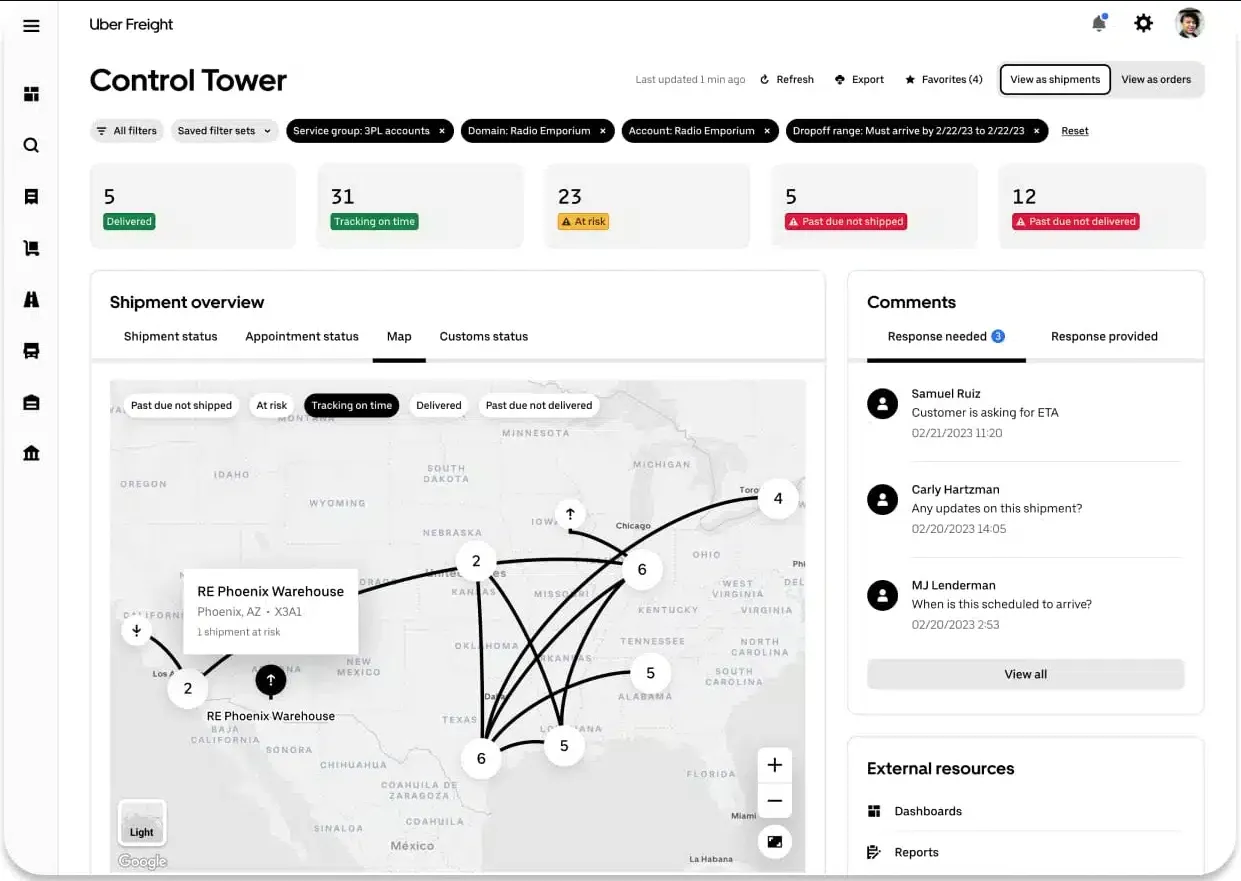
Workflow alignment: Uber Freight fits companies that move a lot of truckload or LTL, like retailers, food and beverage, and more. But if you run multi-step global transportation processes, Uber Freight might feel a bit light compared to heavyweights like SAP or Oracle.
User experience and learning curve: Feedback on Uber Freight ranges from praise for its intuitive design to concerns about reliability and customer support.
Integrations: Uber Freight offers API integrations that connect with a wide range of transportation management systems, ERPs, and logistics platforms, including major TMS solutions like BluJay, Oracle, and SAP.
Scalability: Uber Freight offers a modular, enterprise-grade platform that grows with your business. You can expand capacity, services, and integrations over time.
Pricing and TCO transparency: Uber Freight doesn’t share full pricing details online, but we know they use a pay-per-shipment model. In other words, you pay for the loads you ship.
The seven platforms we’ve reviewed represent the best of what's available off-the-shelf from our standpoint. For many operations, they're the right answer. But if you've made it this far and none feel quite right, you need a custom transportation management solution.
Read more about how logistics API integration helps overcome SaaS limits for scalable data flow.
When the best transportation management systems of 2026 don't fit, Stfalcon builds what does
At Stfalcon, we develop custom transportation solutions that serve tens of thousands of daily active users. Here’s how we work:
- 30% faster development: We use ready-made modules and AI-powered SDLC to cut delivery time by ~30%. You see real functionality early, not a giant reveal at the end.
- Purpose-built features: Every workflow is designed around your modes, lanes, rules, partners, and exceptions. No bloated feature sets borrowed from enterprise SaaS.
- No surprises: We follow a clear Green/Yellow/Red model to show which features are reusable, which need adaptation, and which require full custom development. You always know where the budget goes.
Backed by 364+ successful projects and 16 years in providing transportation software development services, we’ve helped operators, carriers, and delivery networks modernise their systems and scale with confidence. To make it concrete, here are some of the projects we’ve built.
Ecolines doubles ticket bookings after mobile app revamp
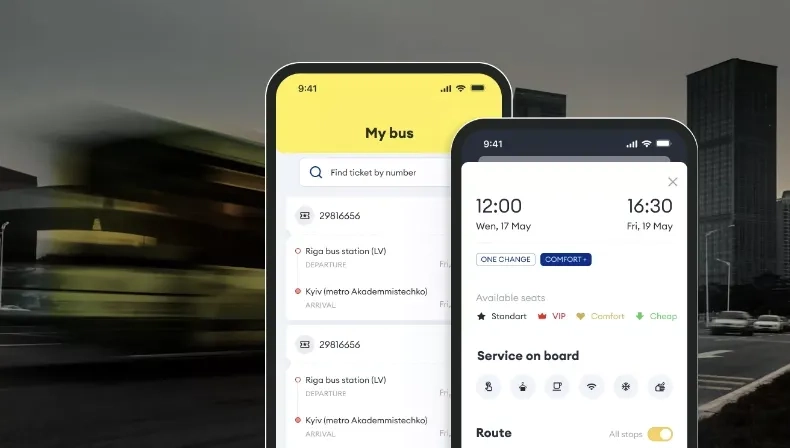
Ecolines is one of Europe’s largest and most experienced coach operators. When they came to us, they had an app that constantly crashed and confused users. People couldn’t complete bookings, payments failed, and conversions kept dropping.
 Read the full case study
We redesigned the UX, audited the backend, and documented all APIs and data flows. With a clear technical foundation in place, we rebuilt the app to make booking simple and reliable. After the relaunch, Ecolines saw conversions surge and boosted ticket sales twofold.

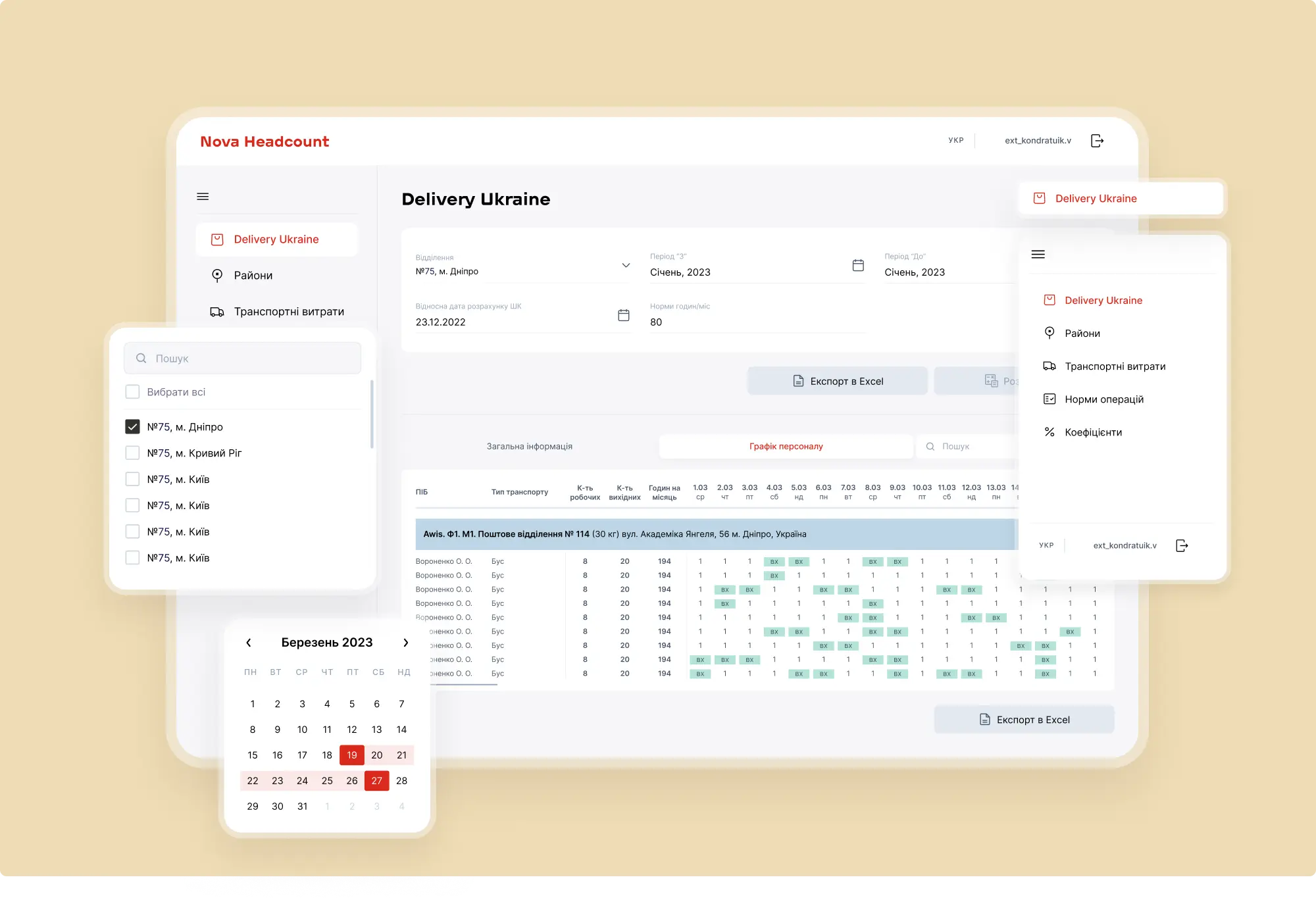
Nova Post automates shift planning for 38,000 employees nationwide
Nova Post is a Ukrainian market leader in logistics and delivery. The company runs a network of over 39K service points in Ukraine and abroad.
Stfalcon's team has a long history of cooperation with the company. For this project, we’ve developed a staff scheduling system that automates 99% of manual work. As a result, Nova Post improved the company’s workforce planning and cut shift scheduling time from hours to minutes.
 Read the full case study
Berlin startup takes 40% of bus market share with a new booking platform
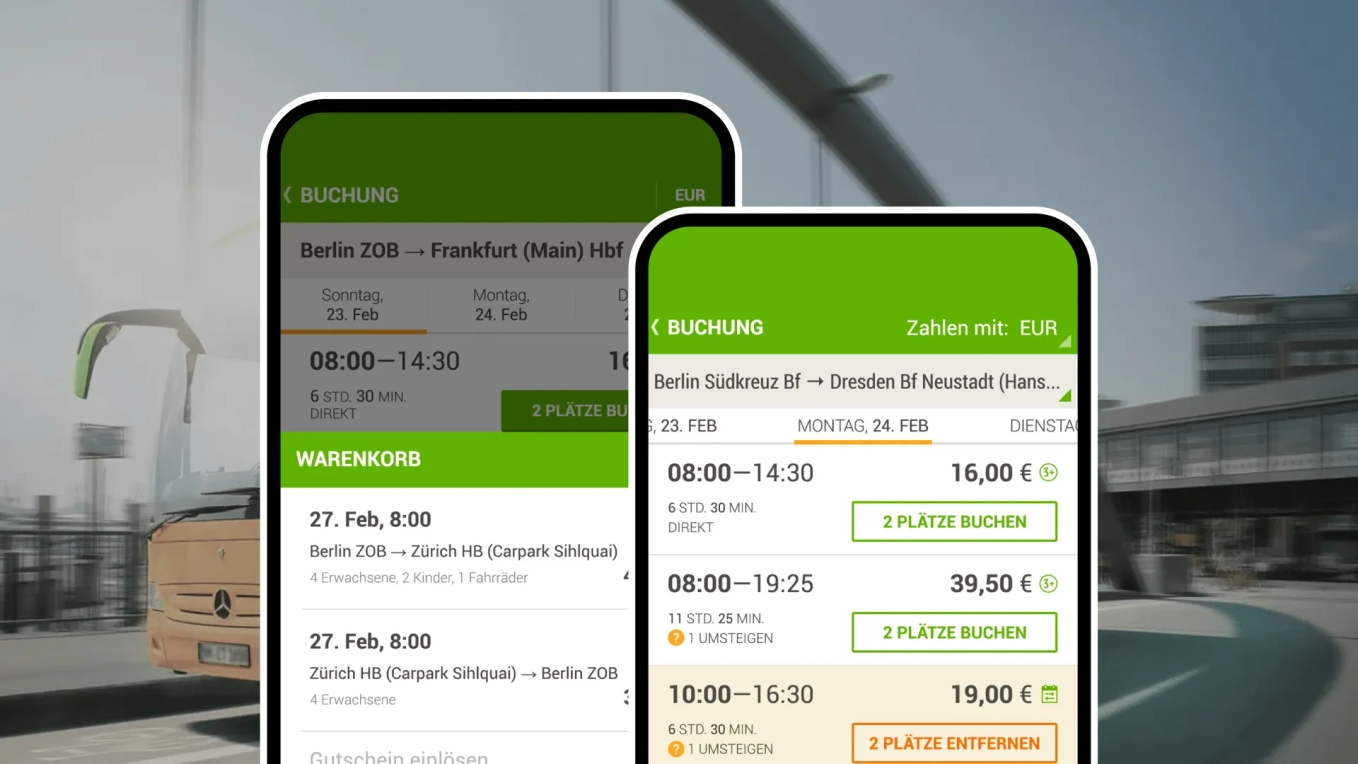
The long-distance bus market had been banned in Germany for decades. When the law was lifted in 2009, a Berlin-based startup set out to become the country’s first low-cost intercity bus operator. They needed a complete ticket booking platform with web, mobile apps, backend, routing, and partner integrations. That’s when they partnered with Stfalcon.
Over three years, we developed the core booking logic, a scalable backend, a web interface, and the first Android and iOS apps. Our team worked closely with the client to launch new features, handle growing traffic, and support their fast-moving startup pace.
 Read the full case study
After launch, the startup gained 38.5% of Germany’s intercity bus market and became the leading operator by route coverage. By 2015, after merging with another company, they reached 73% market share, offering 1,300+ routes and serving 8M+ passengers.
If you believe it’s time to choose a transportation management system, we are here to help
If you’re not ready to invest in a custom TMS now, you can start with one of the ready-made solutions available on the market. But when the best logistics transportation management systems on the market still fall short of your needs, our dedicated logistics team is here to build what fits.