A routing engine for an 80-vehicle fleet takes roughly $98,000 in year-one development. Three years of enterprise SaaS for the same fleet comes to $256,700. The custom build lands at $152,080 over the same period, and you own it at the end.
Those may look appealing and make custom development look like a better option. But they don’t tell you whether your own project lands near them. The route optimization software development cost depends on how many constraints you have to model, whether dispatch runs on a schedule or reacts to live exceptions, how many systems the engine has to connect to, and what you pay for map data. Two fleets of the same size can sit $150,000 apart on the same brief.
Per-vehicle pricing is what makes most operations consider a custom build still. At $40–60 per vehicle per month, the subscription looks small next to a development budget, but one day, the comparison keeps getting made on the wrong numbers.
Below, we break down what custom development costs by scope, what drives the number up or down, and what you keep paying after launch.
TL;DR
- Route optimization software development cost tracks scope. A single-depot MVP runs $40,000–$90,000, a multi-constraint build $90,000–$160,000, and a real-time dispatch platform $160,000–$250,000+.
- Four things move the number: how many constraints you model, scheduled versus live re-routing, how many systems the engine connects to, and whether you self-host map data or license it. Scheduled-versus-live is the biggest single lever.
- Budget front-loads into audit and pilot on purpose. Proving the constraint model on one depot before a full-fleet rollout is what keeps route optimization software development predictable.
- The cheapest way to build is to build less: a bolt-on engine that plugs into your TMS and telematics through APIs prices in the tiers above, where a full-stack replacement doesn't.
- On an 80-vehicle fleet, custom costs more in Year 1, breaks even in Year 2, and by Year 3 saves over $104,000 against SaaS, with no per-vehicle ceiling and the IP owned outright.
How much does route optimization software development cost?
We can’t name a single price, but there’s a reliable range once you know what you're building. Development cost tracks scope more than fleet size, because a 200-vehicle operation running scheduled single-depot routes can cost less to build for than a 40-vehicle fleet that needs live re-routing and a driver app.
Most routing builds fall into one of three tiers.
| Scope | Typical range | What it covers |
|---|---|---|
| Routing MVP | $40,000–$90,000 | One depot, scheduled dispatch, a tuned open-source solver (OR-Tools, VROOM), and one integration into your TMS. Solves the “we’ve outgrown per-vehicle pricing” case without much else. |
| Multi-constraint build | $90,000–$160,000 | Multiple depots, driver-hour and compliance rules, vehicle-attribute mapping, and a live telematics feed. Where most scaling fleets land. |
| Real-time dispatch platform | $160,000–$250,000+ | Everything above plus live re-routing against traffic and cancellations, a driver app, a dispatcher console, and dynamic pricing or ETA logic. |
Ranges reflect current market benchmarks for custom route optimization builds (mid-2026), not fixed Stfalcon quotes. Actual cost depends on your constraint set and integration surface — get a scoped estimate.
The 80-vehicle example that runs through the rest of this article, which is around $98,000 in year-one development, sits in the second tier: multiple constraints, a telematics feed, one core integration. The jump between tiers is driven less by lines of code than by what the engine has to react to in real time, and how many outside systems it has to stay in sync with.
One decision splits the tiers more than any other: scheduled dispatch versus live exception handling. We'll come back to it in the cost drivers, because it changes both the build and the monthly bill.
What drives the cost to build software for route optimization
Two builds at the same fleet size can land a tier apart. What separates them is a short list of decisions, and they don't weigh equally. Here they are in rough order of how much they move the number.
Constraint count is the first fork. A solver that only sequences stops by distance is a different job from one that respects driver-hour limits, vehicle weight and dimensions, delivery windows, and cross-border compliance zones all at once. Each constraint is logic someone has to model, test against real routes, and maintain. Commercial routing for trucks has to weigh truck size and weight, inner-city access rules, toll costs, and legal rest-period law, which is the reason a heavy-freight build costs more than a parcel-van one isn't the code volume.
Scheduled versus real-time is the second, and it hits twice. It changes the build, and it changes the monthly bill for as long as the system runs.
| Approach | How it works | Development impact | Runtime cost |
|---|---|---|---|
| Heuristic VRP solvers | Searches for a near-optimal route set, computed once or on a schedule. | Lower. Open-source solvers (OR-Tools, VROOM, OptaPlanner) tuned to your rules. | Low — batch compute, minimal live API calls. |
| AI-assisted dynamic re-routing | Continuously re-scores routes against live traffic, new orders, cancellations, and driver delays. | Higher. Needs a live data pipeline, telematics ingestion, and continuous scoring. | Higher — live GPS feeds and per-request map-API metering that scales with volume. |
Most production systems run both: a heuristic solver for the morning dispatch plan, and logistics AI handling exceptions on the road. Naming which one your operation actually needs is the single biggest lever on the quote — it's easy to over-scope toward real-time when scheduled dispatch would carry the load.
The integration surface is the third. A routing engine is only worth what it connects to. Every system it has to exchange data with, including your TMS, your ERP, a GPS and telematics feed, a driver app, is an interface to build and keep in sync. One clean TMS integration is a line item, while five bidirectional syncs are a project.
Map data is the fourth, and it's the one teams forget to budget. Self-hosting an open-source engine (OSRM, Valhalla) keeps recurring cost near zero but puts map upkeep on you. A commercial provider like HERE or PTV bills per transaction — the first couple thousand calls are free, then it's a few dollars per thousand, scaling with every route you compute. For a busy dispatch operation that's a live monthly line, not a one-time cost, which is why it belongs in the build conversation and not just the launch budget.
Fleet size barely appears on this list on purpose. It moves the SaaS bill directly, but on a custom build it mostly affects compute and licensing at the margins — the architecture costs the same whether it's routing 40 vehicles or 140.
A guide to route optimization software development: where the budget goes
Knowing the total isn't the same as knowing when you spend it. At Stfalcon, for example, a custom route optimization software development project runs in four phases, and they don't cost the same. Front-loading the money into an Audit and Pilot before a full-fleet rollout is what lets us keep the project predictable and stops our clients from paying to rebuild the wrong thing.
| Phase | What happens | Share of budget | What it de-risks |
|---|---|---|---|
| Audit | Map every routing constraint your current tool handles poorly or not at all: time windows, driver rules, depot logic, compliance zones. | ~10–15% | Stops you building a system that recreates the old tool's blind spots. |
| Pilot | Build the engine and run it against one depot or route cluster, alongside the existing platform. | ~40–50% | Proves the constraint model on real data before the full fleet depends on it. |
| Extend | Roll the engine out to the rest of the fleet; connect it to TMS, GPS, and dispatch. | ~30–35% | Scales what’s proven instead of scaling a guess. |
| Stabilize | Tune for load, monitor edge cases, retire the old tool. Ongoing SLA monitoring and map dataset updates start here. | ~5–10% | Locks in the savings and removes the per-vehicle fee for good. |
The Pilot is where the method earns its keep, and it's the phase most teams want to skip. Skipping it feels faster because you get the whole fleet on the new engine sooner. But what it does is it bets your entire routing operation on a constraint model no one has run against live data yet. One depot's worth of real routes will surface the compliance edge case or the depot-logic quirk your audit missed, while it's still cheap to fix.
The phase split also explains why the tiers earlier carry the ranges they do. A single-depot MVP is mostly audit and pilot with a light Extend, and you may never scale past the first phase-three step. A real-time platform spends heavily in Extend and never really leaves Stabilize, because live re-routing needs continuous tuning against traffic and telematics data that keeps changing.
The costs that continue after launch
The build figure is the one that gets quoted, argued over, and put in the budget. The recurring cost often gets forgotten, and it's the fairer comparison against a SaaS subscription, because it's the number you keep paying every year the system runs.
Four lines make up the ongoing bill.
Maintenance. Plan for 15–25% of the initial build cost per year. On a $98,000 engine, that's roughly $15,000–$24,000 annually, covering bug fixes, solver tuning, and keeping the system current as your routes and rules change. This figure is planned work only — emergency fixes run several times a normal one, which is the argument for a maintained system over a deferred one.
Hosting and infrastructure. Modest and predictable if you self-host an open-source solver turns into a few thousand dollars a year in compute that scales gently with data volume.
Map data. The line that moves with usage. A commercial provider bills per transaction, so a real-time re-routing operation computing routes all day pays materially more than a fleet running one scheduled dispatch each morning. Self-hosting flips this to near-zero recurring cost in exchange for taking map upkeep in-house, the same fork from the cost drivers, now showing up as a monthly number.
SLA support. Business-hours support barely changes the maintenance baseline. A 24/7 uptime guarantee, the kind a live dispatch operation needs, adds 20–40% on top of it. Worth pricing deliberately: if drivers are on the road at 2 a.m., the SLA isn't optional.
Add it up and a mid-tier custom build carries a recurring cost well under what the same fleet pays in per-vehicle SaaS fees, in other words, the gap that the three-year math turns into real money.
Want to price your own build?
Tell us your fleet size, your constraints, and your current stack, and we'll scope the number against 16+ years of logistics builds.
Alina
Client Manager

How to build software for route optimization without overspending
The most cost-effective way to build software for route optimization is as a bolt-on module, a focused engine that plugs into your existing stack through lightweight APIs and leaves the rest alone.
That single architectural choice is worth more to the budget than any solver decision. A wholesale platform rebuild prices like a multi-year enterprise project, while a bolt-on routing engine prices like the tiers earlier in this article, because it only has to do one thing well and talk cleanly to the systems that already do the rest.
Three integration points carry most of that work:
TMS and ERP. The engine pulls raw orders and delivery windows, sequences them, and pushes optimized routes back to dispatch without a need to touch the system of record. If your core stack needs work first, that's a separate decision, and our how to build a TMS guide covers where that line falls.
Telematics and GPS. The engine hooks into hardware you already run, be it Samsara, Geotab, or a mobile driver app, to read actual vehicle positions rather than planned ones. Reusing the feed you've got beats specifying new hardware into scope.
Coexistence with SaaS. During migration the engine runs alongside your current platform, taking the complex constrained routes while the old tool handles standard orders. You're never mid-cutover with nothing running, which is what lets the Pilot phase stay low-risk and low-cost.
Treating the engine as an integration layer instead of a replacement keeps a build inside a predictable four-month window and stops scope from creeping toward a full-stack rewrite you never needed. The rule of thumb is that every system you connect to is cheaper than every system you rebuild.
The 3-year math: what building actually saves
The subscription is the only cost that shows up on an invoice, while the rest hides in the operation. Dispatchers re-sequencing stops by hand, a second depot tracked in its own spreadsheet, a support ticket for every rule the platform won't bend to is what we call the SaaS Cost Multiplier, the operational tax that compounds as the fleet grows.
It's also why comparing a subscription line against a development quote gets the decision wrong, since you're weighing the visible cost against the total one.
Based on Stfalcon's audits of mid-sized fleets, here's the three-year arc for an 80-vehicle operation growing 10% a year, against standard enterprise routing benchmarks.
| Year 1 | Year 2 | Year 3 | ||||
|---|---|---|---|---|---|---|
| Cost Category | SaaS | Custom | SaaS | Custom | SaaS | Custom |
| Software / Hosting | $52,800 | $6,000 | $58,080 | $6,300 | $64,020 | $6,600 |
| Initial dev / Setup | $0 | $98,000 | $0 | $0 | $0 | $0 |
| Maintenance / Updates | $0 | $3,000 | $0 | $12,000 | $0 | $12,000 |
| Manual Workaround | $22,000 | $2,200 | $26,000 | $2,600 | $33,800 | $3,380 |
| Annual Total | $74,800 | $109,200 | $84,080 | $20,900 | $97,820 | $21,980 |
| Cumulative TCO | $74,800 | $109,200 | $158,880 | $130,100 | $256,700 | $152,080 |
Illustrative model only. Based on Stfalcon's operational audits of mid-sized fleets (50–500 vehicles) and enterprise SaaS pricing benchmarks.
- SaaS pricing is calculated at standard enterprise routing tiers (average $55/vehicle/month).
- Fleet growth from 80 to 97 vehicles over three years directly triggers linear SaaS subscription price jumps.
- Payroll impact calculation is based on an average dispatcher salary of $50k/year with 20% of billable time spent on manual overrides. In Years 2 and 3, this operational cost increases by ~30% due to compounding fleet and route complexity. For custom builds, workarounds drop by 90% rather than vanishing completely, accounting for unavoidable real-world edge cases.
- The $98,000 in Year 1 is an upfront CapEx investment for a targeted MVP routing engine. Cloud infrastructure fees scale marginally with data volume. These figures assume self-hosted engines (e.g., OSRM, Valhalla) with commercial map API usage billed separately if required.
- Year 1 Maintenance accounts for post-launch SLA support following an initial development and warranty window.
As you can see, Year 1 goes to SaaS, and it’s not surprising. The custom build costs more upfront, exactly as you'd expect, but by the end of Year 2 the custom platform is already $28,780 cheaper cumulatively. By the end of Year 3, the gap widens to $104,620, and unlike the subscription, there's no per-vehicle ceiling waiting on the other side of it. The decision to build software for route optimization stops being a leap of faith once the crossover point is on the page.
The shape is what matters more than the exact figures. SaaS stays flat-looking but climbs with every vehicle you add; custom front-loads once and then flattens. The steeper your growth, the sooner the lines cross.
When custom beats SaaS: real-life example
BBGO is a ride-hailing service with 16+ years on the market. Ride-hailing isn't heavy freight, but BBGO hit the same wall every scaling operation hits: its third-party SaaS platform couldn't support the growth anymore. Rigid driver-matching logic left no room for the features BBGO needed, and hosting fees climbed as volume did (the SaaS Cost Multiplier playing out in real numbers).
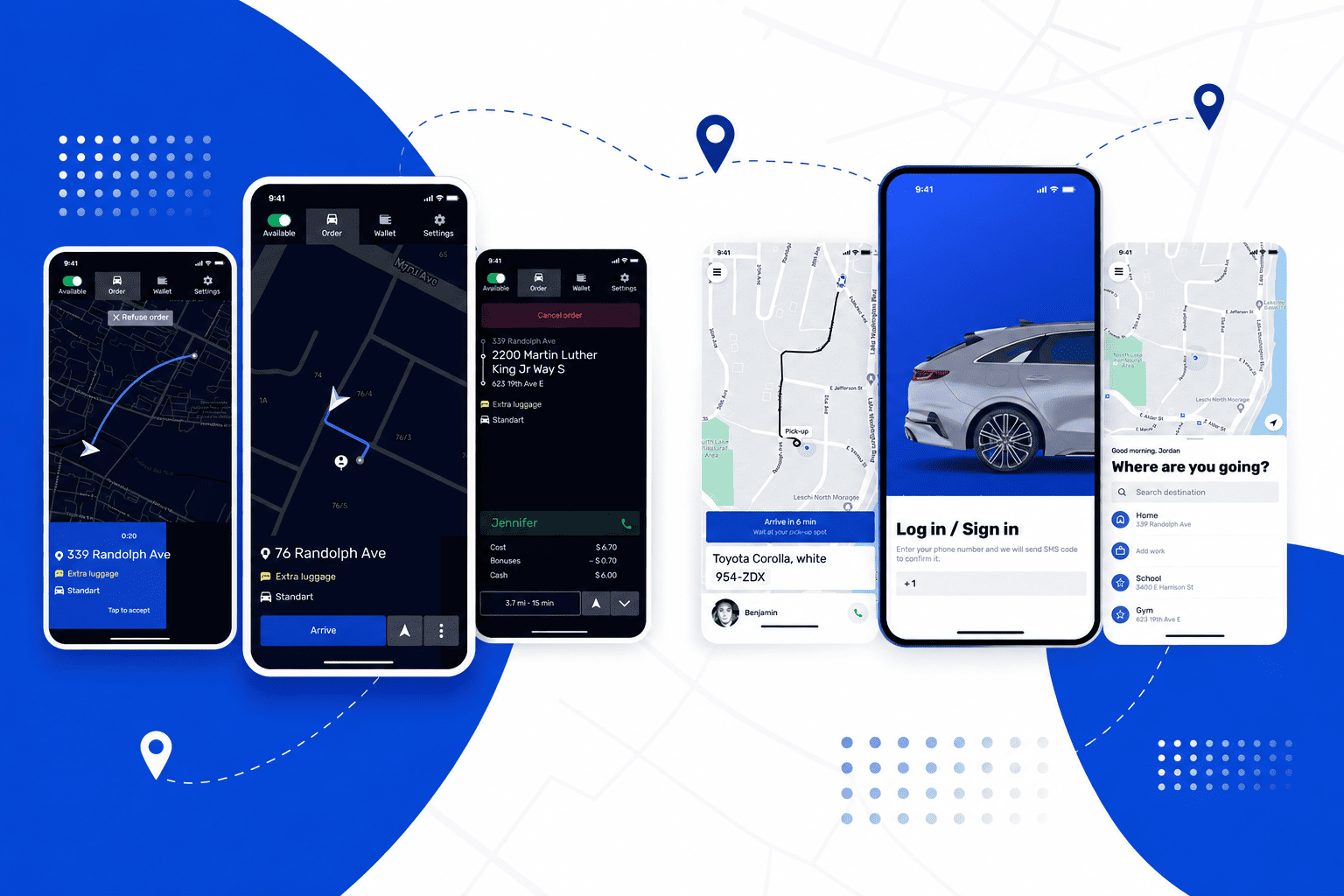
Together with Stfalcon, BBGO replaced the platform with a custom system built around its own dispatch logic. The infrastructure choice is what made the cost case concrete: Stfalcon built BBGO cloud-agnostic on Kubernetes from the start, so when the client wanted to cut cloud spend during the pandemic, moving from Google Cloud to the cheaper Hetzner was fast and caused no disruption. That portability is a cost lever a SaaS subscription simply doesn't give you.
BBGO came out of it with lower operational costs, full control over its roadmap, and no per-seat ceiling on growth, now handling 50,000+ orders a month.
Ready to price your build against three more years of SaaS fees?
Let's scope the real number for your fleet.
Alina
Client Manager
The expensive part isn't the code
The learning curve is the most expensive phase of custom software development, not the code. This is the price of figuring it out as they go: generalist engineering teams build routing software by trial and error, charging you for every logistics edge case they fail to anticipate.
Over 16+ years, Stfalcon has delivered over 387 logistics projects with a 99% success rate. Our transportation software development company uses battle-tested components and domain expertise to deploy your custom engine predictably, within budget, and with zero downtime.