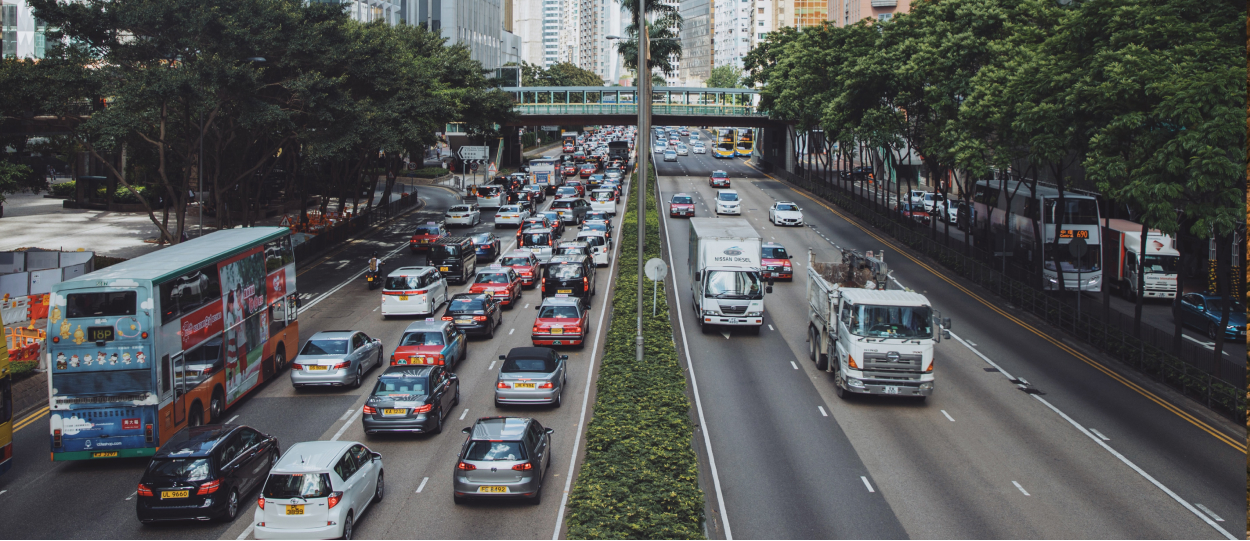
Transportation is no longer defined only by fleets, routes, and physical infrastructure. In 2026, the industry is increasingly shaped by digital platforms, artificial intelligence, automation, real-time data, and autonomous mobility.
Global logistics providers, ride-hailing platforms, public transit technology companies, and intercity travel networks are all competing through faster operations, broader coverage, and a better customer experience.
At Stfalcon, we develop custom transportation software solutions that support fleet management, real-time tracking, route optimization, and other digital operations.
This article looks at five transportation companies representing major directions in today’s market: DHL Group, Uber, Waymo, Via Transportation, and Flix. We compare their core services, geographic reach, technologies, and competitive strengths to understand how leading transportation businesses are evolving.
TL;DR
- The transportation industry in 2026 is shaped by artificial intelligence, automation, real-time data, autonomous mobility, and connected digital platforms.
- DHL Group, Uber, Waymo, Via Transportation, and Flix represent five major market segments: global logistics, on-demand mobility, autonomous ride-hailing, public transit technology, and intercity travel.
- Their key strengths range from DHL’s global logistics network and Uber’s scalable marketplace to Waymo’s driverless operations, Via’s transit software, and Flix’s asset-light business model.
- Across these segments, competitive advantage comes from scalable platforms, real-time visibility, route and fleet optimization, and a seamless customer experience.
What Companies Are in the Transportation Field? An Overview for 2026
Companies in the transportation field include logistics providers, freight carriers, ride-hailing platforms, public transit operators, autonomous mobility companies, and intercity bus and rail networks. Their services cover passenger transportation, freight delivery, fleet operations, ticketing, route management, and supply chain logistics.
In 2026, transportation industry companies increasingly rely on artificial intelligence, automation, real-time data, and connected digital platforms. Key transportation industry trends, including electric vehicles, shared mobility, autonomous transport, and smarter logistics systems, are changing how passengers and goods move.
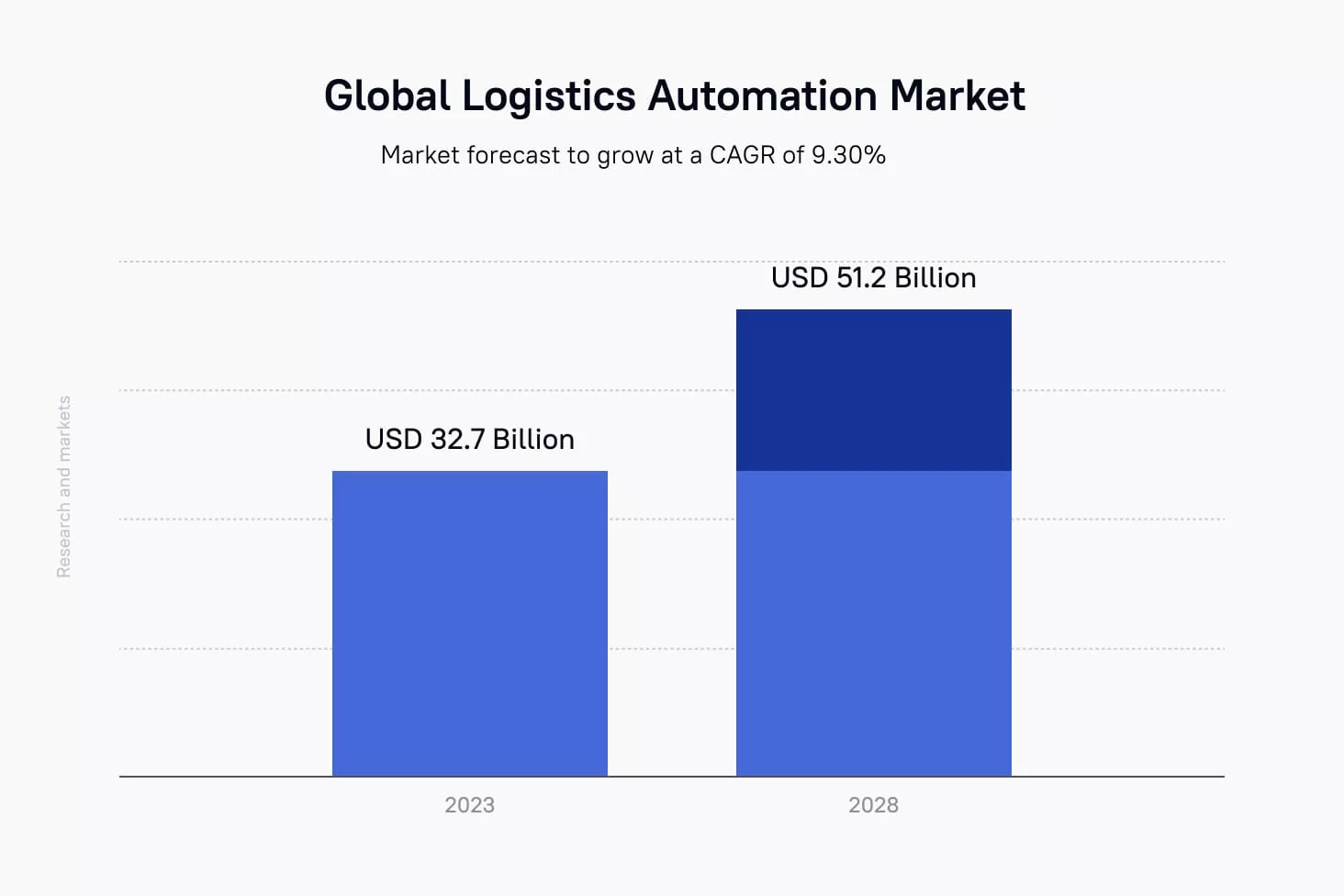
According to a MarketsandMarkets forecast, the global logistics automation market is expected to grow from $32.7 billion in 2023 to $51.2 billion by 2028, representing a CAGR of 9.3%.
To remain competitive, transport companies are expanding their services, adopting new business models, and modernizing operations with transportation and logistics software. Solutions such as TMS and 3PL platforms can improve route planning, delivery visibility, fleet coordination, and overall operational efficiency.
Top Transportation Companies in 2026: List and Comparison
Transport companies differ significantly in their scale, services, technologies, and business models. Some operate global logistics networks and physical infrastructure, while others connect passengers, carriers, public authorities, and local transport operators through digital platforms.
The following list of transportation companies covers five major segments of the industry: global logistics, on-demand mobility, autonomous ride-hailing, public transit technology, and intercity transportation. Rather than ranking businesses solely by revenue or fleet size, the comparison highlights transport companies that are influencing how people and goods move in 2026.
| Comparison of Leading Transportation Industry Companies | ||||
|---|---|---|---|---|
| Company | Main segment | Geographic reach | Key technologies | Main strength |
| DHL Group | Logistics and supply chain | 220+ countries and territories | Shipment tracking, warehouse automation, analytics, robotics | End-to-end global logistics network |
| Uber | On-demand mobility and freight | 70 countries; 15,000+ cities | Real-time matching, dynamic pricing, route optimization, TMS | Scalable digital marketplace |
| Waymo | Autonomous ride-hailing | Multiple US cities | Autonomous driving, AI, sensor fusion, HD mapping | Driverless transportation at commercial scale |
| Via Transportation | Public transit technology | 30+ countries; hundreds of cities | Dynamic routing, dispatching, planning, booking, analytics | Digital infrastructure for public transit |
| Flix | Intercity bus and rail travel | 40+ countries | Network planning, digital booking, pricing, partner management | Technology-driven asset-light model |
1. DHL Group — global logistics and supply chain leader
DHL Group is one of the largest transportation companies in the world and a major provider of international logistics services. Its operations cover express delivery, freight forwarding, contract logistics, e-commerce delivery, and postal services. The company operates in more than 220 countries and territories, giving it one of the broadest logistics networks in the transportation industry.
DHL divides its operations into five major areas: Express; Global Forwarding, Freight; Supply Chain; eCommerce; and Post & Parcel Germany. This structure allows the company to serve individual customers, online retailers, manufacturers, healthcare organizations, and multinational enterprises. Its services range from urgent international document delivery to air and ocean freight, warehouse management, fulfillment, returns processing, and supply chain orchestration.
The scale of DHL's operations is reflected in its financial results. In 2025, DHL Group generated approximately €82.9 billion in revenue and €6.1 billion in operating profit. DHL Express alone transported around 248 million time-definite international shipments during the year. These figures illustrate the company's ability to manage high shipment volumes despite changes in trade flows, customs regulations, freight rates, and consumer demand.
Technology is essential to maintaining this global network. DHL uses end-to-end shipment tracking, automated sorting systems, warehouse robotics, predictive analytics, and digital supply chain management tools. Its quality control centers monitor shipments and allow operational teams to respond when delays or disruptions occur. Within contract logistics, the company also applies data and robotics to warehouse operations, fulfillment, returns, service logistics, and inventory management.
DHL's position among the top transportation companies is based not only on its physical infrastructure but also on its ability to connect multiple logistics services within a single network. Businesses can use DHL for transportation, customs clearance, storage, order fulfillment, last-mile delivery, and returns rather than coordinating each function with a separate provider.
Key strength: DHL combines extensive geographic coverage with end-to-end logistics capabilities, making it particularly valuable for companies that operate complex international supply chains.
To better understand how modern digital tools help transport companies stay resilient in challenging market conditions, explore our in-depth article about Overcoming Supply Chain Risks with Custom Software.
2. Uber — digital mobility and freight marketplace
Uber has evolved from a ride-hailing application into one of the world's largest digital mobility platforms. As of March 2026, its services were available in more than 15,000 cities across 70 countries. The company connects passengers, drivers, couriers, restaurants, businesses, shippers, and freight carriers through a shared technology infrastructure.
Uber's core business includes Mobility, Delivery, and Freight. Mobility covers on-demand rides and a growing range of transportation options, while Uber Freight provides logistics solutions for shippers and carriers. The freight business includes a transportation management system, managed transportation services, brokerage, shipment booking, carrier tools, and real-time freight visibility.
The size of Uber's platform creates a powerful network effect. In the fourth quarter of 2025, users completed approximately 3.8 billion trips through the platform. Quarterly gross bookings reached $54.1 billion, while revenue increased to $14.4 billion. Growth was supported by both an expanding user base and an increase in the number of trips completed by each active customer.
Uber's technology coordinates supply and demand in real time. Its systems process passenger locations, driver availability, traffic conditions, travel times, pricing, payments, and service demand. Matching algorithms connect users with available drivers, while dynamic pricing helps balance demand with the number of vehicles operating in a particular area. Navigation and ETA systems continuously recalculate trips as traffic conditions change.
Uber is also expanding its role in autonomous transportation. Rather than building every autonomous vehicle itself, the company increasingly provides commercial infrastructure for autonomous technology partners. In 2026, it introduced Uber Autonomous Solutions, a set of services designed to help autonomous vehicle companies manage deployment, marketplace integration, fleet operations, remote assistance, customer support, and payments.
This platform-based approach distinguishes Uber from traditional transportation industry companies. It does not need to own every vehicle operating through its network. Instead, the company provides the technology, user interface, transaction infrastructure, and operational systems required to connect transportation supply with customer demand.
Key strength: Uber's global marketplace can integrate different transportation providers and mobility models within a scalable digital ecosystem.
3. Waymo — autonomous transportation at scale
Waymo is one of the most advanced autonomous transportation companies operating commercial driverless ride-hailing services. Its main product, Waymo One, allows passengers to request a vehicle through a mobile application and complete a journey without a human driver behind the wheel.
Unlike driver-assistance systems that require constant human supervision, the Waymo Driver is designed to manage the entire driving task within supported service areas. The system combines cameras, lidar, radar, artificial intelligence, detailed mapping, and onboard computing to identify road users, understand traffic conditions, predict movement, and select an appropriate driving response.
By mid-2026, Waymo had completed more than 20 million fully autonomous passenger trips across more than 11 cities. Its autonomous vehicles had also traveled more than 220 million miles without a human driver controlling the vehicle. The company continued expanding its commercial coverage, with its service footprint reaching approximately 1,400 square miles across 11 cities in 2026.
Scaling an autonomous transportation service involves more than developing a self-driving system. Waymo must also manage fleet maintenance, vehicle charging, cleaning, remote assistance, passenger support, mapping, software updates, and local operating requirements. These supporting systems make autonomous mobility a complex combination of automotive technology, artificial intelligence, fleet management, and customer-facing software.
Waymo's expansion also demonstrates how autonomous vehicles can become part of existing mobility ecosystems. In some cities, passengers can access Waymo vehicles through partnerships with platforms such as Uber. This model allows autonomous fleets to use established booking and payment infrastructure while reaching a wider group of potential riders.
The company's progress is significant for the broader transportation field because it moves autonomous mobility beyond limited demonstrations. Commercial ride-hailing operations generate real-world information about passenger behavior, fleet utilization, service areas, operating costs, and the integration of driverless vehicles into urban traffic.
Key strength: Waymo has transformed autonomous driving from a research project into a commercial transportation service operating at meaningful scale.
4. Via Transportation — technology for modern public transit
Via Transportation is a transportation technology company that helps cities, transit agencies, schools, universities, and private operators modernize their mobility services. Its platform is used by hundreds of cities in more than 30 countries to turn fragmented transport operations into connected digital networks.
The company is particularly well known for demand-responsive transit. Instead of following only fixed routes and timetables, demand-responsive services can adjust vehicle routes according to current passenger requests. A rider books a journey through an application or contact center, and the platform determines where and when the passenger should be collected. It then groups compatible trips and builds efficient routes for available vehicles.
Via's technology covers much more than passenger booking. Its platform can support network planning, scheduling, driver management, dispatching, vehicle tracking, payments, customer communication, reporting, and operational analytics. Transit authorities can use these tools to monitor performance, identify underserved areas, adjust service levels, and understand how different parts of a transportation network work together.
The company provides technology for public transit, microtransit, paratransit, student transportation, non-emergency medical transportation, and other specialized mobility services. This flexibility enables agencies to manage different transport programs within a shared digital environment instead of relying on disconnected legacy systems.
Via's financial growth reflects increasing demand for public transit technology. In the fourth quarter of 2025, the company reported revenue of $119 million and annual run-rate revenue of $476 million, representing year-over-year growth of 30%. The results show that cities and transport operators are increasingly treating software as core infrastructure rather than as an optional addition to vehicles and routes.
Via is an important transport industry example because it demonstrates that transportation companies do not always need to operate large fleets themselves. The company supplies the digital layer that enables public authorities and local operators to plan, launch, and manage services more effectively.
Key strength: Via provides an end-to-end platform that helps public transport organizations replace fragmented systems with coordinated, data-driven operations.
5. Flix — technology-driven intercity transportation

Flix is a global travel technology company that provides long-distance bus and rail services through brands including FlixBus, FlixTrain, Greyhound, and Kâmil Koç. Since its launch in 2013, the company has served more than 500 million travelers and expanded its network across more than 40 countries on five continents.
The Flix model differs from that of a traditional bus operator. Local transportation partners generally provide and operate the vehicles, employ drivers, and handle day-to-day fleet operations. Flix manages the technology platform, route network, scheduling, pricing, ticket sales, marketing, customer service, and quality standards.
This asset-light structure allows the company to enter new markets and add routes without purchasing every bus used in its network. At the same time, local operators gain access to Flix's brand, sales channels, passenger demand, data, and digital tools. The model distributes responsibilities between a central technology company and regional transport providers.
By the end of 2025, the Flix network had expanded to approximately 8,000 destinations across 45 countries. Its global reach includes Europe, North America, Türkiye, India, Australia, and several Latin American markets. Greyhound supports its presence in the United States, Canada, and Mexico, while FlixTrain adds rail transportation to the company's multimodal offering.
Proprietary software supports network planning, ticket distribution, pricing, partner management, and the digital customer journey. Passengers can search for routes, compare departure times, book tickets, manage trips, and receive travel updates through the website and mobile application. Transport partners use digital systems to access operational information, manage services, monitor quality, and process financial settlements.
Flix shows how established transportation industry services can be reorganized around a centralized technology platform. Instead of replacing regional operators, the company connects them within a shared network and provides the digital infrastructure needed to sell and coordinate intercity travel at an international scale.
Key strength: Flix combines the operational expertise of local transport companies with centralized technology, distribution, and network management.
Stfalcon Transportation Software Development Case Studies
Stfalcon has developed transportation solutions for intercity booking, on-demand mobility, and logistics operations. These projects demonstrate how custom software can improve passenger services, operational efficiency, and business scalability.
Berlin bus-ticketing startup — intercity booking platform
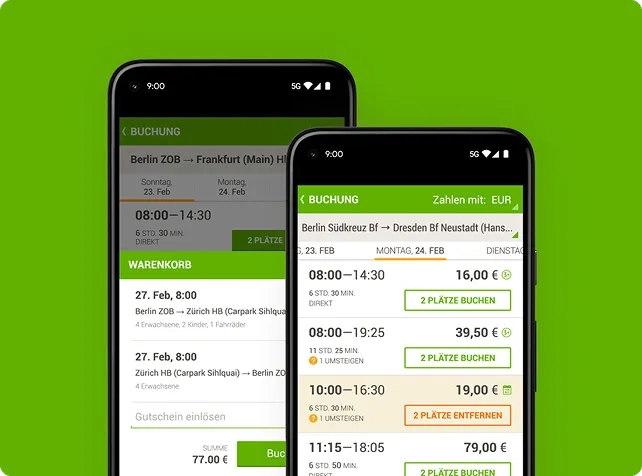
Stfalcon created a bus ticket booking system for a Berlin-based transportation startup. The platform supported route, pricing, and passenger management, helping the company strengthen its position in Germany’s intercity bus market.
 Read the full case study
Busfor — online bus ticket booking app
Busfor is an online ticket booking service operating across Ukraine, Europe, and Southeast Asia. The client wanted to move beyond the limitations of a mobile browser and turned to Stfalcon to develop native iOS and Android applications.
Our team used the existing responsive website as the foundation for efficient native iOS and Android app development. At the time of the project, the Busfor platform covered more than 50,000 routes across Europe.
 Read the full case study
BBGO — on-demand transportation platform
The client approached Stfalcon with a clear vision for an on-demand transportation service. Our team researched user needs and competitors, developed key usage scenarios, designed the interfaces, and built native iOS and Android applications together with the API and backend.
 Read the full case study
The resulting platform provided a flexible foundation for launching, optimizing, and scaling the service.
Nova Headcount — logistics workforce planning system
Nova Post is a Ukrainian market leader in logistics and delivery. The company runs a network of over 39,000 service points in Ukraine and abroad.
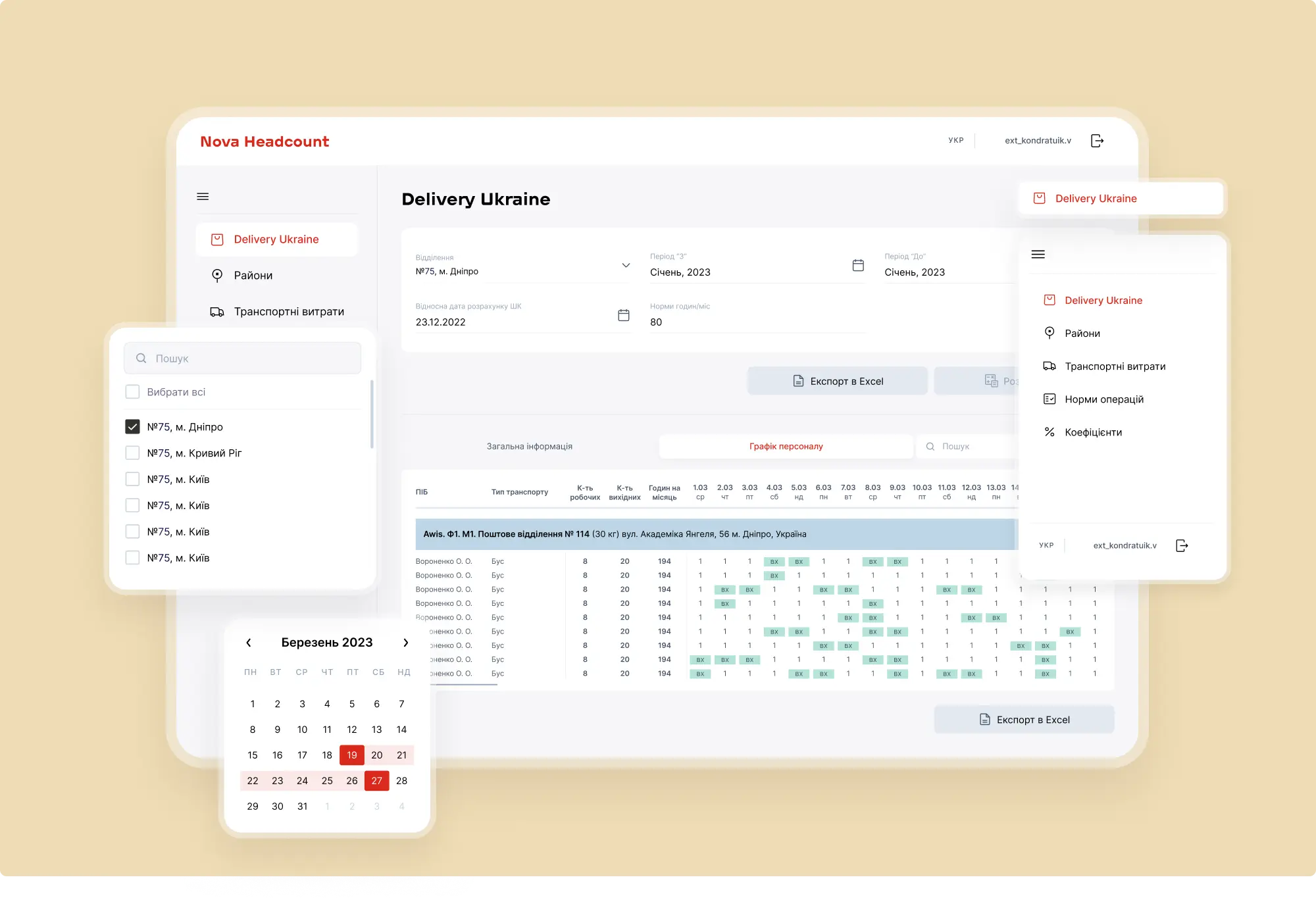
Stfalcon has delivered several projects for Nova Post. For this case, our team developed a shift scheduling system with specialized modules for warehouse and delivery teams, real-time calculations, and support for more than 13,000 post offices across Ukraine.
 Read the full case study
Ecolines — mobile bus ticket booking app
Ecolines is an example of how transportation companies use digital solutions to improve passenger experiences. Stfalcon redesigned the mobile app to simplify ticket booking, improve usability, and create a more convenient travel experience for users.
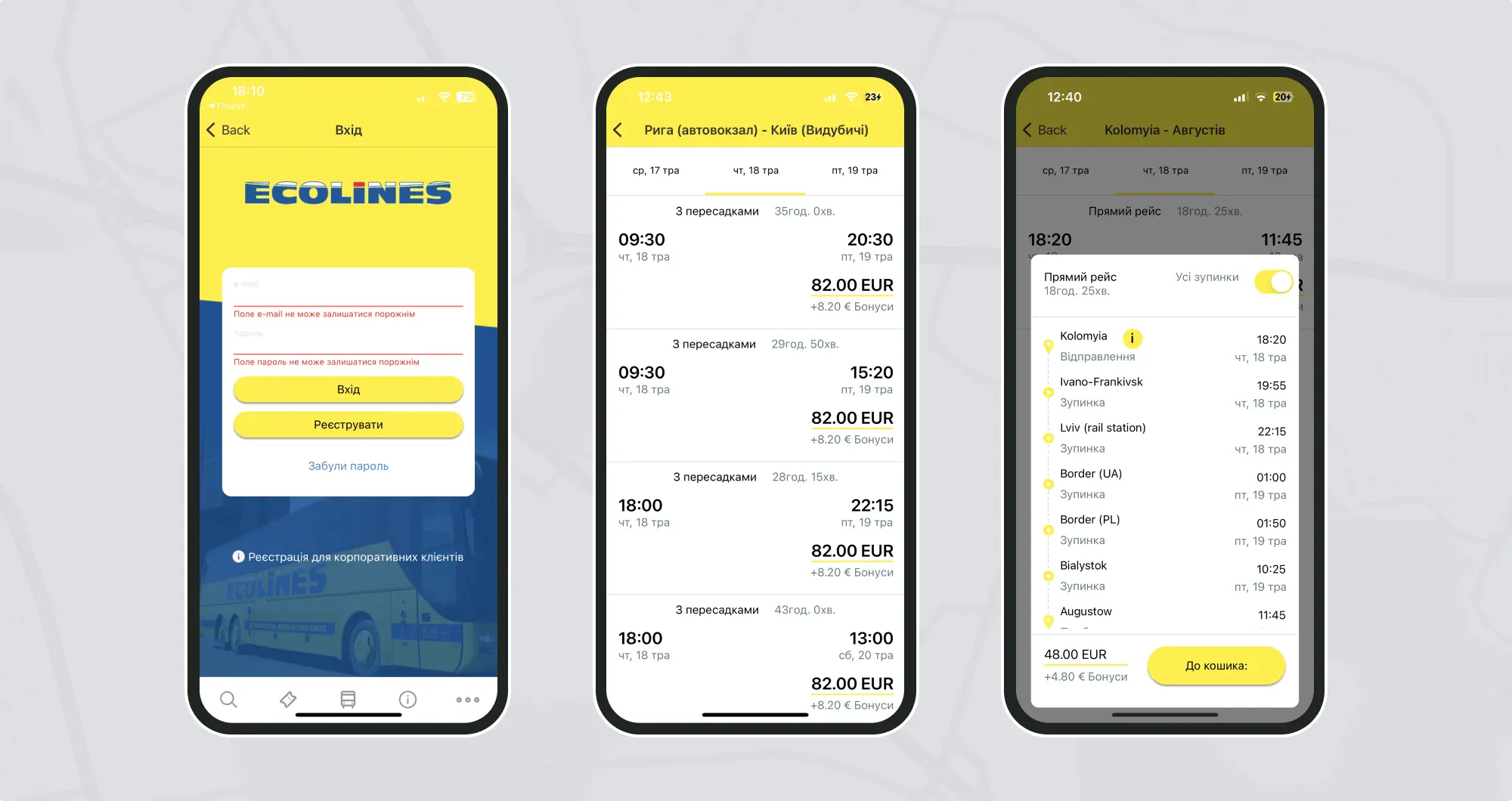
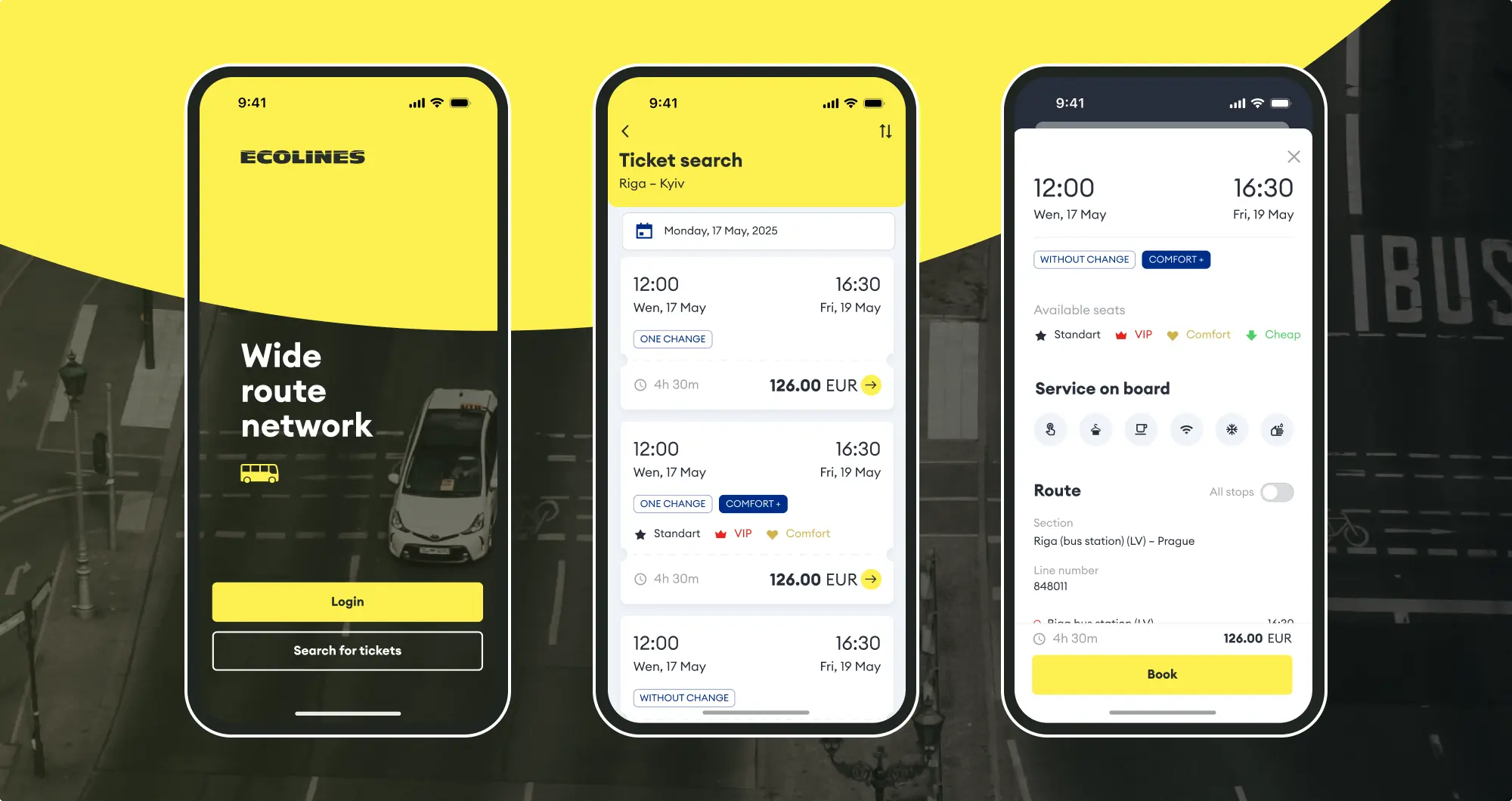
Use the slider above to see the Ecolines app transformation before and after the redesign.

Want to build a smarter transportation platform?
Let’s create a scalable solution for seamless passenger experiences.
Alina
Client Manager

Final Thoughts
The leading transportation companies in 2026 show that success in this industry depends not only on fleet size or geographic reach, but also on the ability to use automation, real-time data, scalable platforms, and customer-focused digital services. DHL Group, Uber, Waymo, Via Transportation, and Flix represent different market segments, yet each demonstrates how technology can improve operations and create new transportation models.
Stfalcon has delivered multiple transportation and logistics projects, helping clients address both technical and business challenges. Our experience in custom transportation software development includes solutions for booking, fleet and route management, real-time tracking, operational automation, and passenger services. Contact us to discuss how a custom digital solution can support your transportation business.